Fiona Flintan

Fiona Flintan

Rangelands & Pastoralism Scientist

 Fiona Flintan is a Senior Scientist at ILRI specialising in pastoralism, livestock and climate, land governance and tenure, participatory land use planning, participatory rangeland management (PRM), gender and conflict resolution and/or transformation. She has spent significant time working on these issues across Africa and particularly in East and Horn of Africa. She also leads a number of global projects and initiatives that cover South Asia, Central Asia, Middle East and Latin America too, as well as global engagement to raise awareness on rangelands in UN Decade of Ecosystem Restoration 2021-2030, the upcoming International Year of Rangelands and Pastoralists (IYRP) 2026 and the International Land Coalition.

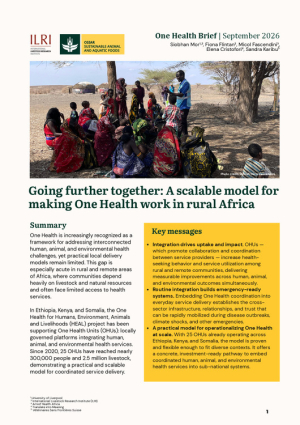
Fiona leads the CGIAR Research Initiative on Livestock and Climate. Other major projects and initiatives that she is currently and/or has been recently involved in include SPARC (Supporting Pastoralism and Agriculture in Recurrent and Protracted Crises), STELARR (Sustainable Investments for Large-Scale Rangeland Restoration), the Sustainable Rangeland Management Project Tanzania, the Piloting of Participatory Rangeland Management Project in Tanzania and Kenya, and HEAL (One Health for Humans, Environment, Animals and Livelihoods) operating in Ethiopia, Kenya and Somalia. 

Previously Fiona worked for a number of organisations as a consultant and/or employee including SOS Sahel, Ministry of Livestock Ethiopia, Save the Children/USA, CARE, IIED, IDS-University of Sussex, IFAD, ACDI-VOCA, TetraTech and Oxfam/REGLAP. She has a degree in Rural Environmental Studies, and in Environment and Development. Her passion is securing stronger rights to resources and land for pastoralists and raising understanding and support for rangelands globally.
My Blog Posts

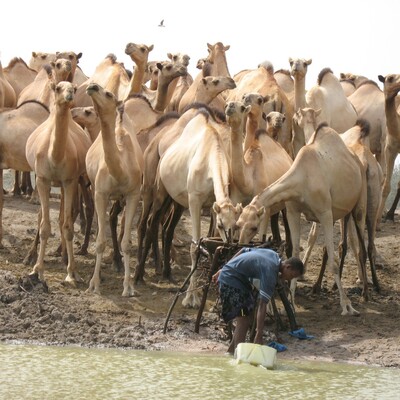
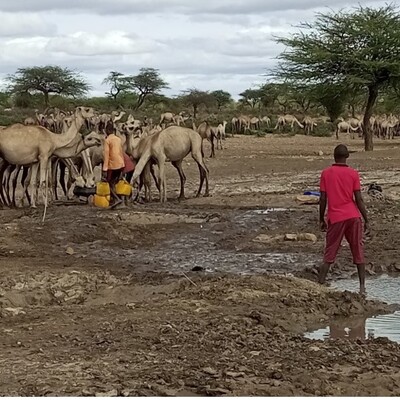
In the Osobey-Globo rangeland unit in the Filtu Woreda of Ethiopia, supported by the PRM project, a pastoralist waters his camels from the pond during the short dry season. Photo by Mohammed Said/ILRI.

ILRI News

Piloting Community Rangeland Health Workers (CRHWs) in Ethiopia: A ground-breaking innovation for One Health application in pastoral areas

Reversing rangeland degradation is a must for ensuring the sustainability of pastoralism as a viable land use in Ethiopia. Photo by F.Flintan/ILRI.

Charting a path to more sustainable livestock value chains with a Rangelands Stewardship Council and a rangelands standard

Policy gains from ILRI’s land-use planning research in eastern Africa

New film highlights women’s role in protecting the world’s rangelands and pastoral communities

Rangelands data platform wins the vote in Big Data’s 2020 Inspire Challenge

Rangelands in the spotlight in CGIAR's Big Data Platform Inspire Challenge

My Publications

agroecology_infographic.pdf.jpg

Agroecology in livestock systems in low- and middle- income countries: Managing synergies and trade-offs

  • Masso, C.
unlocking_rio_nexus_infographic.pdf.jpg

Unlocking the Rio nexus – How sustainable transformation of food, land and water systems can turn the tide of land degradation, climate change and biodiversity loss while enhancing social gains

  • Upla, P.
Report- Socially differentiated.pdf.jpg

Socially differentiated willingness-to-pay for rangeland health services among pastoralists in Ethiopia

  • Ochenje, Ibrahim
SPARC_Status_livestockMobility_Kenya_Ethiopia.pdf.jpg

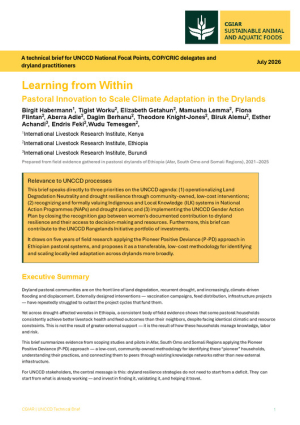
Status of livestock mobility in Kenya and Ethiopia: mapping livestock routes and case studies on mobility blockages

  • Said, Mohammed Yahya
SPARC French Deep-rooted causes of farmer-herder conflicts.pdf.jpg

Causes profondes des conflits entre agriculteurs et éleveurs et leur impact sur les systèmes alimentaires locaux. études de case au Soudan, au Nigeria and au Mali

  • Flintan, Fiona E.
SPARC_Status_mobility_livestock_Ethiopia.pdf.jpg

Status of mobility of livestock in Ethiopia: Mapping of livestock routes and case studies on mobility blockages

  • Said, Mohammed Yahya