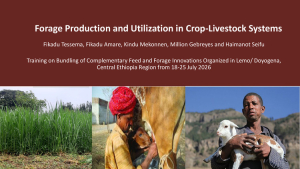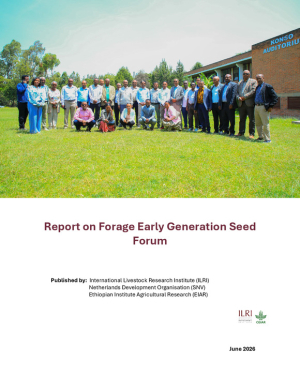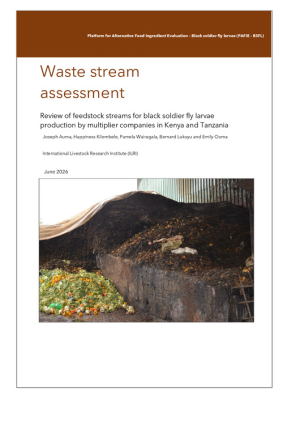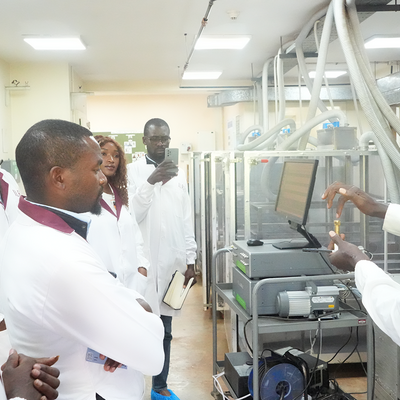
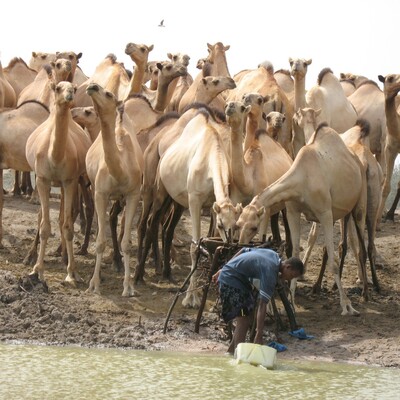
Dryland fodder production and utilization in Borana zone of Ethiopia
Abstract
Livestock plays an important role in the lives and livelihoods of pastoral communities across sub-Saharan Africa, serving as
a key source of nutrition for households and income and support for education. However, over recent decades its role has
been undermined by the impacts of climate change and rangeland degradation, leading to reduced quality and quantity of
feed availability and livestock losses. This study investigated current rangeland conditions, existing forage species and forage
production in Borana zone of Ethiopia, examining how these challenges impact the resilience of pastoral livelihoods to provide
recommendations to government and different actors related to fodder production and use. The study employed six gendersensitive
focus group discussions (FGDs) with purposefully selected participants from three different ecological zones within
Borana zone. The discussions were complemented with key informant interviews (KIIs) with development actors, government
and individual interviews with rangeland experts. This joint study by ILRI and Ayuda en Acción under the Resilience Building
Project in Borena to generate evidence on locally available dryland fodder resources, management practices and developed
a commercialization model to strengthen pastoralist resilience
Citation
Gobu, W., Malicha, W., Kone, D., Banerjee, R., Shikuku, K.M., Lepariyo, W. and Tadesse, E. 2025. Dryland fodder production and utilization in Borana zone of Ethiopia. Nairobi, Kenya: ILRI.
Authors
Related Publications
Effects of Thymus vulgaris, Euphorbia hirta, and Allium sativum as phytogenic feed additives on nutrient digestibility, gut microbiota, and performance of Kabir chickens in Cameroon