ILRI launches sustainable livestock recommendations and One Health investment briefs at FAO global conference
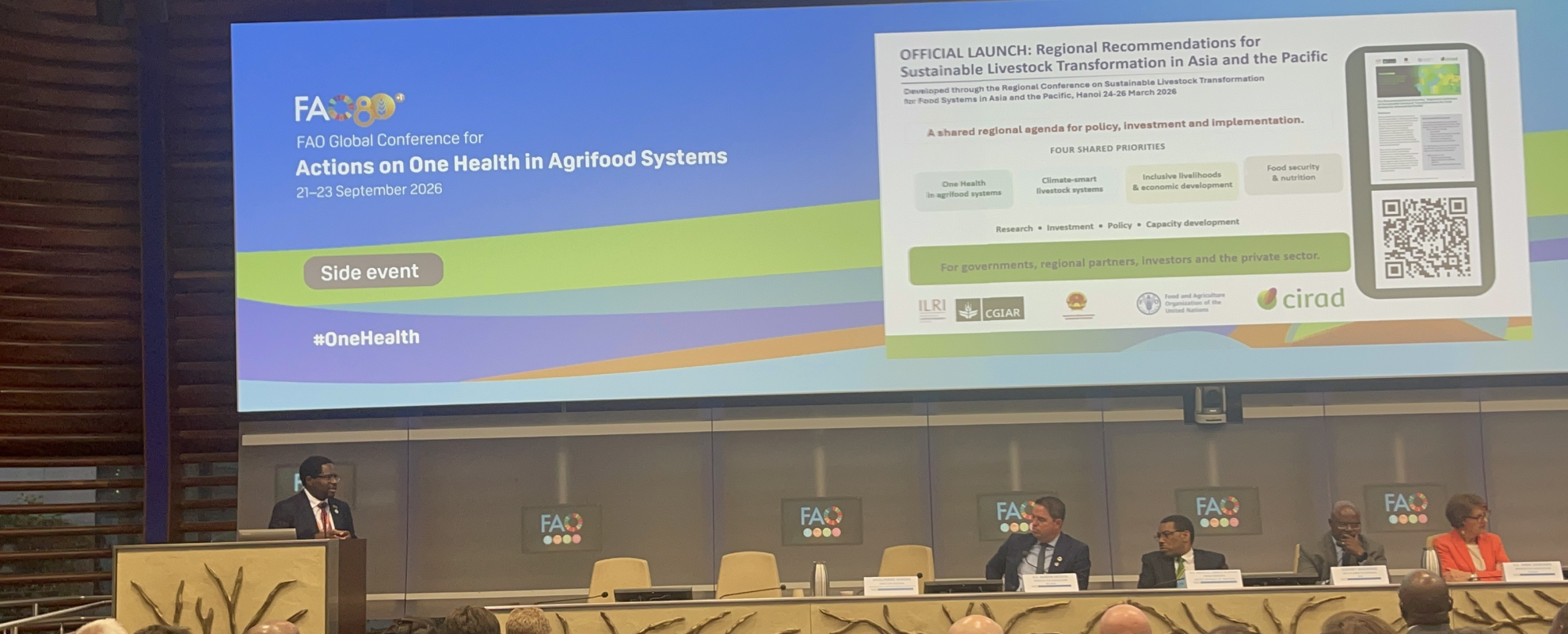
Rome, Italy, 21 September 2026 – The International Livestock Research Institute (ILRI) and partners have launched two complementary knowledge products designed to move evidence into policy, investment and practical action: regional recommendations for sustainable livestock transformation in Asia and the Pacific, and 10 CGIAR One Health solution and investment briefs drawing on decades of research and implementation experience.
ILRI director general Appolinaire Djikeng presented the new publications ––“Recommendations from the regional conference on sustainable livestock transformation for food systems in Asia and the Pacific” and a series of CGIAR One Health briefs––on behalf of the organizers: the Ministry of Agriculture and Environment of Viet Nam, ILRI, the Food and Agriculture Organization (FAO) and the French Agricultural Research Centre for International Development (CIRAD). Together, they offer practical guidance for translating research and evidence into action and investment.
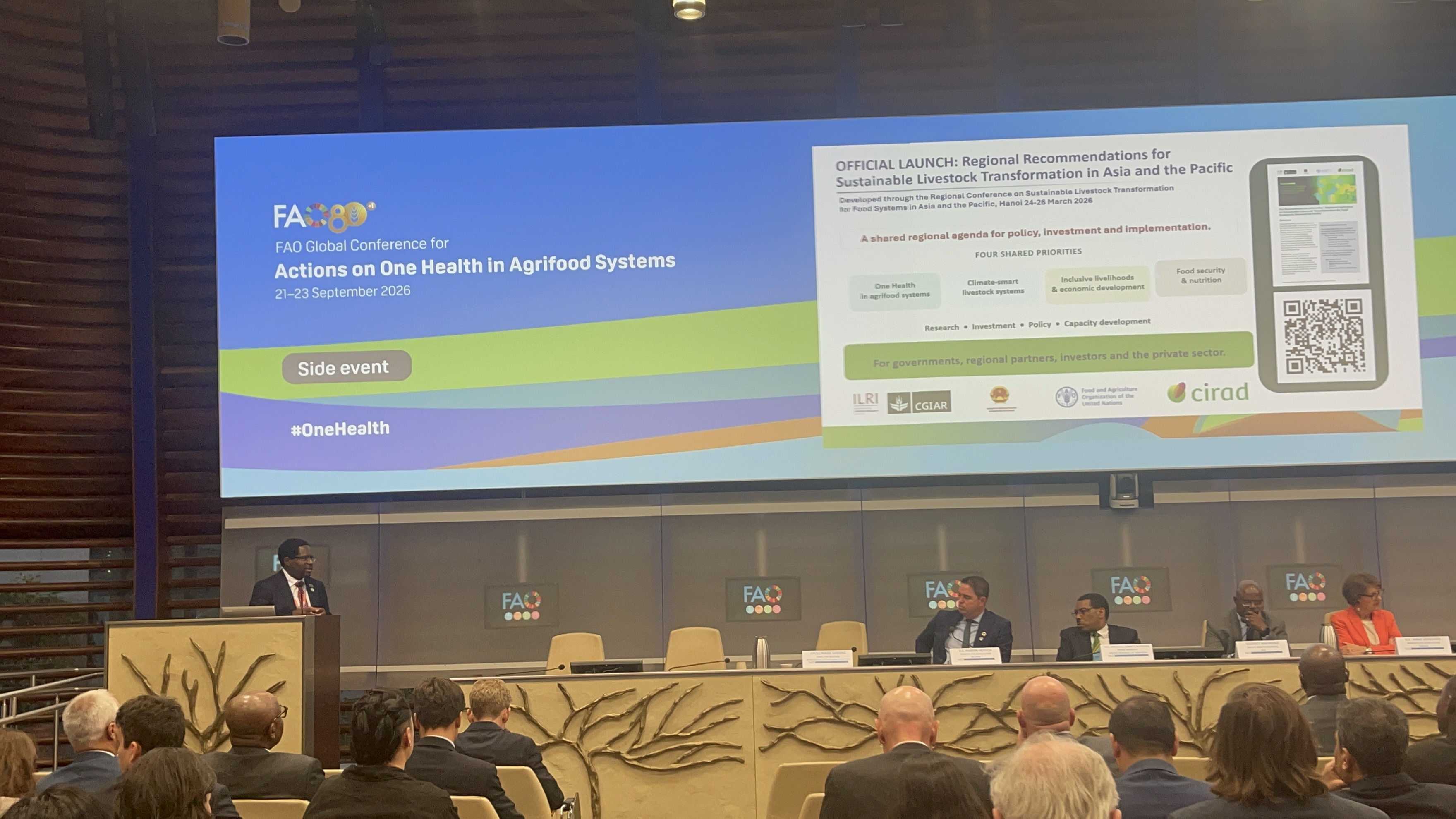
The launch comes as countries face increasingly interconnected pressures from food insecurity, climate change, zoonotic disease, antimicrobial resistance and environmental degradation. Both products focus on a common challenge: proven knowledge and innovations already exist, but stronger institutions, financing and coordination are needed to take them to scale.
Advancing resilience in Asia and the Pacific
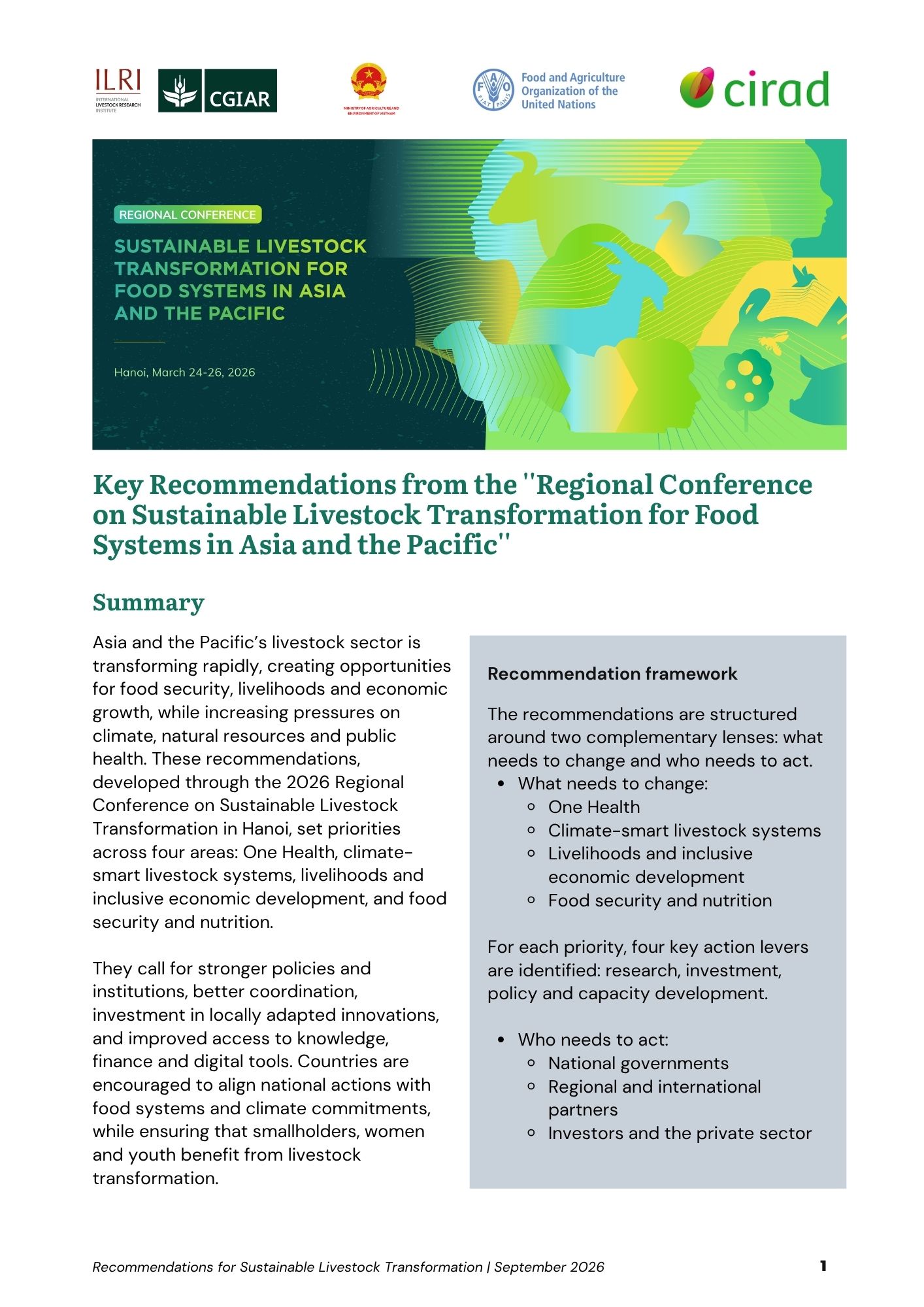
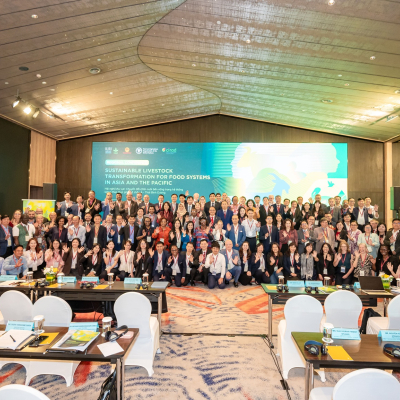
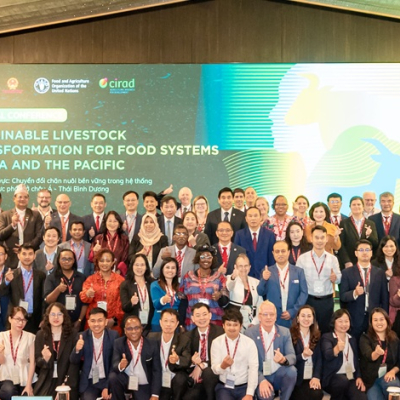
The recommendations emerged from the “Regional conference on sustainable livestock transformation for food systems in Asia and the Pacific”, convened in Hanoi, Viet Nam, in March 2026 by the Ministry of Agriculture and Environment, ILRI, FAO and CIRAD. Bringing together governments, research organizations, development partners, the private sector, producer organizations, and other stakeholders from across Asia and the Pacific, the conference identified priority actions to make livestock systems more sustainable, resilient, and inclusive.
The recommendations focus on four areas: One Health; climate-smart livestock systems; livelihoods and inclusive economic development; and food security and nutrition. They call for stronger coordination between research, policy, and investment; greater regional collaboration; and the scaling of proven innovations that respond to local needs.
Among the specific actions proposed are:
- Develop or update national plans of action for sustainable livestock transformation, aligned with national food systems strategies and climate commitments, with clear implementation roadmaps, responsibilities and monitoring systems.
- Establish stronger national coordination mechanisms that bring agriculture, health, environment, finance and planning authorities together, including national One Health committees and integrated surveillance and response systems.
- Mobilize public, private and blended finance for climate-smart livestock solutions, value-chain upgrading, food safety, animal health services and producer access to finance.
- Plan innovations as packages rather than stand-alone technologies—combining improved breeds, vaccines, feeds, food safety practices or digital tools with producer capacity, input supply, markets, finance, quality assurance and supportive policies.
- Strengthen regional cooperation and data and knowledge sharing, while ensuring that women, young people, smallholders and marginalized groups benefit from livestock transformation.
By launching the recommendations at a global forum, ILRI and its partners are helping bring regional experiences and priorities from Asia and the Pacific into international discussions on agrifood systems transformation. The recommendations therefore provide more than a summary of the Hanoi discussions. They offer a practical reference for governments developing national livestock transformation plans, regional organizations seeking greater policy coherence, and investors seeking clearer opportunities to support scalable livestock solutions.
Turning evidence into scalable solutions
Alongside the regional recommendations, Djikeng launched a series of CGIAR One Health solution and investment briefs. The collection brings together evidence and lessons from research and partnerships across Africa and Asia, with a focus on what has worked, what can be adapted to different settings and what governments and funders can invest in next.
- Governing One Health: Lessons on institutionalization from Asia and Africa
- Going further together: A scalable model for making One Health work in rural Africa
- Why One Health outcomes depend on participation, not just information
- One Health innovations for zoonotic disease control: Evidence from Africa and Asia
- Community education innovations for responsible antimicrobial use
- Tackling antimicrobial resistance in agrifood systems: From plans to practice
- Investing in people: A case for One Health capacity building
- The three-legged stool: A practical One Health framework for scaling food safety in informal slaughterhouses and markets
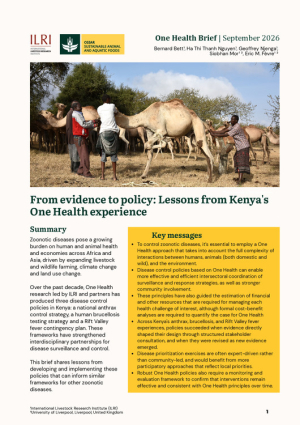
- From evidence to policy: Lessons from Kenya’s One Health experience
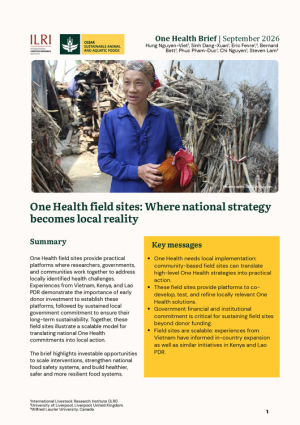
- One Health field sites: Where national strategy becomes local reality
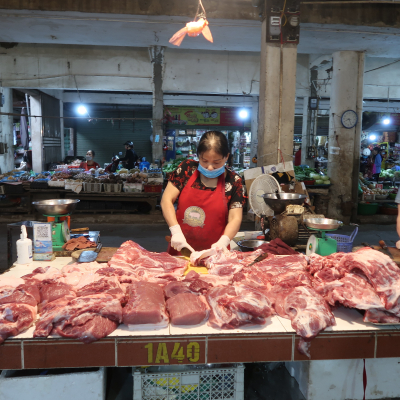
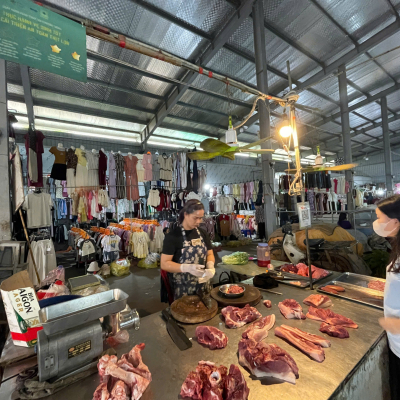
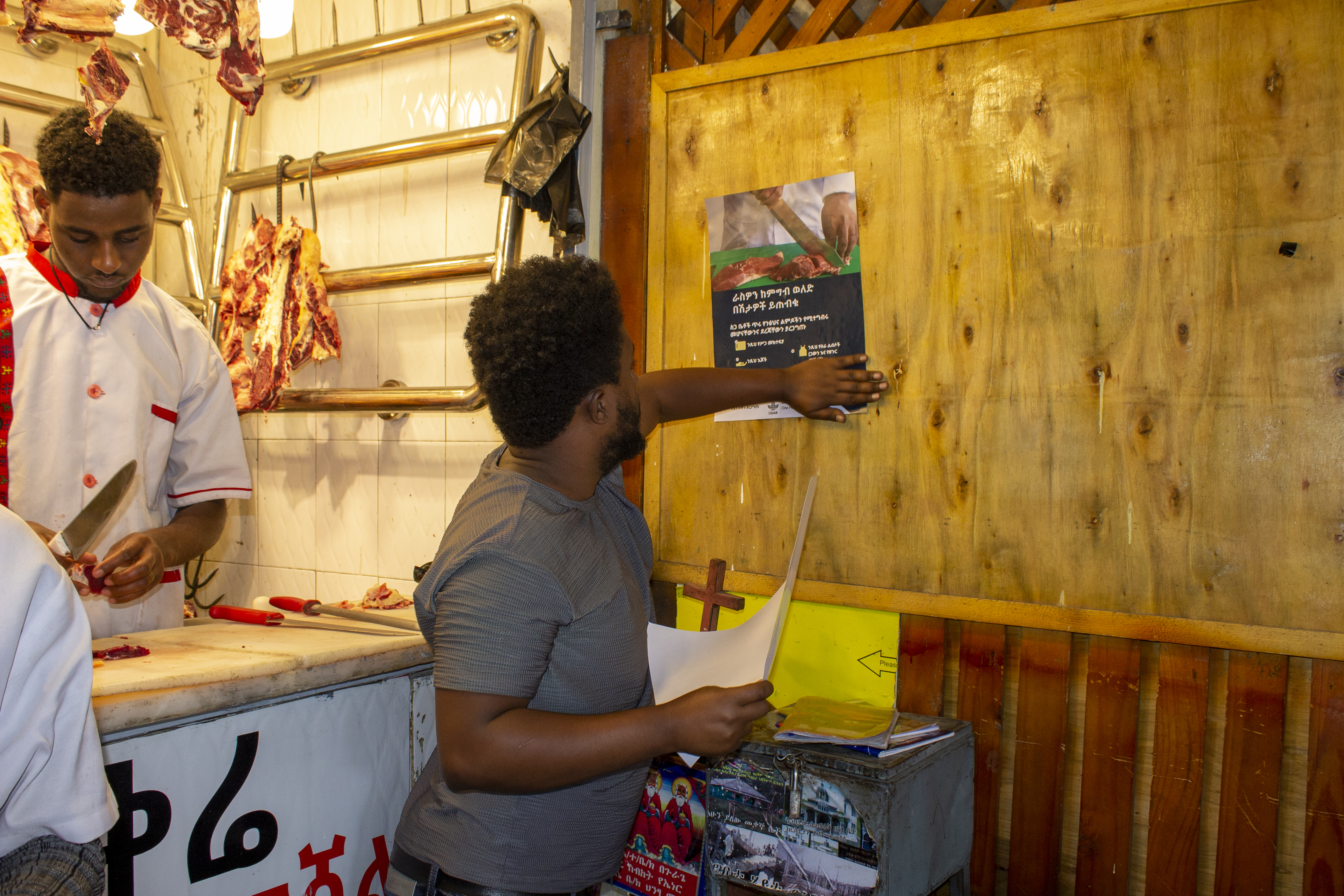
The briefs show, for example, that improving food safety in informal markets requires more than training alone. Evidence from CGIAR and partner work points to a “three-legged stool” that combines capacity and practical technologies, incentives for behaviour change, and an enabling policy and institutional environment. Evidence from work across countries including Cambodia, Ethiopia, India, Kenya and Viet Nam illustrates how combinations of capacity building, practical technologies, behaviour-change incentives and enabling institutions can improve food safety practices and support wider investment.
The governance brief similarly shows that One Health becomes sustainable when countries move beyond project-based coordination towards government-owned platforms with clear mandates, technical working groups, predictable financing and links between evidence and decision-making. Other briefs highlight community-governed One Health units, integrated field sites, workforce development, zoonotic disease innovations and practical approaches to antimicrobial resistance.
Together, the collection identifies investable opportunities such as multi-year support for national One Health platforms, integrated surveillance and local field sites; financing to scale proven food safety interventions; capacity development for multisectoral teams; stronger data and decision-support systems; and South–South learning to adapt successful approaches across countries.
Hung Nguyen-Viet, ILRI Regional Director for Asia and Lead for One Health in the CGIAR Sustainable Animal and Aquatic Foods Science Program, reflected after the conference that “One Health does not lack evidence. The challenge is turning evidence into decisions and decisions into action.”
What comes next
The next step is to use the publications as working tools rather than end products. For the Asia-Pacific livestock recommendations, this means supporting countries and partners to translate the regional priorities into national plans, implementation roadmaps, clearer institutional responsibilities and financing strategies, while strengthening regional alignment on shared issues such as transboundary disease, trade and climate-smart livestock systems.
For the One Health briefs, dissemination will continue through policy and investment engagement, country and regional dialogues. The aim is to help governments, development finance institutions, donors, research organizations and implementing partners identify proven approaches that can be adapted, financed and scaled.
Read the recommendations: https://hdl.handle.net/10568/185524
Explore the 10 CGIAR One Health briefs: ilri.org/onehealthbriefs