From slaughterhouses to markets: making pork safer in Vietnam
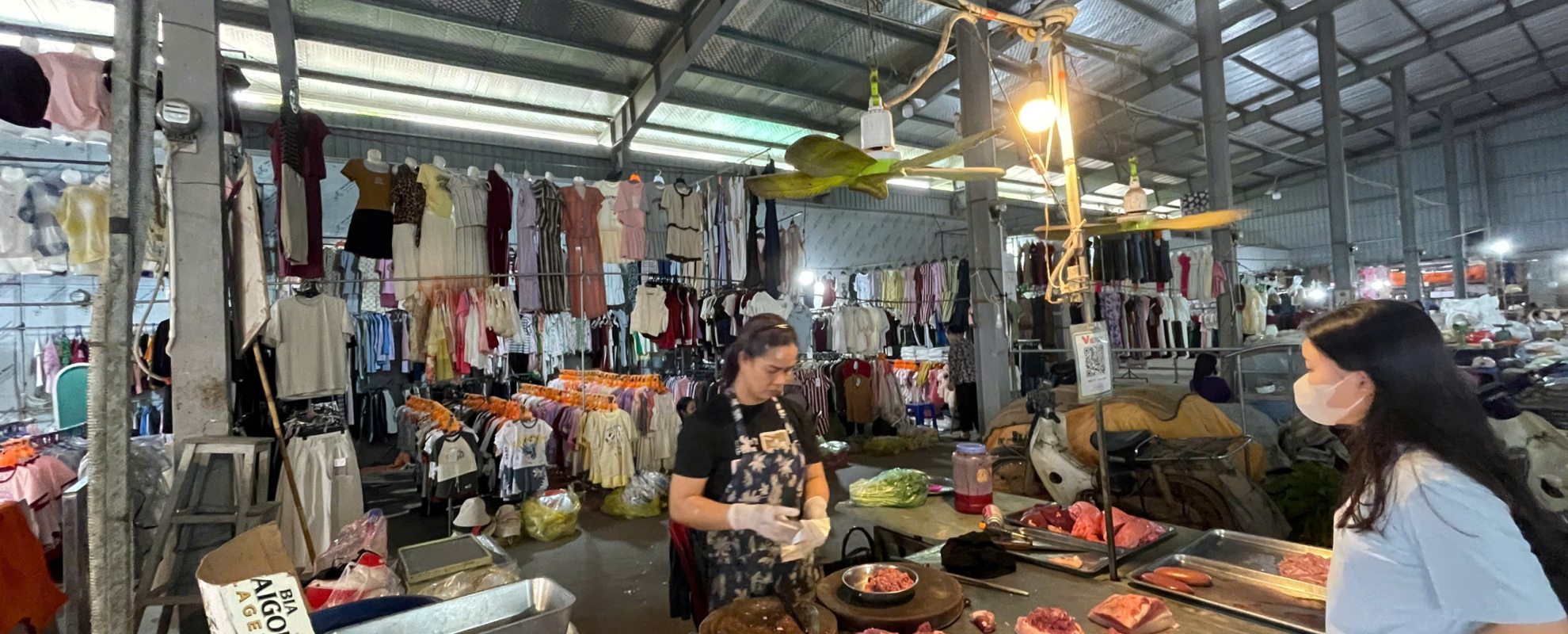
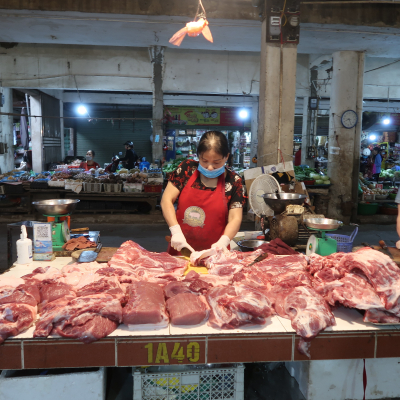
Early each morning at Kim Lan market in Hanoi, Dao Thi Duyen prepares her pork stall for the day. She cleans her cutting board, separates knives used for raw meat, and places fresh pork neatly on trays. These simple steps may seem routine — but they help reduce a risk that affects millions of Vietnamese consumers each year: bacteria contamination in fresh pork.
Just a few years ago, these practices were not a regular habit for Duyen.
“I have been selling pork in this market for more than ten years,” she said. “Before the training, I did things mostly based on experience. Now I understand much better how to keep meat safe for customers.”
Duyen is one of dozens of pork vendors who have adopted improved hygiene practices through a food safety initiative led by the International Livestock Research Institute (ILRI) and partners in Vietnam.
Together, these efforts aim to make pork safer—from slaughterhouses to traditional markets where millions of Vietnamese consumers buy their daily food.
Duyen's day usually starts at 4:30 a.m. She collects pork from a supplier three kilometers away and arrives at the market around 6 a.m., selling about 20–30 kilograms of pork each morning to regular customers from nearby villages.
After attending the ILRI training, she began changing several daily practices. She now separates knives used for meat and organs, keeps different products in separate trays and cleans tools regularly with soap.
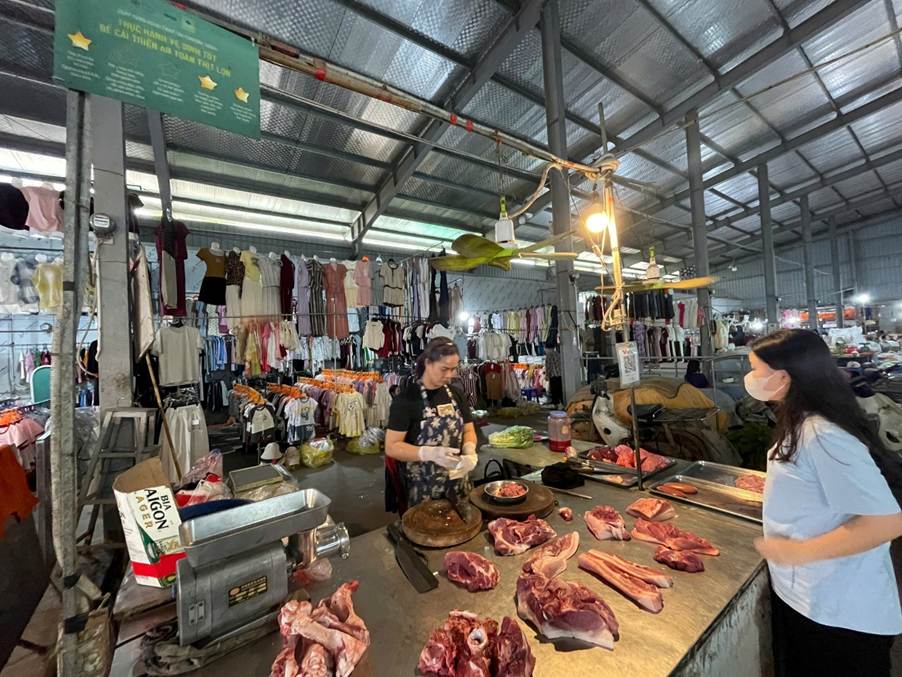
“These things help prevent contamination,” she explained. “Customers can see that the stall is clean. They trust the meat more.”
Maintaining hygiene in a traditional market can be challenging. Vendors work in crowded spaces and handle large quantities of meat during busy morning hours. “But once you understand why hygiene matters, you try to do it properly,” Duyen says.
She estimates that the number of customers at her stall has increased by about 10 percent since she started applying improved hygiene practices. “When people see that the meat is clean and well organized, they feel more confident buying from me,” she said.
A food safety challenge
Pork is the most widely consumed meat in Vietnam. On average, people eat around 30 kilograms of pork per person each year — one of the highest pork consumption rates in the world.
Most pork is sold through traditional markets, which are also the main source of fresh meat for households. Research by ILRI and partners has shown that contamination with bacteria such as Salmonella is common at various points along the pork value chain, from slaughterhouses to markets.
In some markets, half of pork samples may carry Salmonella, meaning that many consumers risk exposure to foodborne illness each year. Much of this contamination occurs during slaughtering and meat handling, where poor hygiene conditions can spread harmful bacteria.
In many traditional small slaughterhouses, pigs are killed and butchered directly on the ground. Contact with contaminated surfaces can increase the risk of people getting sick. To address this challenge, researchers introduced a simple intervention: a raised stainless-steel grid that keeps carcasses off the ground during slaughtering.
In Thai Nguyen province, slaughterhouse owner Vu Van Tien adopted this practice. Tien has been running this business for nearly ten years, and kills about five to seven pigs each day. Before the intervention, carcasses were often processed on the floor.
“Now we slaughter the pigs on a raised stainless-steel grid, he said. “When we wash the carcass, dirt and contaminants flow away instead of staying on the meat.”
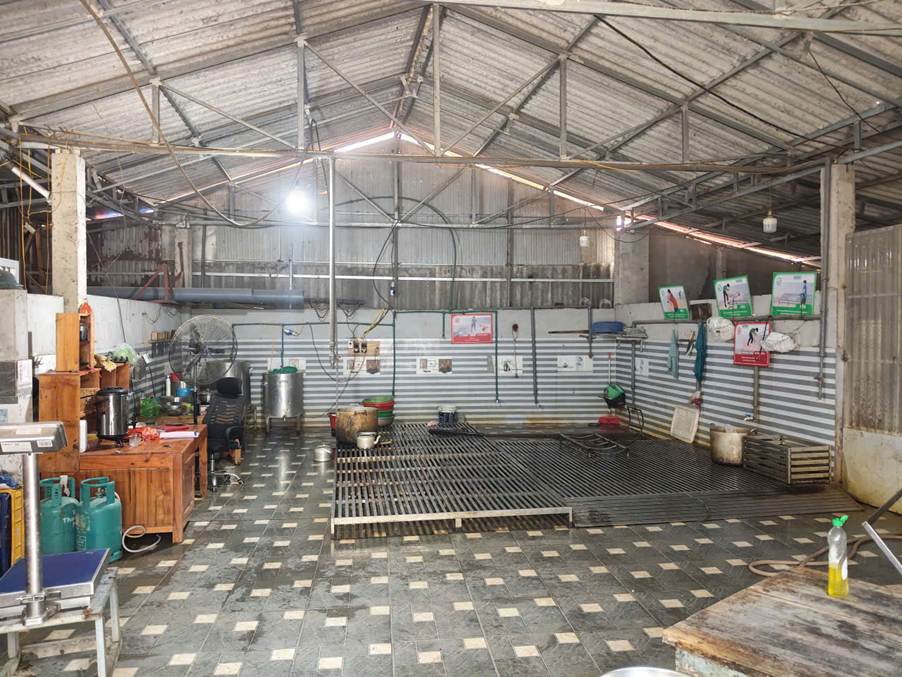
“At first it felt unfamiliar,” Tien recalled. “But after a few days, we realized how much cleaner it was. Now we cannot imagine working without it.”
The project initially paid for two grid panels — which cost 25 million Vietnam Dong (about USD 950) — but after seeing the benefits, Tien decided to expand the system himself with two more grid panels.
Improved hygiene has helped Tien attract new customers. “People say the slaughterhouse looks much cleaner now,” he said. “Some buyers prefer to purchase meat from here because they know the hygiene conditions are better.” Today, his slaughterhouse supplies pork to 24 schools in the district, in addition to local market vendors.
The initiative has also worked with pork vendors in traditional markets, where most consumers buy their meat. In many markets, vendors often display pork on cardboard or cloth surfaces, believing that these materials help absorb moisture, but such materials can increase contamination risks.
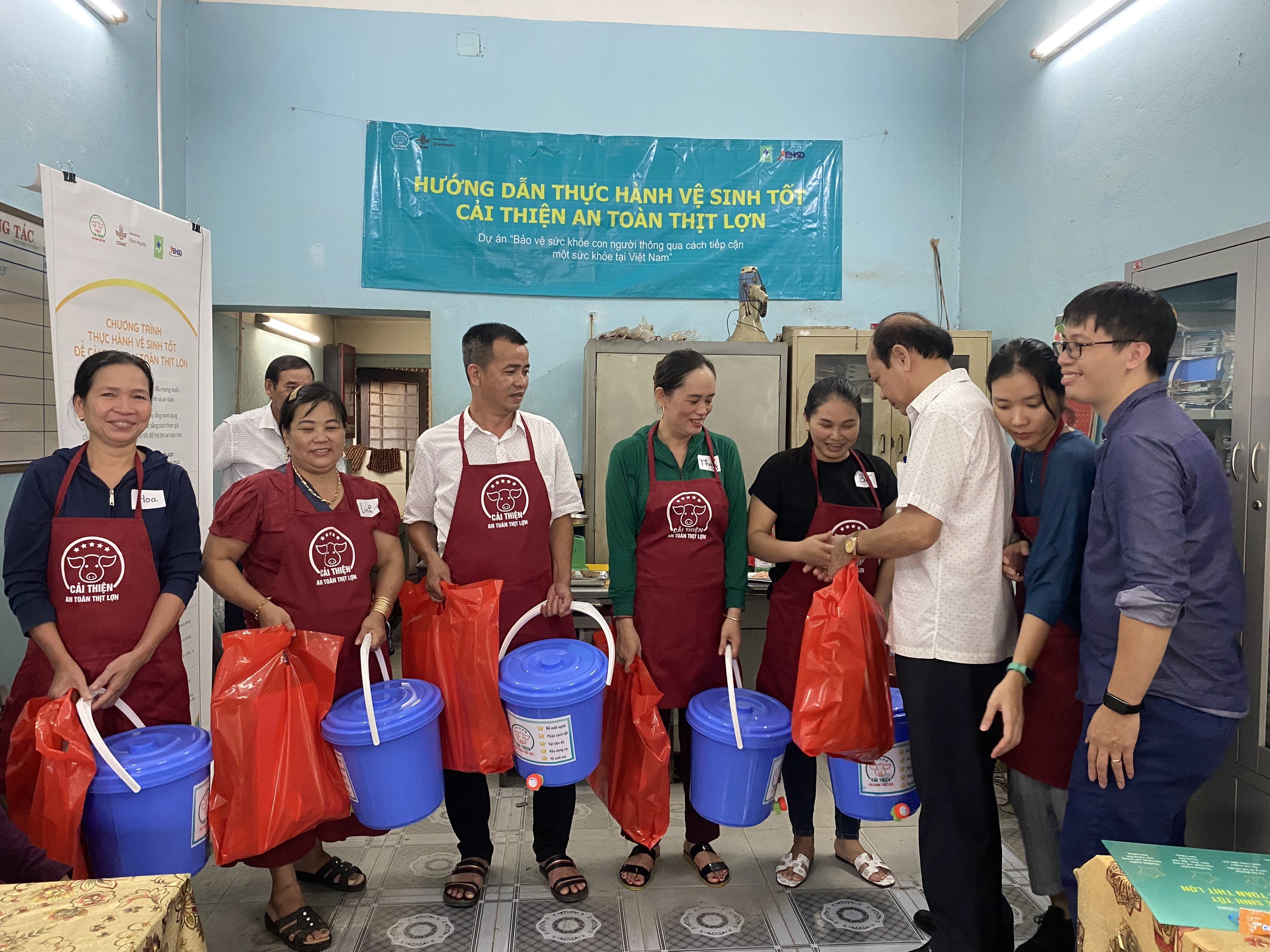
In Dien Bien and Son La provinces, 60 pork vendors across six markets received training and equipment to improve hygiene practices during meat handling and sale. Monitoring found that Salmonella contamination in pork dropped significantly: from 60% to 47% in Dien Bien and from 83% to 60% in Son La.
Scaling across the country
The hygiene interventions were first piloted between 2022 and 2024 under the CGIAR One Health Initiative, which tested improved practices in seven slaughterhouses across four provinces in Vietnam.
Building on these results, the approach is continuing under the CGIAR Sustainable Animal and Aquatic Foods (SAAF) science program, which works to improve food safety and nutrition across livestock and aquatic food systems. Today, 21 slaughterhouses in six provinces continue to apply improved hygienic practices, including the use of raised grids and better cleaning routines.
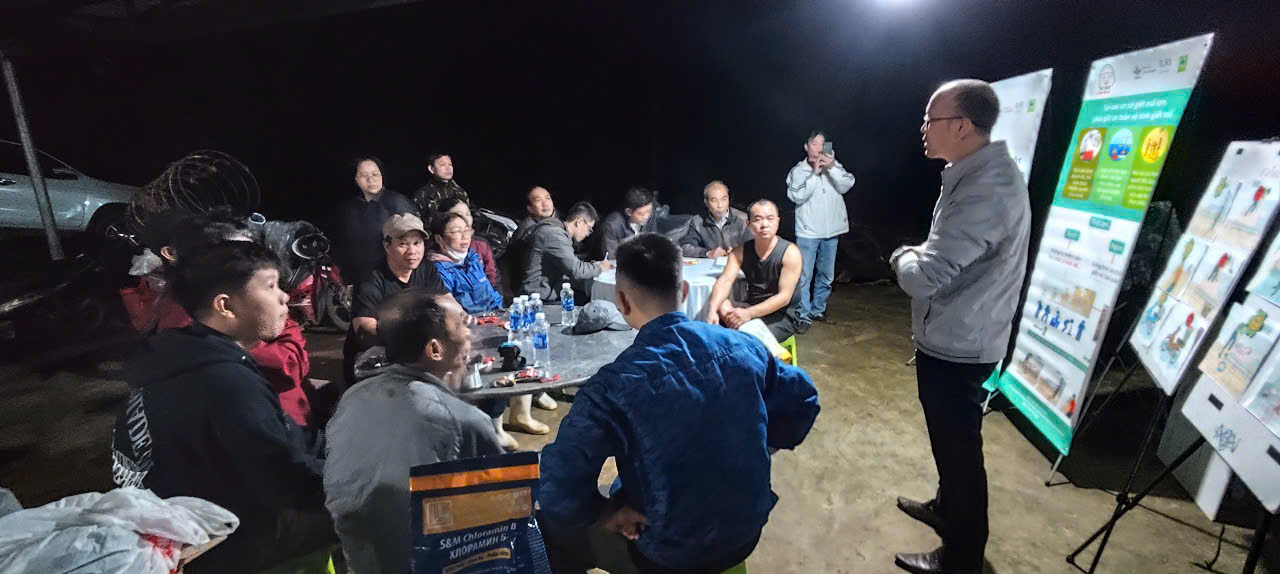
Importantly, the model is spreading beyond the original project areas. While the program’s core activities focus on five provinces in Vietnam (Hanoi, Thai Nguyen, Hue, Can Tho and Dong Nai), similar approaches have recently been adopted in Son La and Dien Bien provinces in the northwest of Vietnam.
Another sign of success is that these practices are also being adopted by local authorities.
In Hue, the local government has incorporated the hygiene intervention package into its routine slaughterhouse supervision activities. By 2025, 11 of the city’s slaughterhouses had adopted improved hygiene practices, and the province plans to expand the approach further through training and inspection programs.
Combining technical guidance with infrastructure improvements and government supervision has helped create sustainable change, said Ho Thi Hoa, Deputy Head of Community Veterinary Services in Hue.
“These interventions help improve both management capacity and hygiene practices,” she said. “They protect consumers and strengthen food safety in the pork supply chain.”
Read related stories:
SafePORK’s interventions have contributed to safer pork and food systems in Vietnam
New study confirms efficacy of low-cost interventions in reducing pork contamination in Vietnam
Investing in upgraded pork offers opportunity to improve food safety and incomes in Vietnam
Related Publications
Spatial and temporal risk mapping of human and porcine Taenia solium infections in Malawi: a systematic review and geostatistical approach
Determinants of food safety practices among Ethiopian households: a multilevel mixed effects linear regression analysis