SAAF workshop designs pathways to strengthen Tanzania’s poultry and dairy sub-sectors
The co-designing of a roadmap for Tanzania’s dairy and poultry subsectors was a key focus of a livestock experts workshop held in Moshi on 18–19 June 2025. Convened as part of the CGIAR Sustainable Animal and Aquatic Foods (SAAF) Science Program launch in the country, the event proposed steps to boost productivity and support inclusive livelihoods, thus ensuring a food-secure future.
SAAF is part of continuing efforts to implement the CGIAR 2030 Research and Innovation Strategy to transform food, land, and water systems in a climate crisis. It builds on the gains of the Sustainable Animal Productivity (SAPLING) Initiative, which focused on the dairy and poultry value chains, and was implemented from 2022–2024 in seven countries, including Tanzania.
From 2025–2030, SAAF will seek to do the following in Tanzania, with Tanga and Kilimanjaro as pilot regions:
- boost access to nutritious foods while reducing emissions and supporting inclusive livelihoods;
- combine diverse livestock and aquatic systems;
- create opportunities to address local challenges using integrated solutions tailored to specific contexts; and
- closely align itself with national efforts towards a more productive, competitive and sustainable livestock sector, as reflected in the working document.
Highlights of the inception meeting
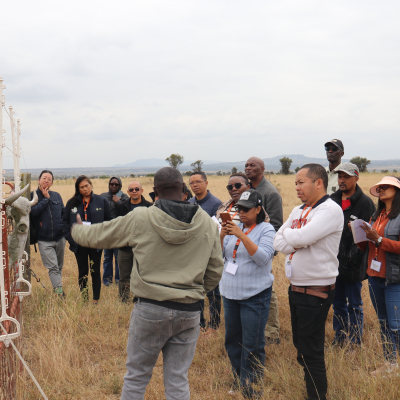
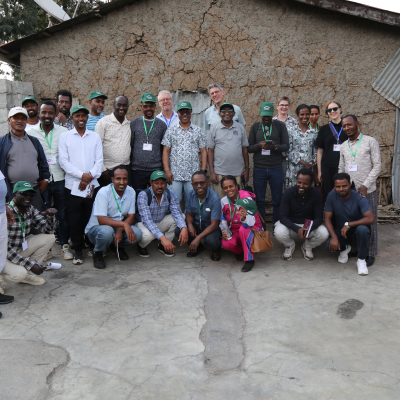
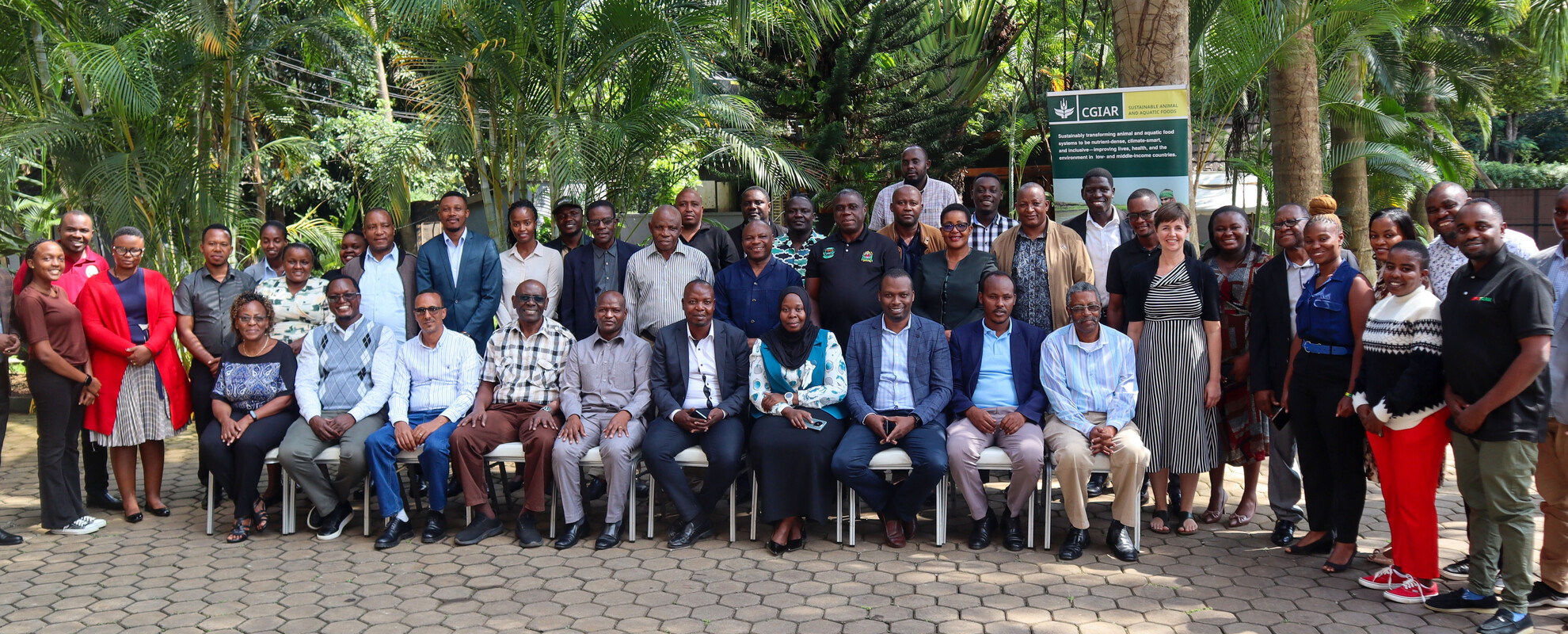
About 50 representatives from government agencies, research institutions, the private sector, financial institutions, and development partners attended the SAAF launch and workshop.
Jeremiah Sanka, speaking on behalf of Stephen Michael (director of production and marketing at the Ministry of Livestock and Fisheries), pointed out that SAAF’s focus on sustainable productivity and inclusive growth aligns with Tanzania’s vision for a resilient livestock sector as outlined in the livestock master plan.
“These concerted efforts will support citizens to grow the livestock sector, improve food security, and enhance livelihoods,” Sanka said.
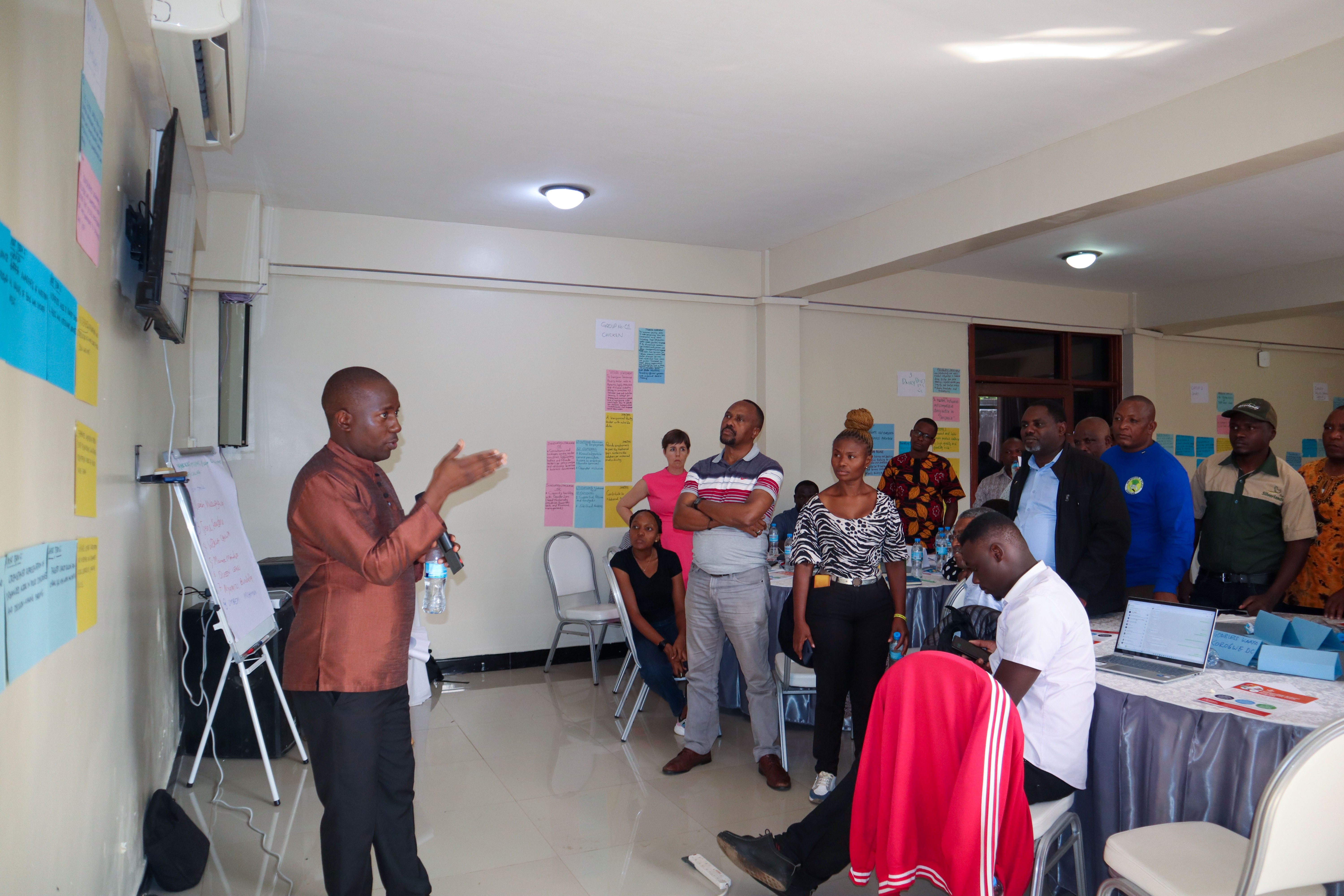
Through a series of keynote presentations and group sessions, participants began to co-create a theory of change for SAAF in Tanzania. This approach allowed stakeholders to articulate long- and short-term visions for the dairy and poultry sectors and identify innovation packages to drive transformation. These goals will guide monitoring, evaluation and learning across interventions in the two value chains.
Speaking on the theory of change, Amos Omore, the International Livestock Research Institute (ILRI) regional representative for eastern and southern Africa, emphasized the importance of understanding the root of the problem and bundling integrated innovative solutions or “innovation packages”. He called for the combining of technologies, business models, training, and enabling policies for collaborative and sustainable transformation of the dairy and poultry sub-sectors.
Workshop participants discussed five of SAAF's six core areas of work (AoWs) that will be applied to develop interventions for the dairy and poultry value chains in Tanzania:
- Productivity: Strengthening genetics, feeds/forages and animal health to increase yields.
- Climate and environment: Promoting climate-smart practices, improved manure management, and low-emission livestock systems.
- Market systems, policy solutions, and scaling: Addressing informal markets, high production costs, and weak producer-processor linkages while improving access to finance and market information.
- Gender, youth, and social inclusion: Expanding opportunities for women and young people through access to finance, training, and equitable business models.
- Digital and data solutions: Creating reliable livestock data systems and leveraging digital tools such as artificial intelligence and blockchain technology for extension, traceability, and market transparency.
Dairy value chain
Stakeholders identified the most significant problems facing Tanzania’s dairy sector as low productivity and weak market integration, driven by poor practices, limited access to finance and technology, gender inequities, and weak coordination. This is compounded by climate change and underdeveloped extension and market systems.
The desired long-term outcomes are more productive, resilient animals; a digitalized database for data-driven decisions; farmer adoption of climate-smart technologies; equitable benefits for women and youth; and stronger producer-processor linkages. On this basis, the following innovation packages were proposed:
- a community dairy enterprise package integrating improved technologies (including digital tools) for feeds and breeds with tailored and extension services, supported by business training and innovative financing solutions; and
- a national dairy policy and investment package focused on policy analysis and innovation to create an enabling environment for the uptake of climate smart technologies, leading to sustainable growth.
Poultry value chain
The major problems in the poultry sub-sector were noted as high production costs (feeds, genetics), disorganized markets, limited access to finance, business capacity, gender barriers, and weak policy support. Poor environmental management and inadequate data and digital systems create additional obstacles.
Stakeholders envisioned long-term outcomes such as a competitive sector supported by data-driven policies, sustainable practices for higher productivity, job creation, greater gender inclusion, organized value chain actors, and increased economic contribution. The derived innovation packages are:
- a community poultry enterprise package to build the skills and resilience of smallholder farmers and service providers through gender-responsive capacity building in husbandry, business, and financial management; and
- a national poultry policy and investment package to promote an enabling environment and stronger linkages between regulatory bodies and the private sector, thus enhancing sustainable growth and competitiveness.
The participants concluded with a consensus to maintain Tanga and Kilimanjaro as pilot regions, building on earlier investments from SAPLING and other initiatives. Future expansion to underserved regions such as the Southern Highlands and Southern Zone will be explored as resources allow.
In Tanzania, SAAF is being implemented by the International Livestock Research Institute (ILRI) in collaboration with the Alliance of Bioversity International and the International Center for Tropical Agriculture (ABC-CIAT), the International Center for Agricultural Research in the Dry Areas (ICARDA), WorldFish, and the International Food Policy Research Institute (IFPRI. The Tanzania Livestock Research Institute (TALIRI) continues to be a key national partner in the implementation of CGIAR programs that focus on livestock research for development, including SAAF.