From field intervention to policy: food safety innovations becoming routine practices at pig slaughterhouses in Hue City, Vietnam
Sustained improvements in food safety often depend not on one-off interventions, but on whether local users and institutions continue to adapt and retain innovations after a project ends. Recent experience from Vietnam shows encouraging signs that simple, practical solutions when combined with government leadership can become embedded in daily practice and scaled up through official systems.
Daily use of intervention packages
Under the CGIAR One Health Initiative, an intervention was co-developed with the sub-departments of animal health (Sub-DAH) in four provinces/cities (Hanoi, Thai Nguyen, Hue, and Can Tho) in Vietnam to ensure technical relevance and institutional ownership from the outset. Between 2023 and 2024, seven traditional pig slaughterhouses across the four provinces received an intervention package consisting of:
- low-cost infrastructure upgrades such as stainless-steel grids to prevent floor slaughter, combined with hands-on training for workers on hygienic practices;
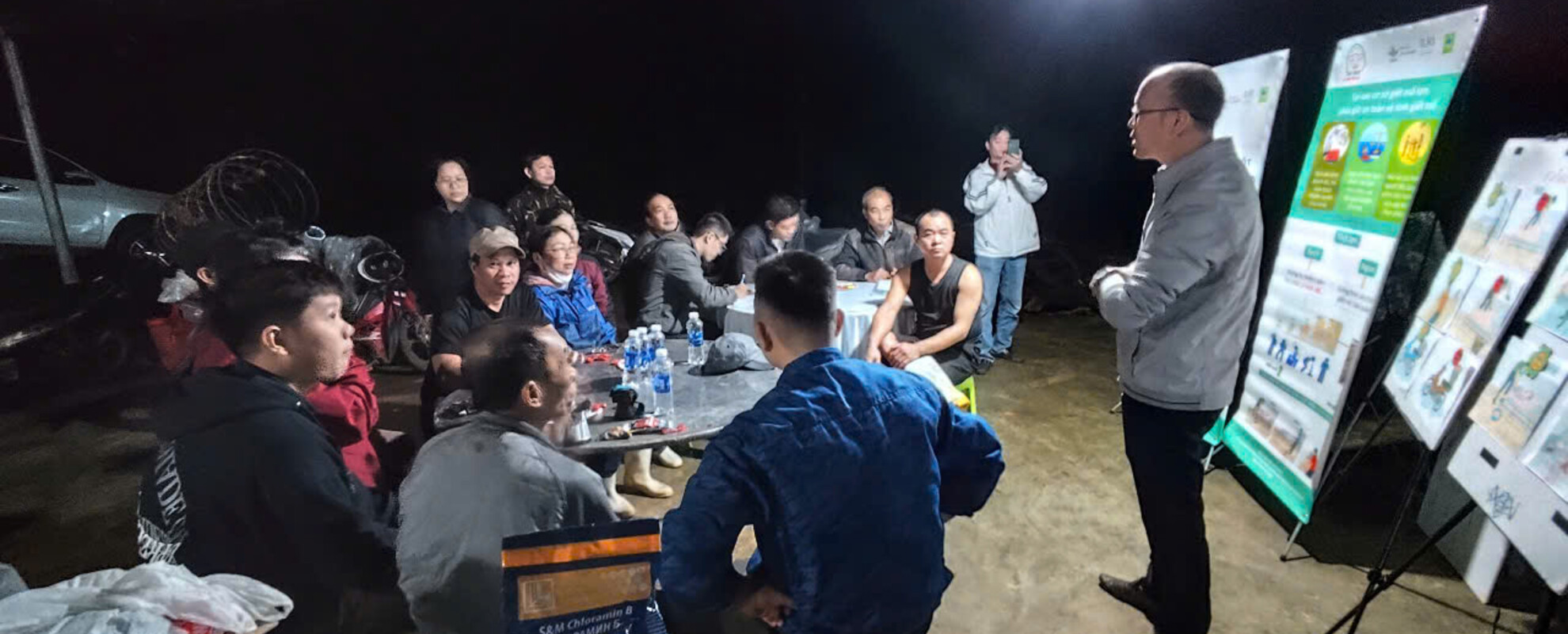
- creation of an enabling environment through engagement with local authorities and inclusion of slaughterhouse owners and workers in training activities; and
- behavioral nudges, including hygiene-promoting posters placed in operational areas to reinforce good practices.
During the transition to the CGIAR Sustainable Animal and Aquatic Foods (SAAF) program in 2025, collaboration with local authorities was maintained, including continued technical support to ensure the application of hygienic practices during daily slaughterhouse operations.
A 2025 review showed that workers continued to consistently slaughter animals on raised, easy-to-clean surfaces rather than on the floor, reducing contamination risks and improving overall cleanliness. This sustained use demonstrates that the intervention package was not only technically appropriate but also practical and acceptable to slaughterhouse operators, reinforcing the feasibility of long-term behavior change at the facility level.
Scaling up through government leadership
Building on these results, the Hue City Sub-Department of Animal Health (Sub-DAH) has incorporated the project’s innovation into its official working plan, including slaughterhouse management. A new provincial initiative entitled “Contribution to the provision of clean meat for consumers starting from slaughterhouses” has been developed, based on SAAF’s simple, risk-based intervention model.
“Combining technical guidance, infrastructure improvements, and strengthened government supervision helps raise slaughterhouse operators’ sense of responsibility, creating sustainable improvements in slaughter control and food safety assurance,” says Ho Thi Hoa, vice head of the city’s veterinary public health division.
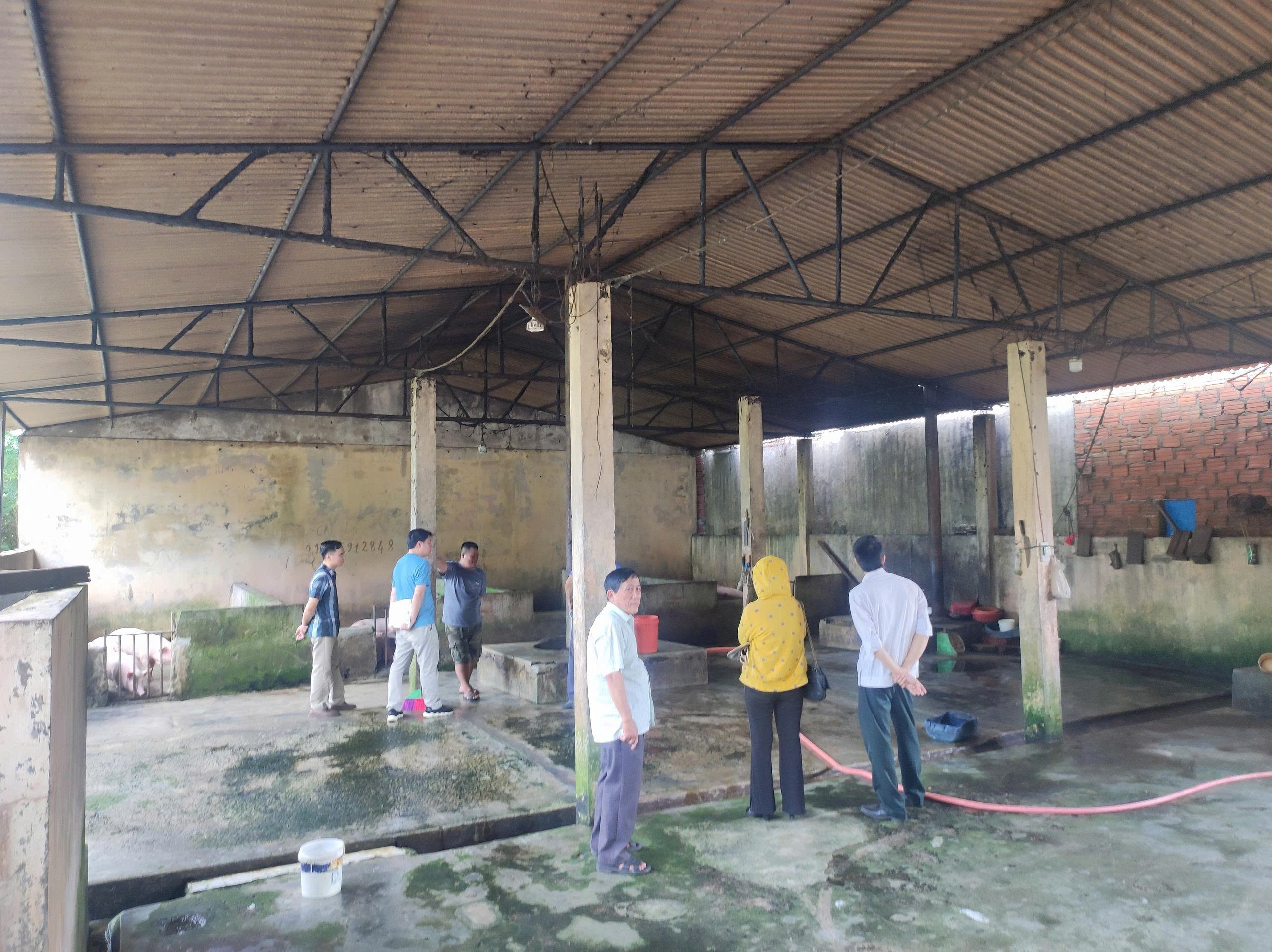
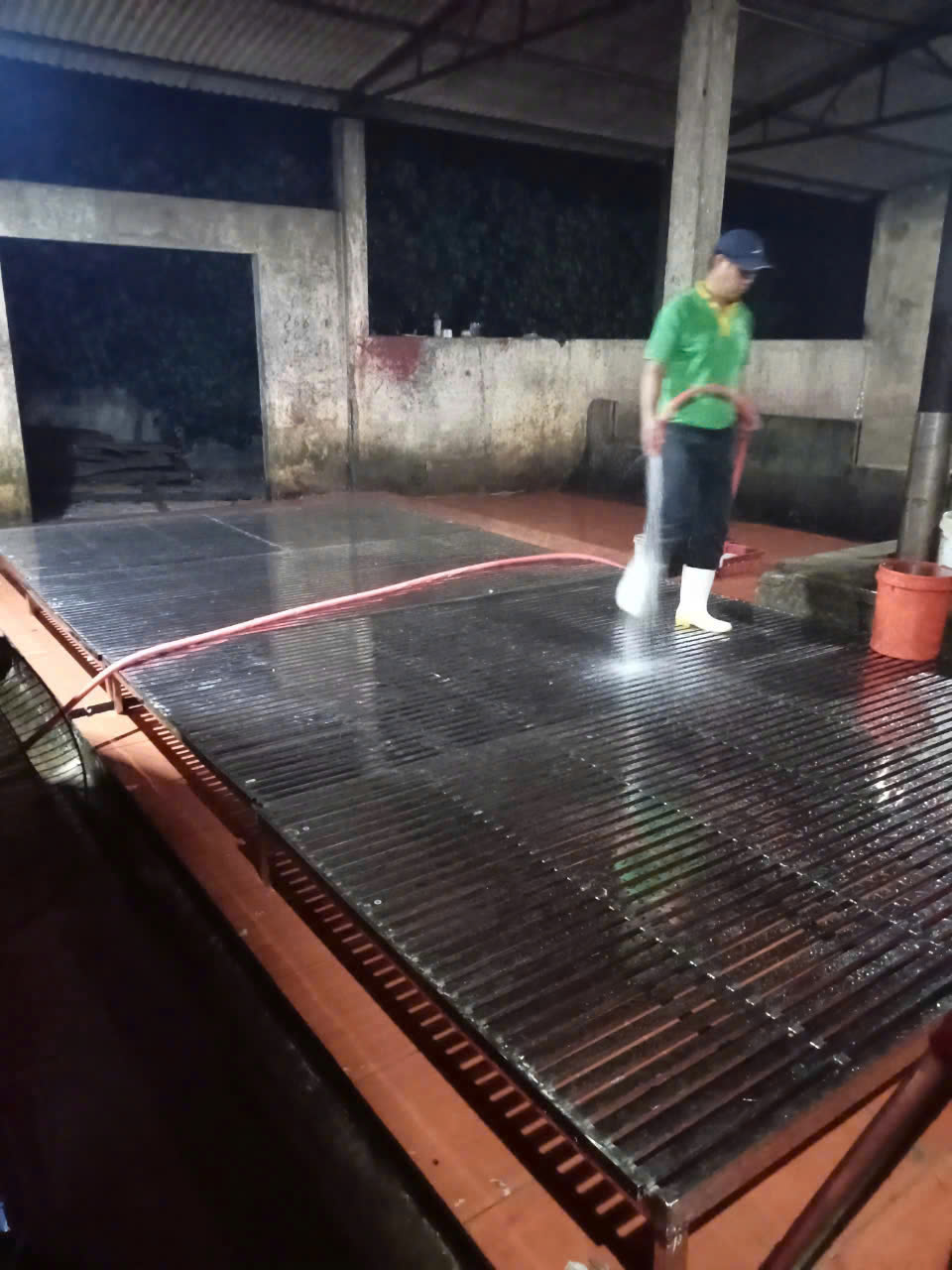
In 2025, 20 slaughterhouses in Hue City were equipped with waste treatment pits, reducing cross-contamination to carcasses and environmental pollution, and 13 of them installed tiled or stainless-steel slaughter platforms. The initiative has been identified as highly scalable, with potential application across all pig slaughterhouses in Hue City.
An expansion roadmap for 2026 aims to ensure veterinary hygiene and food safety inspections cover all 28 pig slaughterhouses citywide, that 100% of slaughterhouses meet regulatory standards for facilities, and that the proper quality of water is used in slaughter. Seven more slaughterhouses will be equipped with stainless-steel or other hygienic slaughter platforms equipment in early 2026.
“The initiative contributes to strengthening state management capacity in the veterinary sector, creating positive and coordinated improvements across the slaughterhouse system, and thus safeguarding the consumers’ right to access safe and clean food,” Hoa reported.
These experiences show how food safety innovations can move beyond pilot projects implemented in the field to become part of routine government practice. Sustained daily use of improved slaughter infrastructure, combined with formal adoption by provincial authorities in Thua Thien Hue demonstrates a shift toward locally owned and system-embedded solutions. As these approaches continue to be scaled through official plans, monitoring and inspection systems, they offer a practical pathway for strengthening food safety management, protecting consumers, and supporting safer pork value chains in Vietnam.
Read more about SAAF works:
New study confirms efficacy of low-cost interventions in reducing pork contamination in Vietnam
Strengthening zoonotic disease prevention in captive wildlife farming in Vietnam
Repositioning communal veterinarians in Vietnam’s changing animal health system

Related Publications
Prevalence, quantification, and household-level risk factors associated with Salmonella spp. infection in chickens in Boussouma commune, Burkina Faso