Community-based rangeland health (for One Health) on the edge of Kafue National Park in Zambia
Abstract
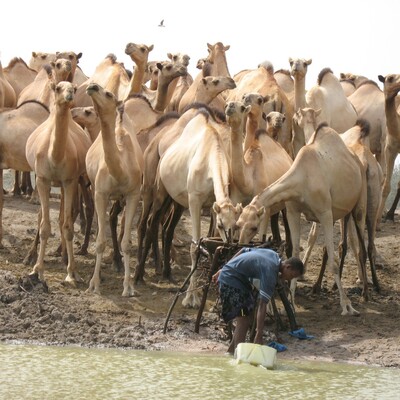
In the Kafue flats of Western Zambia, Ila and Tonga livelihoods are based on agro-pastoral practices centred on cattle production representing the basis for cultural, social, agricultural and economic practices. Up to four decades ago, herds were transhumant within a community, and movements were decided by traditional authorities. This system has gradually been lost due to various multifactorial changes. Epidemics among communal cattle herds (especially tick-borne diseases), a more individualistic lifestyle, and increasing pressure on natural resources caused by population and livestock growth have weakened community management. However, the current organization faces new challenges, including human-wildlife conflicts, declining grazing quality, anthropogenic fires in grazing areas, and conflicts over the use of grazing resources. Agro-pastoral farmers struggle facing these emerging and complex challenges on their own. Melindika is a French solidarity organization created in 2016 by two veterinarians. After initial engagement with Ila and Tonga communities, it became clear that key for the sustainability of the Kafue flats was the support to local livelihoods crafted in indigenous cultures and knowledge systems but facing multiple challenges. Interventions were to promote decent livelihoods embedded in a bio- and culturally diverse territory. Melindika initially used a community-based approach for improving animal health and nutrition through the development of local private veterinary services to move towards income-generating livestock farming that respects natural resources (i.e., rangeland and wildlife). Through a dedicated and long-term participatory approach, an observational attitude and a gradual understanding of the knowledge and practices surrounding the dynamics of local natural resources and the challenges associated with their multiple uses, it became clear that the farmers’ challenges were caused by the intertwining of social characteristics (management of natural resources by farmers) and the ecological characteristics of the social-ecological system (SES). It was hypothesized that a change in the grazing management system could promote the improvement of natural resources and animal production. In order to develop a coherent organization for herd management, Melindika relied on farmers and various stakeholders in the governance system to define the stages and actions of the project, based on the emergence of a communal vision of the territory and its resource dynamics and use. Finally, this joint effort, driven by a holistic One Health approach, has led to the development of grazing management committees (GMCs), integrated into local governance, which are working to implement long-term community actions by drawing up collective management rules.
Citation
Bichat, G., Dupon, L., Shandomo, F., Kasama, B., Delesalle, V. and Caron, A. 2026. Community-based rangeland health (for One Health) on the edge of Kafue National Park in Zambia. One Health Cases 2026 (2026): ohcs20260009.
Authors
Related Publications
Opportunities and challenges for countermeasures against Rift Valley fever virus: A quintessential One Health pathogen