mature
Livestock data platform unlocks dairy genetic gains for smallholder farmers
When dairy farmers and service providers can record, access, and share livestock data, they can better manage and breed their animals, resulting in higher milk yields.
Useful for
- Development programs and NGOs
- Extension services
- Farmers and livestock keepers
- Governments
- Private sector
- Researchers
What’s the challenge?
Smallholder dairy farmers account for more than 72% of milk production across Africa and Asia, yet productivity remains persistently low. One key reason is that farmers lack access to appropriate seedstock — high-performing breeding bulls whose genetics could significantly improve the productivity of local herds through artificial insemination.
The root cause is a near-total absence of national systems for animal identification, registration, and performance recording. Without consistent data on individual animals, there is no way to identify which bulls produce the best offspring under local conditions, no way to certify seedstock quality, and no way to verify whether artificial insemination services are delivering results. Therefore, private sector investment in dairy genetics stays limited, leaving farmers locked out of the potential genetic gains that could transform their livelihoods.
What’s the solution?
The Africa Asia Dairy Genetic Gains (AADGG) data platform, developed and led by the International Livestock Research Institute (ILRI), gives countries the digital infrastructure they need to run effective national dairy breeding programs.
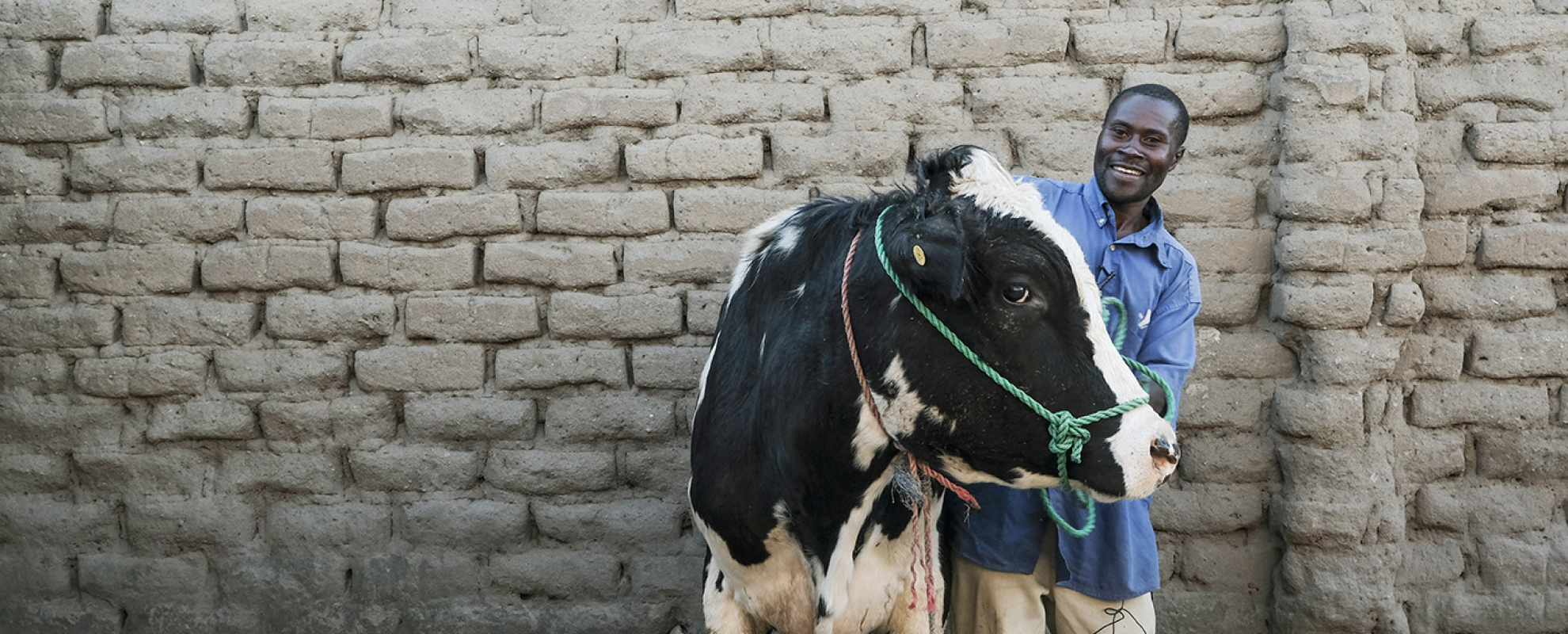
Launched in 2016, the platform combines online and offline data capture systems to identify and rank top-performing bulls and bull dams (cows that deliver high-performing bulls).
A mobile application allows data recorders, extension agents, and artificial insemination service providers to register farms and animals, record information on milk yields and the genetic makeup for each animal, and sync records to a central platform. The platform processes these records to generate evaluations, produce bull and cow catalogs, and feed practical guidance back to farmers and those across the dairy supply chain (processors, traders, retailers).
The platform is built to be adapted and has already been extended to dairy buffalo in Nepal. Countries can access a tailored version of the platform installed on their own servers, with training and technical support provided by ILRI.
Want to use this in your work?
Contact our experts

Contributors
- Centre for Tropical Livestock Genetics and Health (CTLGH)
- CGIAR Trust Fund (CGIAR)
- Gates Foundation (Gates Foundation)
- iCow / Green Dreams Technology, Kenya
- International Livestock Research Institute (ILRI)
- Kenya Agricultural and Livestock Research Organization (KALRO)
- Livestock Development Institute
- National Animal Genetic Resources Center, Uganda (NAGRC&DB)
- National Livestock Breeding Office, Nepal (NLBO)
- Natural Resources Institute Finland (MTT)
- Scottish Agricultural College, UK (SAC)
- Tanzania Livestock Research Institute (TALIRI) (TALIRI)
- Universität Hohenheim
- University of New England
What impact has been achieved so far?
Launched in Ethiopia and Tanzania, the AADGG platform has expanded to Kenya, Uganda, Nepal, Rwanda, Nigeria, Zambia, Burundi, Zimbabwe, and Botswana — with further countries under consideration. Its adoption by Nepal’s Ministry of Agriculture and Livestock Development for dairy buffalo recording marks a significant milestone in government-level uptake.
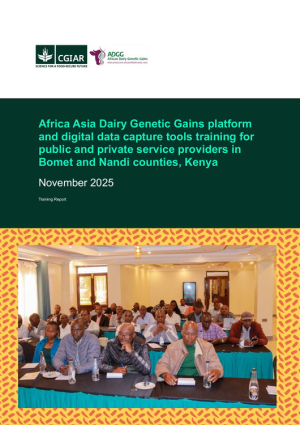
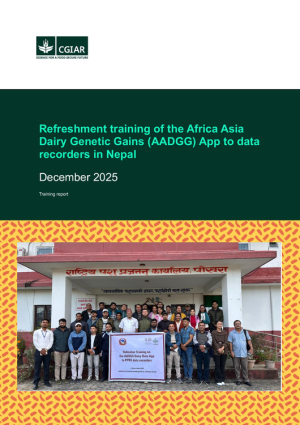
Training programs have been rolled out in Kenya, Nepal, Tanzania, Uganda, and Ethiopia, building the capacity of government extension staff, artificial insemination service providers, and data recorders.
Milk yields increased by
30–50%
for more than 250,000 farmers
and by more than 50%
for 80,000 of them
Who can use, support, and scale this solution?

Governments and national research organizations can adopt the AADGG platform to establish or strengthen national dairy breeding programs, using the platform’s data infrastructure to generate genomic evaluations, certify seedstock, and guide sector investment.

Extension services, artificial insemination service providers, and veterinary practitioners can use the AADGG mobile application to register farms and animals, record services and outputs, and feed data into the national platform — improving the quality of advice they give to farmers.

Farmers and livestock keepers benefit from platform-generated bull catalogs and farm feedback, enabling them to select superior genetics and make more informed herd management decisions.

Development programs, NGOs, and private sector actors can use the platform’s data summaries and analytics to inform investments, monitor progress, and support evidence-based dairy sector development.