mature
Toolbox helps control and eradicate goat and sheep plague
When veterinary services, policymakers, and other stakeholders have the right tools to understand and control goat and sheep plague — more widely known as peste des petits ruminants (PPR) — they can protect both livestock and livelihoods.
Useful for
- Development programs and NGOs
- Extension services
- Funders and investors
- Governments
- Researchers
What’s the challenge?
PPR is a highly contagious viral disease devastating herds of goats and sheep across Africa, Asia, and the Near and Middle East. It is one of the most economically damaging livestock diseases for communities that depend on small ruminants for food, income, and financial security, with annual global losses estimated at between USD 1.4 billion and USD 2.1 billion.
In 2015, the global community committed to eradicating PPR by 2030 through mass vaccination.
Yet, controlling PPR in highly affected settings is complex: it requires understanding local disease epidemiology, vaccination coverage gaps, socio-economic impacts across different household types, gender dynamics in livestock management, and the efficiency of vaccine supply chains. For all these areas, data has historically been scarce, unstandardized, and difficult to collect, which makes it very challenging to successfully tackle the disease.
What’s the solution?
To address these knowledge gaps, the International Livestock Research Institute (ILRI) developed the Epidemiology and Control of Peste des Petits Ruminants (ECo-PPR) toolbox. It is a suite of coordinated data collection tools that gives researchers, veterinary services, and policymakers the evidence they need to design and target effective PPR control programs.
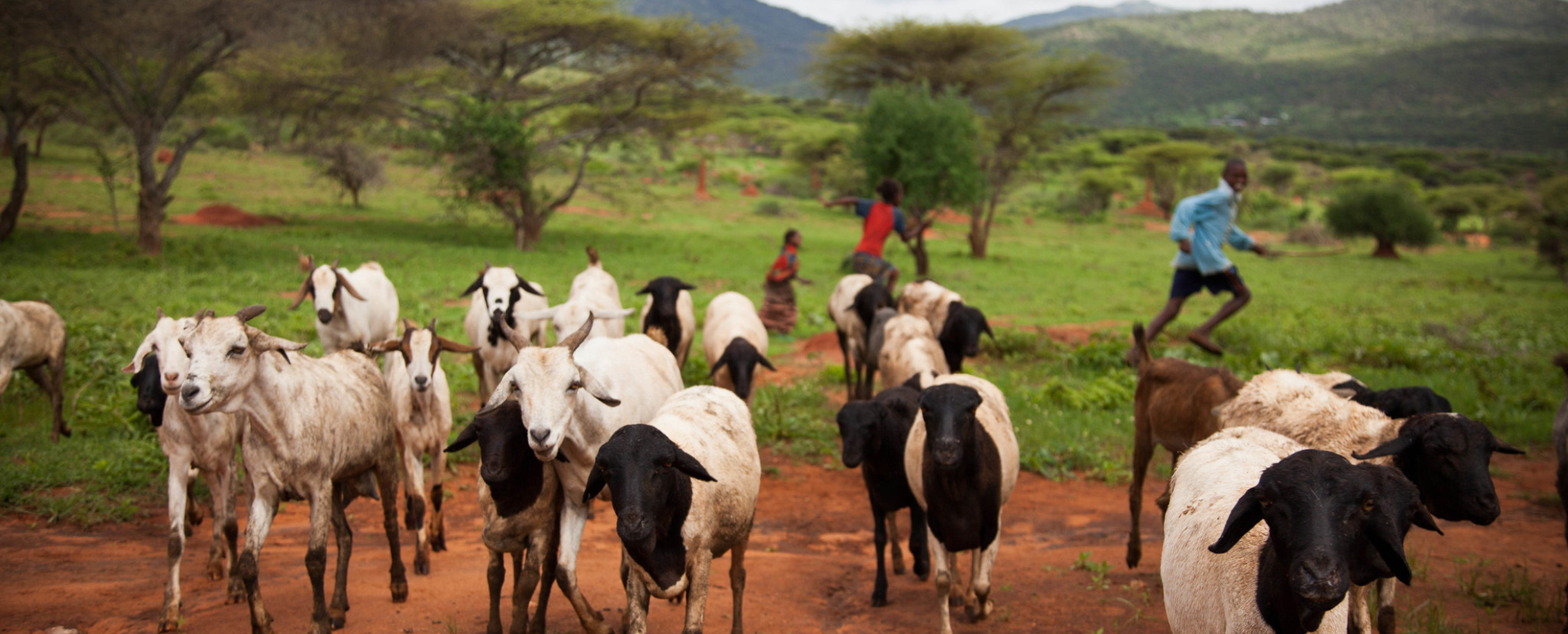
The toolbox brings together more than a dozen methods, covering disease epidemiology, socio-economic impact, gender analysis, vaccine delivery, and risk mapping.
Developed collaboratively with partners in East and West Africa and validated through field testing in six countries, the tools are designed to work together to build a comprehensive picture of PPR dynamics in a given country or region — identifying high-risk areas and entry points for evidence-based disease control.
Want to use this in your work?
Contact our experts

Contributors
- Centre de coopération internationale en recherche agronomique pour le développement (CIRAD)
- Centre International de Recherche-Développement sur l’Elevage en Zone Subhumide (CIRDES)
- CGIAR Trust Fund (CGIAR)
- European Union (EC)
- Government veterinary services of Senegal, Mali, Burkina Faso, Kenya, Tanzania, and Ethiopia
- International Livestock Research Institute (ILRI)
- Institut sénégalais de recherches agricoles (ISRA)
- Laboratoire Central Vétérinaire du Mali (LCV)
What impact has been achieved so far?
Across six countries in sub-Saharan Africa, stakeholders have used the ECo-PPR toolbox to better understand the impacts of, and potential interventions for, the control of PPR.
In Mali, ILRI and partners from the national veterinary services used the toolbox to assess PPR vaccine wastage across the supply chain, revealing a national wastage rate of around 25% that was primarily occurring at the point of delivery — findings that are now used to improve vaccination campaigns.
In Burkina Faso, the tools helped researchers identify high-risk areas for targeted interventions and estimate the costs of private versus public vaccine delivery channels — information that can guide policy and investment decisions on how best to allocate limited resources to control PPR.
In Senegal, the tools helped researchers generate evidence on the impacts of vaccination, understand farmers’ incentives for vaccine adoption, and identify the first emergence of PPR lineage IV virus — a strand of the disease that originally circulated only in Asia.
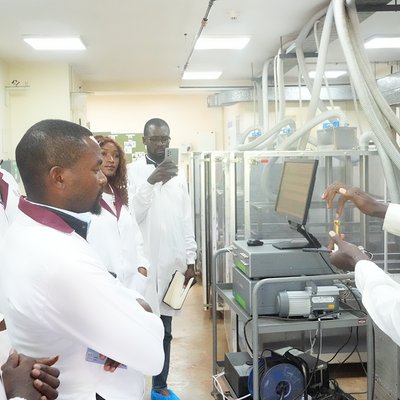
Training videos on how to use the ECo-PPR toolbox have been made available in both English and French.
Who can use, support, and scale this solution?

Veterinary services and animal health agencies can use the ECo-PPR toolbox to conduct standardized, evidence-based assessments of PPR epidemiology and vaccination programs in their countries, enabling them to allocate resources more effectively and target high-risk areas.

Research institutions and universities can use the toolbox to generate gender-disaggregated data on the socio-economic impact of PPR and to model the potential impact of different control scenarios.

Development programs, NGOs, and funders can use findings generated by the toolbox to design more effective, gender-responsive PPR control interventions and to make the case for investment in small ruminant health.


