mature
Tool measures women’s empowerment in livestock programs to improve interventions
When programs can reliably measure women’s empowerment, they can design livestock interventions that genuinely contribute to furthering women’s opportunities and lives.
Useful for
- Development programs and NGOs
- Extension services
- Farmers and livestock keepers
- Funders and investors
- Governments
- Private sector
What’s the challenge?
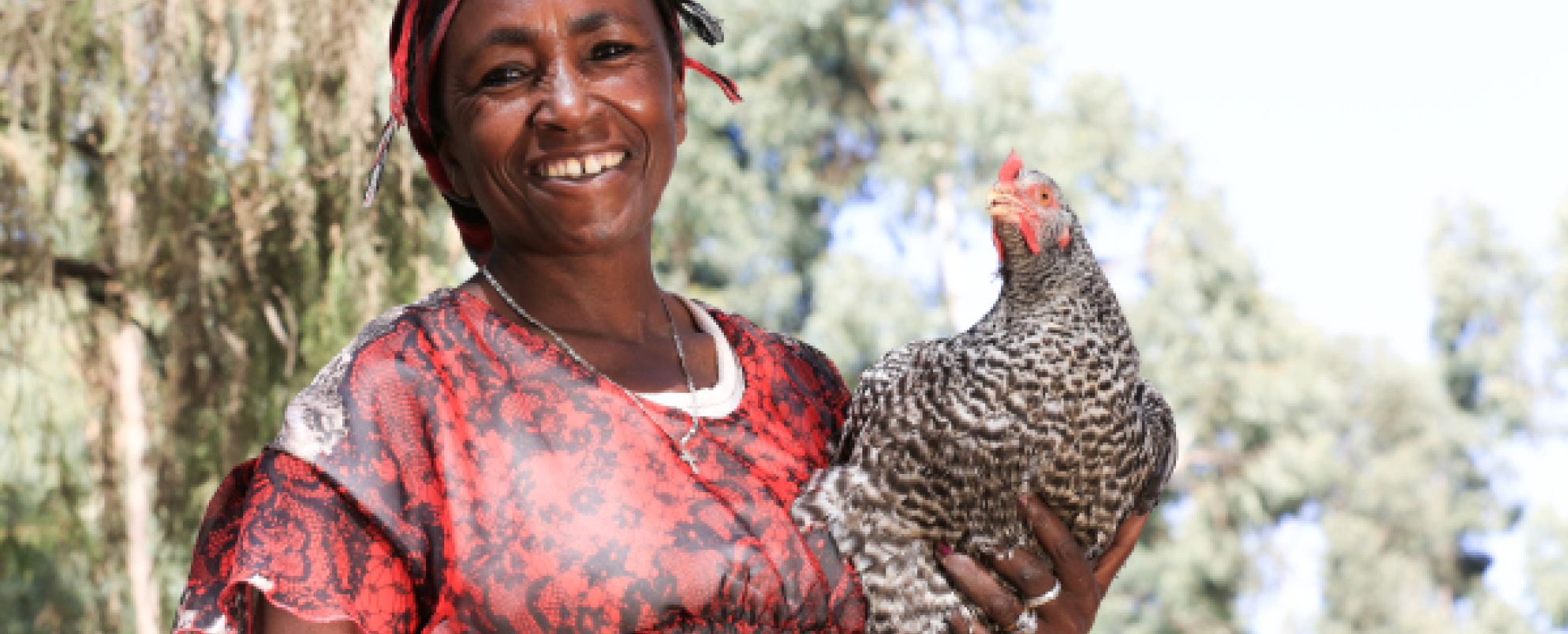
Women make up the majority of the world’s 600 million poor livestock keepers. They often raise smaller animals such as chickens to supplement their family’s diet and income.
However, many livestock development programs that aim to improve livestock systems fail to account for the multiple social, economic, and technical barriers that determine how women can participate in and benefit from these systems.
As a result, well-intended development programs might inadvertently cause women to lose control over the very livestock assets traditionally under their domain — as men, for example, often take over ownership once a livestock activity becomes a significant income source. Or, they may only reach women, without benefiting or empowering them.
A reliable, accepted tool to measure women’s empowerment in livestock contexts enables development programs to assess, measure, and anticipate how their interventions influence women’s empowerment. The resulting data makes it possible to determine which interventions work, compare results across programs, and make the case for more gender-equitable approaches.
What’s the solution?
In 2015, the International Livestock Research Institute (ILRI) collaborated with Emory University to develop the Women’s Empowerment in Livestock Index (WELI), building on the Women’s Empowerment in Agriculture Index developed earlier by the International Food Policy Research Institute.
The WELI gives programs a practical framework (both qualitative and quantitative) to assess how livestock interventions influence women’s empowerment across three domains of agency: intrinsic, instrumental, and collective. It focuses on key areas of livestock production — animal health, breeding, and feeding — and on how women use and benefit from livestock products, through food processing and marketing.
A companion tool, the Women’s Empowerment in Livestock Business Index (WELBI), extends this framework to women in livestock enterprises. Both tools enable program designers to identify sources of disempowerment and adapt interventions accordingly.


What impact has been achieved so far?
Since its development, the WELI has been adopted by a wide range of institutions, establishing itself as a standard tool in gender-sensitive livestock programming. Wide adoption of the tool demonstrates its relevance across both research and commercial contexts. Evidence from WELI applications has informed program redesign, helping practitioners shift from accommodative to transformative approaches to gender equity.
The WELI tool has been adopted in multiple countries and by multiple organizations including Mercy Corps, Vétérinaires Sans Frontières, UN Women, Food and Agriculture Organization of the UN, several universities, CARE, and Zoetis, the world’s largest global animal health company.
Who can use, support, and scale this solution?

Development programs, NGOs, and research institutions can use the WELI and WELBI to measure and track changes in women’s empowerment resulting from livestock interventions, enabling evidence-based program design and adaptation.

Agricultural extension services and government agencies can apply the WELI to identify sources of disempowerment among women livestock keepers and tailor programs to address root causes of gender inequality.

Private sector actors and funders can use the tools to assess the gender impacts of their investments in livestock value chains and demonstrate accountability to gender-equity commitments.

Researchers can use and adapt the WELI and WELBI as standardized measurement frameworks to generate comparable evidence on women’s empowerment across livestock systems and geographies.