When policy meets pasture: Farmers and scientists joining forces to shape a fair climate future
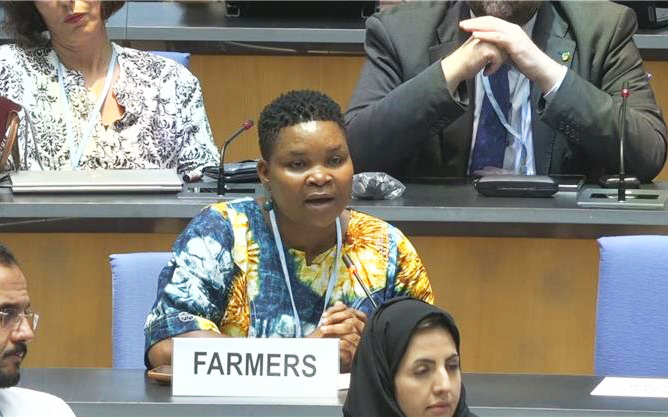
In a bright blue and yellow African dress, Elizabeth Nsimadala stood out among the dark suits as she spoke at a UNFCCC workshop on agriculture and food security at the annual June 2025 climate talks in Bonn, Germany.
And her message got attention, too.
‘As farmers, we are ambitious agents of change,’ says Nsimadala, a Ugandan smallholder farmer and the President of the Eastern Africa Farmers Federation. ‘Not just observers—but key players in the design and delivery of effective climate action in the agriculture sector. Across the globe, the climate crisis is not a distant concern, it is our daily reality.’
She called for access to finance and technology for smallholders, as well as a mindset shift from both the negotiators in the room and the wider public outside. ‘Farmers must be seen as co-creators, implementers, and innovators of solutions—not recipients of top-down solutions... We call on the international community to partner with farmer organisations and co-operatives.’
‘We are ready.’
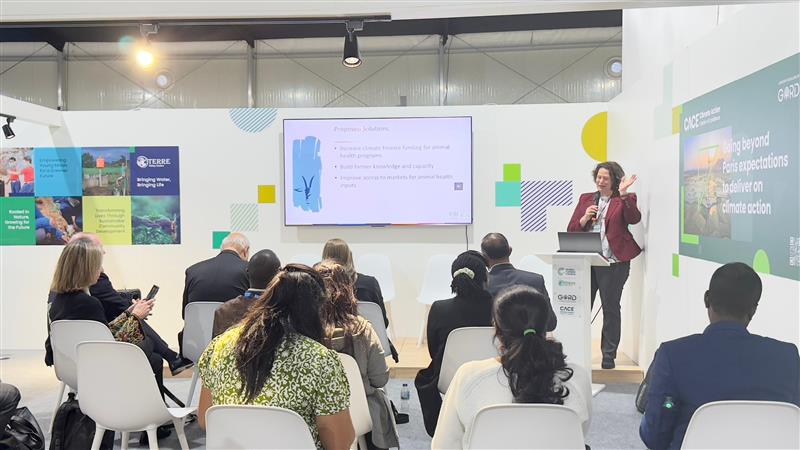
Farmers and livestock-keepers from the Global South must have a voice in global climate policy, says Laura Cramer from the International Livestock Research Institute (ILRI), which supported Nsimadala to attend the UNFCCC’s Subsidiary Bodies 62nd meetings in Bonn, including events like this workshop—the first under the Sharm el Sheikh Joint Work on Implementation of Climate Action on Agriculture and Food Security.
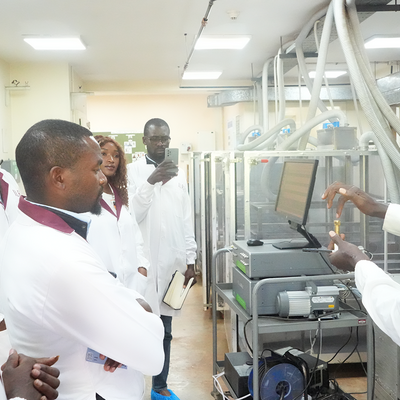
ILRI’s scientists are well-connected both in remote rural communities and among global decision-makers, Cramer says, meaning they can play a unique role in connecting these worlds, and influencing global climate policy.
‘As much as farmers are organised, they're not always able to participate in spaces like this. But as ILRI, we can either help to bring them to speak for themselves, or we can be in these conversations and showcase the importance of livestock for them.’
Shifting the narrative
At the most basic level, ILRI works on climate policy engagement because there’s still a lack of nuance in the way livestock issues are discussed in global climate fora, media and academic literature.
‘For many years, livestock were demonised as contributing too much to climate change,’ says Cramer. ‘There are still vegan activists promoting plant-based diets for everyone as a way to save the environment.’
That’s simplistic in a number of ways—a point Cramer and her colleagues take to international climate negotiations and other global meetings.
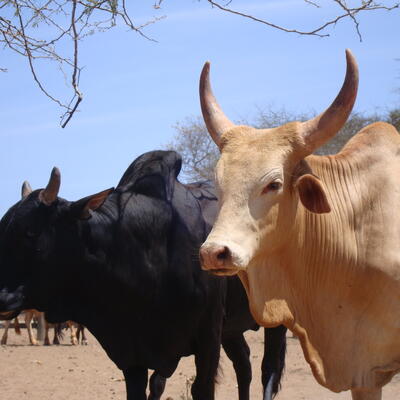
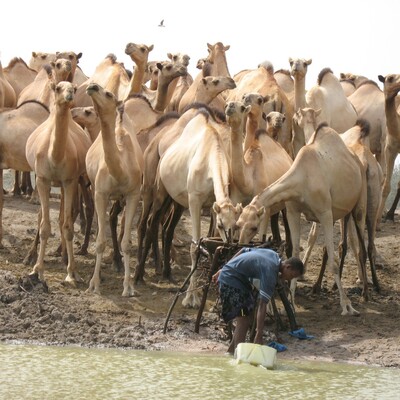
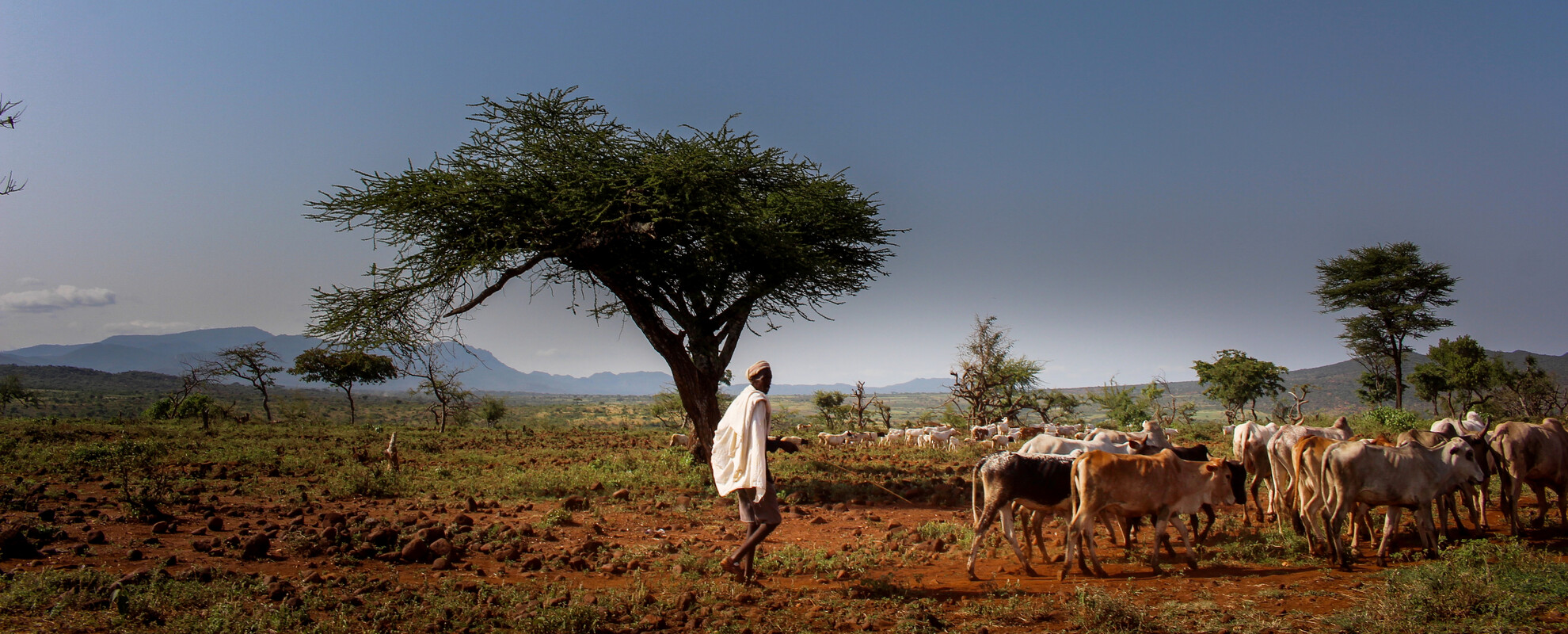
Firstly, context matters. Livestock farming in many places is nothing like the industrial systems in parts of the Global North. In much of Africa, livestock plough fields, contribute fertiliser for crops in the form of manure, keep grasslands healthy by grazing vegetation and spreading seeds, act as a last-resort insurance policy during times of stress, and confer social status and cultural meaning.
‘We can't get rid of livestock,’ says Cramer. ‘This is not an option for hundreds of millions of people in the Global South…It's like asking somebody from Europe to give up their bank account—because for pastoralists, animals are where their wealth is.’
It’s also inequitable. Yes, there will be an increase in meat consumption in developing countries this century, even as developed countries eat less. ‘But I would really request everybody to pause there,’ says Aditi Mukherji, a climate policy expert at ILRI and lead author of the CGIAR’s Breakthrough Agenda Report on Agriculture (2024).‘We have to look at the absolute numbers. The reason most statistics will tell us that a lot of growth will happen in Africa is because the baseline numbers are now ridiculously low.’
In 2022, for instance, according to FAO figures, the average meat consumption in the United States was 122kg per person per year. In Europe, it was 77kg. In Kenya it was 11kg, and in Ethiopia just 6.5kg—with consumption in both African countries actually falling since 2010.
‘From such a low base, any increase would look like a huge one. I really want us to focus a bit more on the actual story—that, yes, globally, we need to eat a lot less meat, but that reduction has to come from the rich countries while the poorer countries, which have nutritional deficiencies, actually have to eat more,’ says Mukherji. (More than a third of Ethiopian children under five are stunted, for instance.)
‘We all agree that climate is super important, but if there's poverty, if there's hunger, then there's no way we can achieve our climate goals without meeting those deficits first—and I'm saying that as an IPCC author.’
Livestock matters
An important step towards equity is giving people from developing countries a voice in climate policy negotiations—not only by bringing farmers like Elizabeth Nsimadala to speak at international events, but also providing support throughout the year to help countries develop a broadly representative national position on livestock and climate policy they can take to the global stage.
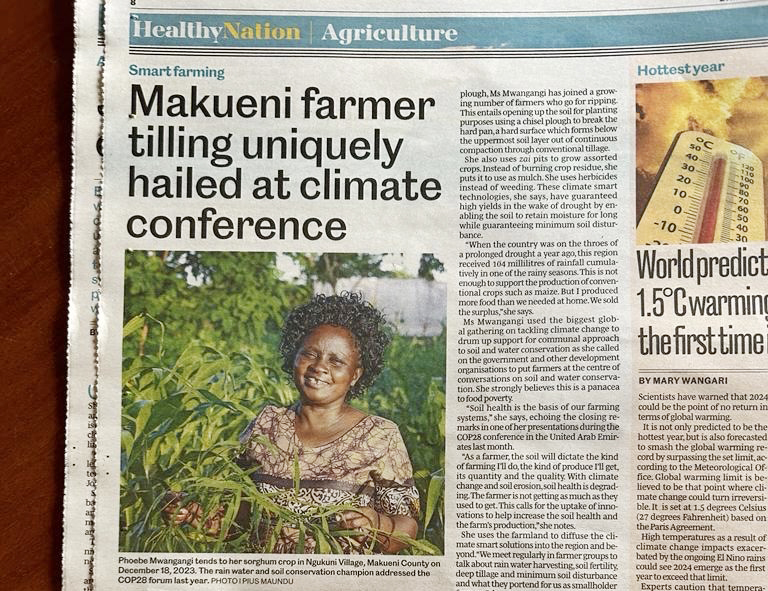
In Kenya, for instance, ILRI has helped to bring together government, the public sector, civil society, researchers, farmers and pastoralists’ organisations in the country’s Climate Smart Agriculture Multi-Stakeholder Platform to help set the country’s agriculture agenda. ‘We try as much as possible to ensure that this country-driven process involves as many actors as possible, and I think ILRI has been very instrumental in ensuring that,’ says Bernard Kimoro, the head of Kenya’s Climate Change and Livestock Sustainability section in the Ministry of Agriculture and Livestock Development.
ILRI scientists have also worked alongside a think tank that provides technical support to African governments on climate negotiations—the Africa Group of Negotiators Experts Support (AGNES)—to build the capacity of Kimoro and other negotiators, and to develop a long-term national agriculture strategy. ‘That has identified the measures and actions the sector should undertake to ensure we are aligning ourselves with a low-emission development strategy at the national level,’ Kimoro says.
It’s important to recognise that livestock do make a significant contribution both to the economy and to greenhouse gas emissions, he says. ‘Livestock emit about 28-30 percent of the national emissions. That is huge.’ But there’s also an equally huge opportunity for mitigation, he says.
‘We see it as an important sector that requires investment for it to be able to support Kenya and contribute to its global targets.’ ILRI’s research has identified many routes to reduce livestock emissions intensities, Kimoro says—the country now needs climate finance to help put them into practice.
This is another area where ILRI is advocating for livestock on the world stage. Just 0.8 percent of climate finance reaches smallholder farmers, says Cramer. Financiers like the African Development Bank, World Bank, and the Green Climate Fund should include more livestock projects in their portfolios, she says—it could help smallholders adapt to climate shocks like the Horn of Africa’s devastating drought in 2020-2023, or change management practices to reduce emissions and increase productivity. ‘Livestock is one of very few areas where certain practices will address both mitigation and adaptation—a healthier animal will deal with climate stress better and have lower emissions intensity.’
Cramer is also advocating for the livestock sector to be written into international climate policies—such as the indicators to measure adaptation, which are currently being compiled. If they’re missing, countries won’t be asked to report on whether their livestock keepers are adapting to climate change, she says. ‘And then thattrickles down from the global level, into international policies, and then into what happens on the ground.’
For Mukherji, speaking up in these global talkfests has become a moral imperative. ‘I think I have no choice but to be an activist as a scientist these days,’ she says.
‘At its heart, climate change is about lack of equity. The reason we are here today, with ever-increasing greenhouse gas emissions, is because of a system that's deeply unequal and unjust.’
‘So if we want to solve climate change we have to come back to a more equitable system, and livestock is a very good example. As human beings, everybody's nutritional requirements are the same, so there is no justification for some people being able to eat 120 kilos of meat per year, versus others not even getting 10 kilos a year.’
‘This is not a distraction, this is the key to solving the climate crisis.’
Related Publications
Collective governance and household-Level decision-making in Afar pastoral systems: Implications for Pioneer Positive Deviance