ILRI corporate report 2026: Advancing Sustainable Livestock - explore now

Secondary navigation

  • Search
  • Microsites

Main navigation

  • About
    • Overview
    • People
    • Supporters
  • Research
    • Themes
      • Health
      • Livestock, Genetics, Nutrition, and Feed Resources
      • People, Policies, and Institutions
      • Livestock, Climate, and Environment
      • Innovations scaling and impact
    • Projects
    • Capacity development
    • Research support
      • Research compliance
      • Communication and knowledge management
      • Intellectual property and legal unit
      • Data and research methods
    • ILRI Hubs
      • BecA-ILRI Hub
      • Livestock and climate solutions hub
    • Facilities
      • Centre for tropical livestock genetics and health
      • ILRI Genebank
      • Kapiti research station
      • Mazingira centre
      • One health centre
      • Poultry facility
      • The CGIAR AMR hub
      • Tick unit
      • Bioscience facility
      • Genomics platform
      • ILRI-Hyderabad livestock research facilities
  • Where we work
    • Eastern and southern africa
      • Kenya
      • Ethiopia
      • Tanzania
      • Uganda
      • Zimbabwe
      • Burundi
    • West Africa
      • Burkina Faso
      • Mali
      • Nigeria
      • Senegal
    • Asia
      • India
      • Nepal
      • Vietnam
    • Explore our work in the countries
  • News & Events
    • News
    • Events
    • ILRI in the media
  • Knowledge
    • Outputs
      • Publications
      • Journal articles
      • Presentations
      • Infographics
      • Browse archive
    • Data
      • Datasets
      • Apps
    • Multimedia
      • Videos
      • Podcasts
      • Stories
  • Join Us
    • Careers
    • Subscribe
International Livestock Research Institute
  • Overview
  • People
  • Supporters
  • Themes
    • Health
    • Livestock, Genetics, Nutrition, and Feed Resources
    • People, Policies, and Institutions
    • Livestock, Climate, and Environment
    • Innovations scaling and impact
  • Projects
  • Capacity development
  • Research support
    • Research compliance
    • Communication and knowledge management
    • Intellectual property and legal unit
    • Data and research methods
  • ILRI Hubs
    • BecA-ILRI Hub
    • Livestock and climate solutions hub
  • Facilities
    • Centre for tropical livestock genetics and health
    • ILRI Genebank
    • Kapiti research station
    • Mazingira centre
    • One health centre
    • Poultry facility
    • The CGIAR AMR hub
    • Tick unit
    • Bioscience facility
    • Genomics platform
    • ILRI-Hyderabad livestock research facilities
Mazingira centre

ACTIVE Jan 2028

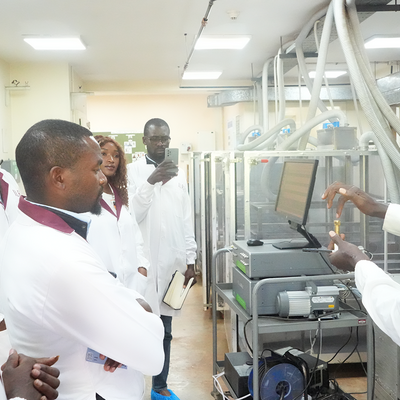
Africa–Asia Bioscience Challenge Fund (AABCF)- Building the next generation of bioscience leaders

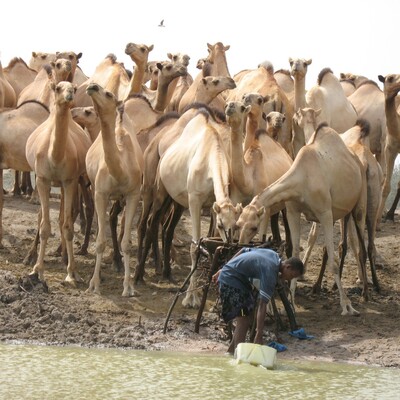
Camels drinking at a water pan in Wajir County, Kenya

ACTIVE Feb 2028

Emerging public health threats in Africa’s drylands

  • Eastern and southern africa
    • Kenya
    • Ethiopia
    • Tanzania
    • Uganda
    • Zimbabwe
    • Burundi
  • West Africa
    • Burkina Faso
    • Mali
    • Nigeria
    • Senegal
  • Asia
    • India
    • Nepal
    • Vietnam
  • Explore our work in the countries
  • News
  • Events
  • ILRI in the media
rangelands_web.pdf.jpg
2026

Rangelands Rising: Investing in Sustainable Management and Restoration

  • Wane, Abdrahmane
two_pager_ strategy.pdf.jpg
2024

Unlocking sustainable livestock’s potential through research for better lives and a better planet: ILRI Corporate Strategy 2024–2030

  • International Livestock Research Institute
  • Outputs
    • Publications
    • Journal articles
    • Presentations
    • Infographics
    • Browse archive
  • Data
    • Datasets
    • Apps
  • Multimedia
    • Videos
    • Podcasts
    • Stories
  • Careers
  • Subscribe

Main navigation

  • About
    • Overview
    • People
    • Supporters
  • Research
    • Themes
      • Health
      • Livestock, Genetics, Nutrition, and Feed Resources
      • People, Policies, and Institutions
      • Livestock, Climate, and Environment
      • Innovations scaling and impact
    • Projects
    • Capacity development
    • Research support
      • Research compliance
      • Communication and knowledge management
      • Intellectual property and legal unit
      • Data and research methods
    • ILRI Hubs
      • BecA-ILRI Hub
      • Livestock and climate solutions hub
    • Facilities
      • Centre for tropical livestock genetics and health
      • ILRI Genebank
      • Kapiti research station
      • Mazingira centre
      • One health centre
      • Poultry facility
      • The CGIAR AMR hub
      • Tick unit
      • Bioscience facility
      • Genomics platform
      • ILRI-Hyderabad livestock research facilities
  • Where we work
    • Eastern and southern africa
      • Kenya
      • Ethiopia
      • Tanzania
      • Uganda
      • Zimbabwe
      • Burundi
    • West Africa
      • Burkina Faso
      • Mali
      • Nigeria
      • Senegal
    • Asia
      • India
      • Nepal
      • Vietnam
    • Explore our work in the countries
  • News & Events
    • News
    • Events
    • ILRI in the media
  • Knowledge
    • Outputs
      • Publications
      • Journal articles
      • Presentations
      • Infographics
      • Browse archive
    • Data
      • Datasets
      • Apps
    • Multimedia
      • Videos
      • Podcasts
      • Stories
  • Join Us
    • Careers
    • Subscribe

Secondary navigation

  • Search
  • Microsites

Why livestock matter

Why livestock matter

Farm animals are an ancient, vital and renewable natural resource. Throughout the developing world, they are means for hundreds of millions of people to escape absolute poverty. Livestock in developing countries contribute up to 80 percent of agricultural GDP; 600 million rural poor people rely on livestock for their livelihoods.

Globally, livestock are becoming agriculture’s most economically important sub-sector, with demand in developing countries for animal foods projected to double over the next 20 years. The ongoing ‘livestock revolution’ offers many of the world’s poor a pathway out of poverty.

Livestock not only provide poor people with food, income, traction and fertilizer but also act as catalysts that transform subsistence farming into income-generating enterprises, allowing poor households to join the market economy.

Livestock sustain most forms of agricultural intensification—from the Sahelian rangelands of West Africa to the mixed smallholdings in the highlands of East Africa  to highly intensified rice production in Asia. Research is helping farmers exploit the potential of their animals to turn the nutrient cycling on their farms faster and more efficiently.

Holding back livestock development in poor countries are inappropriate policies, scarce livestock feeds, devastating diseases, degraded lands and water resources, and poor access to markets. Research by ILRI and its partners is helping to alleviate these problems by developing new knowledge as well as technological and policy options.

ILRI’s strategic intention is to use livestock as a development tool, one that widens and sustains three major pathways out of poverty: (1) securing the assets of the poor, (2) improving smallholder and pastoral productivity and (3) increasing market participation by the poor.

ILRI Kenya

PO Box 30709
Nairobi 00100, Kenya
  • +254-20 422 3000
  • +254-20 422 3001
  • ILRI-Kenya@cgiar.org

ILRI Ethiopia

PO Box 5689
Addis Ababa, Ethiopia
  • +251-11 617 2000
  • +251-11 617 2001
  • ILRI-Ethiopia@cgiar.org

Get Involved

  • Subscribe to our Newsletter
  • Facebook
  • Twitter
  • Slideshare
  • Flickr
  • Youtube
  • Linkedin
  • Pinterest
  • Instagram

We would like to thank all funders who supported this research through their contributions to the CGIAR Trust Fund.

  • Copyright and permissions
  • © 2026 International Livestock Research Institute
  • Creative commons