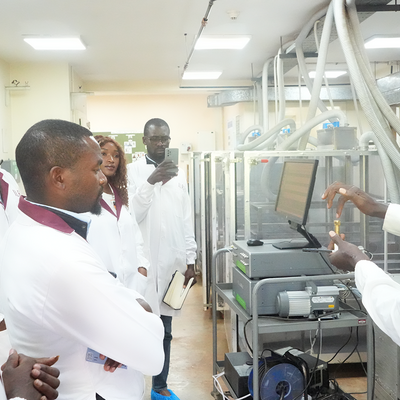
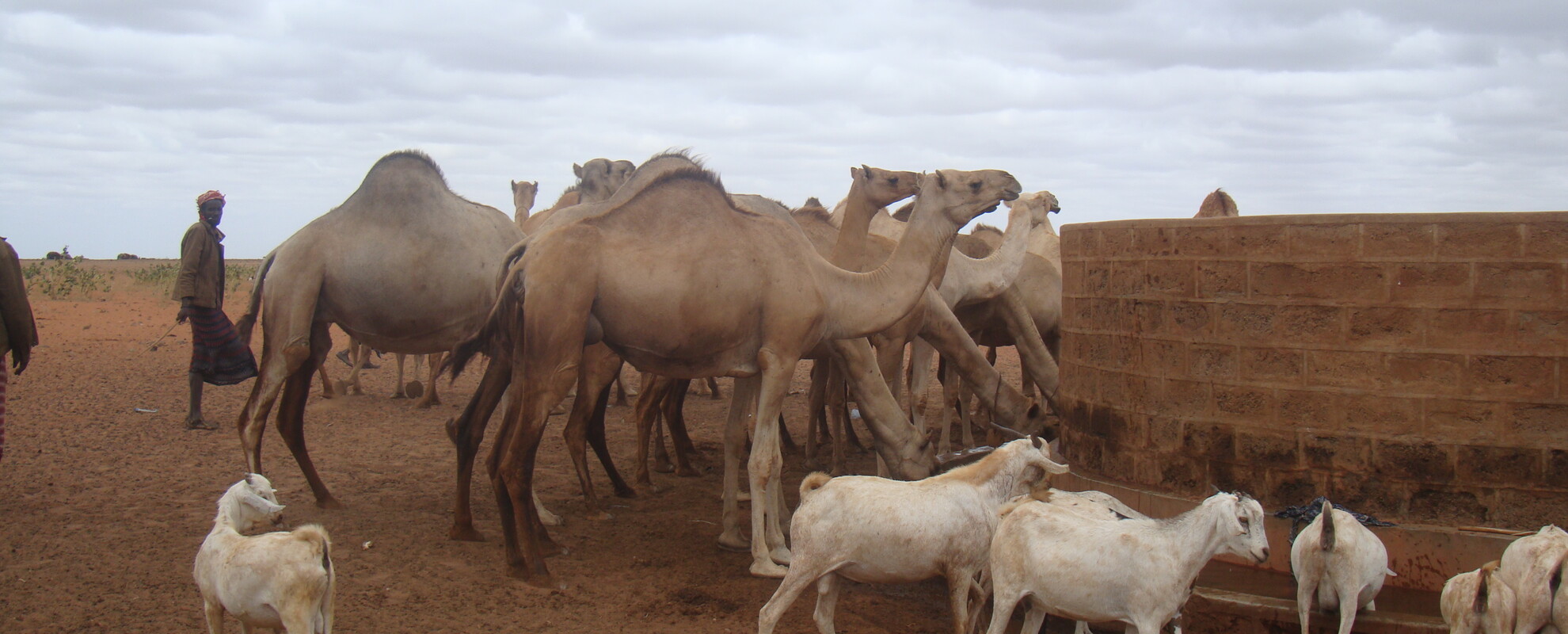
Side Event on “Pastoralism and Rangelands: What Role for Private Sector?” at the FAO Sustainable Livestock Transformation meeting, Rome.
“Virtual meeting registration link: https://fao.zoom.us/j/98419024470”
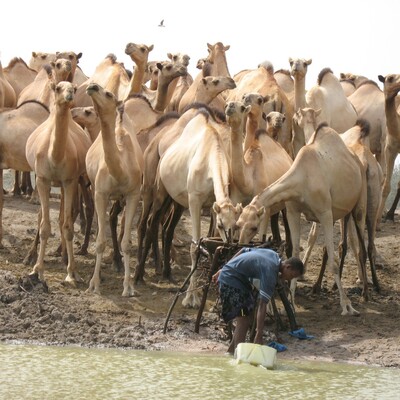
Pastoralism, practiced by over 200 million people across the world’s drylands and rangelands, is a sustainable food system that contributes significantly to food security, climate resilience, biodiversity, and rural livelihoods. Pastoralists manage over 500 million hectares of land often unsuitable for crop farming but essential for biodiversity, ecosystem services, and carbon sequestration - through systems centered on their valued animals including camels, cattle, sheep, goats, and other regionally adapted species. Despite this, pastoralism remains largely marginalized in policy, investment, and development agendas. With 2026 declared the International Year of Rangelands and Pastoralists, a dedicated side event organized by the IYRP Global Alliance will examine the potential role of the private sector in strengthening pastoralism through direct and blended finance, showcasing examples such as UNCCD’s Business for Land initiative, fashion industry investment in rangelands, and private sector processing of livestock products. Building on recent global dialogues and conferences, the event will highlight lessons, challenges—including new EU legislation—and opportunities for improving future investments, serving as a key steppingstone toward IYRP 2026.
Objectives
- Raise awareness on the growing role of private sector in supporting rangelands and pastoralism for economic, environmental and social gains, and provide good practice examples of these from which lessons can be learned.
- Understand the challenges being faced by private sector in investing in rangelands and pastoralism and develop strategies for overcoming these.
- Catalyze additional and most appropriate investment by private sector in rangelands and pastoralism, and capacity needs for this including in local communities.
Key messages
- Private sector has an important role to play in the sustainability of pastoralism and rangelands. If appropriate designed this can have significant economic, environmental and social gains.
- Private sector requires a more enabling environment, for increasing investment in pastoralism and rangelands with reduced risks and clear incentives.
- There is a need for greater most appropriate investment in rangelands and pastoralism. Investment in rangelands and rangelands restoration in way below that of forests. Investment in pastoralism needs to focus on building capacity of communities to adapt as well as mitigate climate change, including to engage with the private sector.
Format
- Duration: 60 minutes
- Structure: Opening remarks framing private sector investment in pastoralism and rangelands for ministries of agriculture supporting pastoralism.
- Panel: perspectives from private sector, government, private sector standard setting organizations, pastoralists.
- Closing reflections and recommendations.
Speakers
Panel 1: Opening remarks and framing
Mr. Fernando Miranda Sotillos, Counsellor for Agriculture, Fisheries and Livestock and Permanent Representative for FAO at the Embassy of Spain
Mr. Radnaabazar Altangerel, Minister Counsellor, Embassy of Mongolia in Rome
Phil Hadley, International Meat Secretariat
Lloyd Day, Deputy Director General, Inter-American Institute for Cooperation on Agriculture
Houtan Bassiri, Innovative Financing and Partnerships Manager, UNCCD
Panel 2: Private sector experiences and discussion
Ana Doralina Alves Menezes, President of the Brazilian Board of Sustainable Livestock
Joshua Laizer, Secretary General of African Youth Pastoralist Initiative
Julie Ojango, ILRI
Anne Gillespie, Rangelands Stewardship Council,
Representative from the World Bank (TBC)
Closing remarks: Dr. Thanawat Tiensin, Director of the Animal Production and Health Division, FAO