World Food Safety Day | From burden to solutions, safe food everywhere
Every year, unsafe food causes 886 million illnesses and 1.5 million deaths worldwide, costing low- and middle-income countries US$310 billion in lost productivity. The burden falls hardest where food safety systems are weakest: informal markets, small slaughterhouses, wet markets, and roadside stalls that formal regulation was never designed to reach. Children under five make up just 9% of the global population but bear almost 30% of that burden.
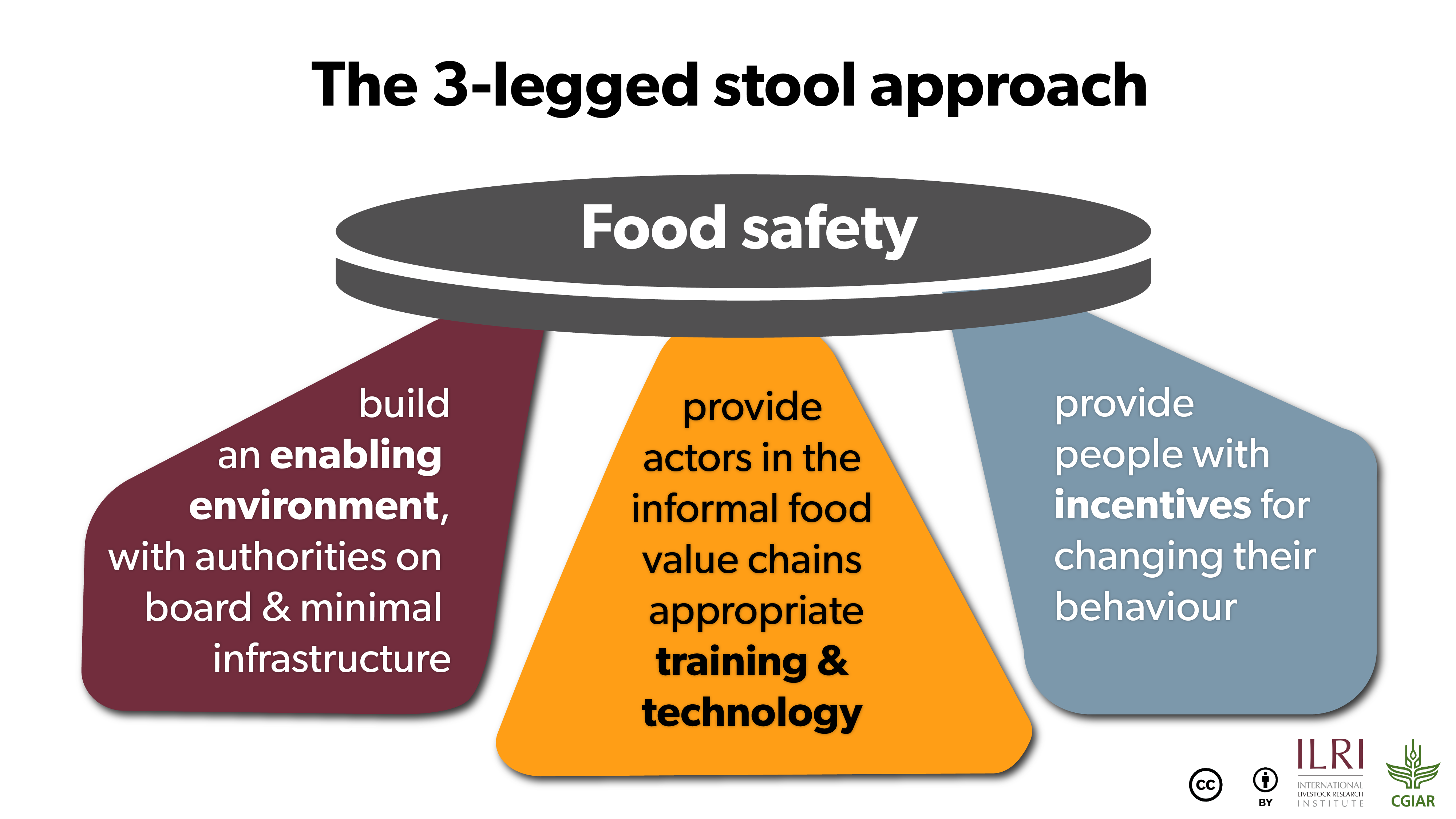
ILRI researchers have spent more than two decades testing what actually works to improve food safety in the informal food sector. Whether in Kenya, Vietnam, India, Cambodia, or Ethiopia. the evidence points to the same conclusion: telling vendors what to do and managing food safety through inspection and unrealistic compliance rules is not enough.Lasting change requires three things working together.
- Training and technology: Food vendors and handlers need practical knowledge and the tools to use it: soap, clean water, protective gear, and training grounded in the conditions under which they work. in how their work actually runs.
- Incentives: Food vendors also need a concrete reason to change their practice, whether that is a better market price, a government certification that legitimizes its business, or any other direct incentive.
- Enabling environment: The policy environment must treat informal vendors as a critical service provider to society rather than a problem to manage, creating space for the sector and government to co-design solutions that can support food safety.
ILRI calls this approach the ‘three-legged stool’. Evidence from multiple countries and food chains shows that when all three legs are in place, food vendors change how they work, customers notice, and safer food reaches the people who need it most.
This World Food Safety Day, we share evidence from across those countries and food chains about what it takes to move food safety from a burden on the most vulnerable into a solution that works for them.
Key messages
Around 90 million Africans fall ill from unsafe food each year, yet the international community invests just USD 55 million annually in food safety across the continent. Globally, unsafe food costs low- and middle-income countries US$310 billion in lost productivity every year. The gap between the scale of the problem and the resources directed at it is not closing on its own.
Fines, closures, and confiscation push vendors underground, reduce the food supply, and create conditions for corruption without making food safer. Evidence from ILRI's randomized controlled trial across 140 slaughterhouses in western Kenya shows that monitoring without penalties, combined with practical training and basic equipment, produces real and measurable changes in how workers behave.
Lasting food safety improvement requires capacity building, incentives to act, and an enabling policy environment working at the same time. Evidence from ILRI research across six countries and two decades shows that behavior changes when all three are in place. Improving practice without addressing the infrastructure and policy environment around it does not translate into lasting improvement.
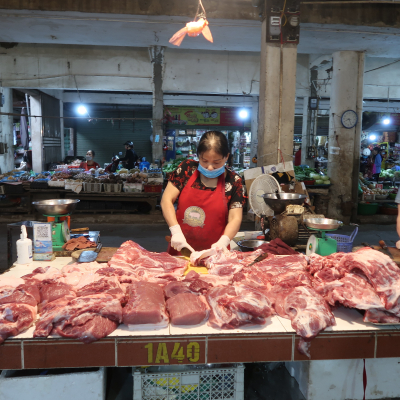
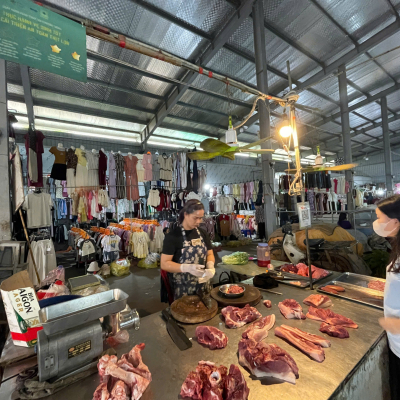
In western Kenya, slaughterhouses that improved hygiene attracted around 12 percent more animals per day. In Vietnam, slaughter practices developed under the CGIAR Initiative on One Health (OHI) and CGIAR Science Program on Sustainable Animal and Aquatic Foods (SAAF), have been formally adopted by provincial authorities in Thua Thien Hue Province as standard government procedure. Safe food, when it is visible, is good for the vendors who produce it and for the governments that support them.
Food safety in informal markets improves when government and vendors work toward the same goal. Placing the full burden of compliance on vendors who have no running water, no cold chain, and no margin for error produces neither safety nor trust. The food safety improvements that have lasted longest in ILRI's research are the ones built on partnership between the sector and the authorities responsible for supporting it.