Building an interactive food system scenario model for Kenya
Kenya’s food system faces mounting pressure from nutritional, environmental, economic, and social challenges.
Despite notable progress in agricultural development, undernutrition and food insecurity persist, while land degradation, climate variability, and economic disparities continue to undermine the system’s resilience and long-term sustainability.
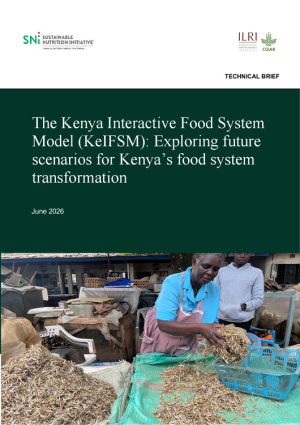
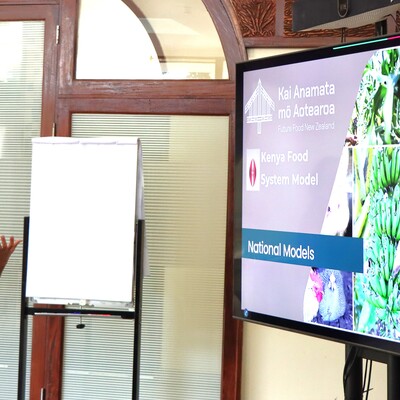
In response, the Sustainable Nutrition Initiative and the International Livestock Research Institute are initiating the co-design of a computational food system model to simulate present and future food system scenarios at regional and national scales.
Co-developed with stakeholders from government, research institutions, industry and local communities, the model will represent Kenya’s food system from production to consumption, placing nutrition delivery at its core.
The model will integrate data across multiple components of the food system — including agriculture, environment, trade, health and demographics — to explore future scenarios and policy options.
By enabling users to assess trade-offs and synergies between nutritional adequacy, environmental outcomes, economic performance and social equity, the tool aims to support evidence-based planning for a more inclusive, resilient and sustainable food system for Kenya.



Related Publications
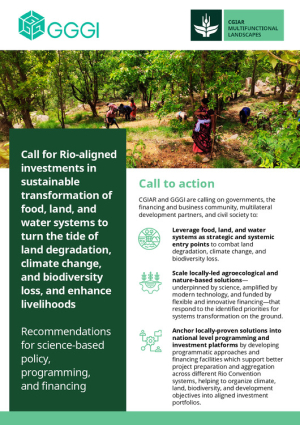
Call for Rio-aligned investments in sustainable transformation of food, land, and water systems to turn the tide of land degradation, climate change, and biodiversity loss, and enhance livelihoods
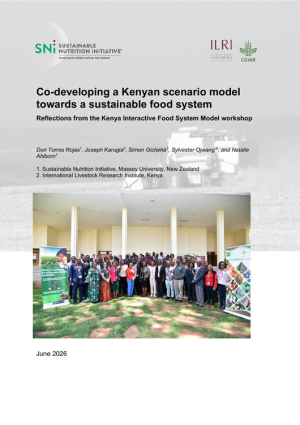
Co-developing a Kenyan scenario model towards a sustainable food system: Reflections from the Kenya Interactive Food Systems Model workshop