Characterization of phylogenetically distinct temperate phages from Kenyan Mammaliicoccus sciuri
Abstract
Background:
Temperate bacteriophages are widespread in bacterial genomes and can play significant roles in bacterial evolution and pathogenicity. Despite their importance, they remain poorly characterized in nonclinical <i>Staphylococcaceae</i>, particularly <i>Mammaliicoccus sciuri</i>.
Materials and Methods:
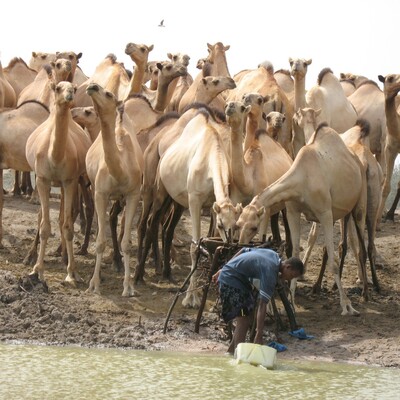
We analyzed 26 <i>M. sciuri</i> strains isolated from the nasal cavities of East African dogs and camels. Prophages were induced using mitomycin C, and isolated phages were characterized by whole-genome sequencing, phylogenetic analysis, electron microscopy imaging, and host-range determination.
Results:
Eight novel siphoviruses were isolated. Phylogenomic analysis revealed two new families, each comprising two genera. Notably, phages from one of these families (with genomes >130 kbp) exhibit a broad host range, while the other family is related to previously described phages implicated in horizontal gene transfer.
Conclusion:
Our findings reveal unexpected diversity of temperate phages in <i>M. sciuri</i>, expanding current knowledge of phage distribution in animal-associated opportunistic pathogens.
Citation
Cherbuin, J.D.R., Llodra, J., Borcard, L., Kaessmeyer, S., Ramette, A., Fernandez, J.E., Wagner, T.M., Torres-Puig, S., Kuhnert, P., Turner, D., Labroussaa, F. and Jores, J. 2025. Characterization of phylogenetically distinct temperate phages from Kenyan <i>Mammaliicoccus sciuri</i>. PHAGE: Therapy, Applications, and Research 6 (4): 259–271.
Authors
Related Publications
Biochemical profile of fetal fluids in alpacas (Vicugna pacos) during pregnancy and immediate postpartum