Newly launched investment handbook outlines opportunities in Ethiopia’s livestock and fishery sectors
Newly launched investment handbook outlines opportunities in Ethiopia’s livestock and fishery sectors
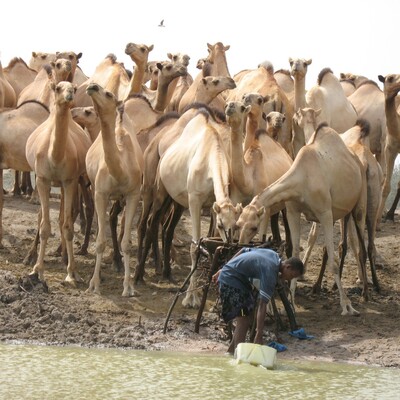
Ethiopia’s livestock and fisheries sub-sectors represent some of the most promising, yet underutilized, engines of economic growth in the country. With the largest livestock population in Africa boasting over 70 million cattle, 52.5 million goats, 42.9 million sheep and 8.1 million camels Ethiopia has a vast biological resource base that can significantly boost food security, nutrition, employment and export earnings.
The government’s 10-year agricultural transformation plan underscores this potential with ambitious targets: 28.4 billion litres of milk, 1.7 million tons of meat, 5.5 billion eggs and 260,000 tons of fish, among others. These milestones are not just aspirational; they are achievable with the right investments in production, processing and market infrastructure. Private sector engagement is at the heart of this transformation, backed by Ethiopia’s strategic location, access to international markets, and a growing domestic demand driven by urbanization and income growth.
However, despite the immense promise, several structural and operational challenges hinder full-scale investment. Infrastructure limitations, such as inadequate cold chains and processing facilities, continue to bottleneck supply chains. Smallholder dominance, weak policy implementation, limited livestock technology multiplication centres and quality control issues have all constrained productivity. Additionally, the private sector’s limited focus on primary production, combined with the lack of entrepreneurship skills among producers, have slowed down commercial transformation.
‘Ethiopia is one of Africa’s leading countries in livestock population and aquatic resources. Our diverse agro-ecologies support dairy, beef, poultry, sheep, goat, camel, apiculture and aquaculture production, and more. Demand for animal-source foods is growing both at home and globally, offering vast potential for investment, export and jobs. Despite this potential, our sector still faces hurdles such as low productivity, poor infrastructure, weak access to finance and fragmented value chains,’ said Sofia Kassa, state minister for agriculture.
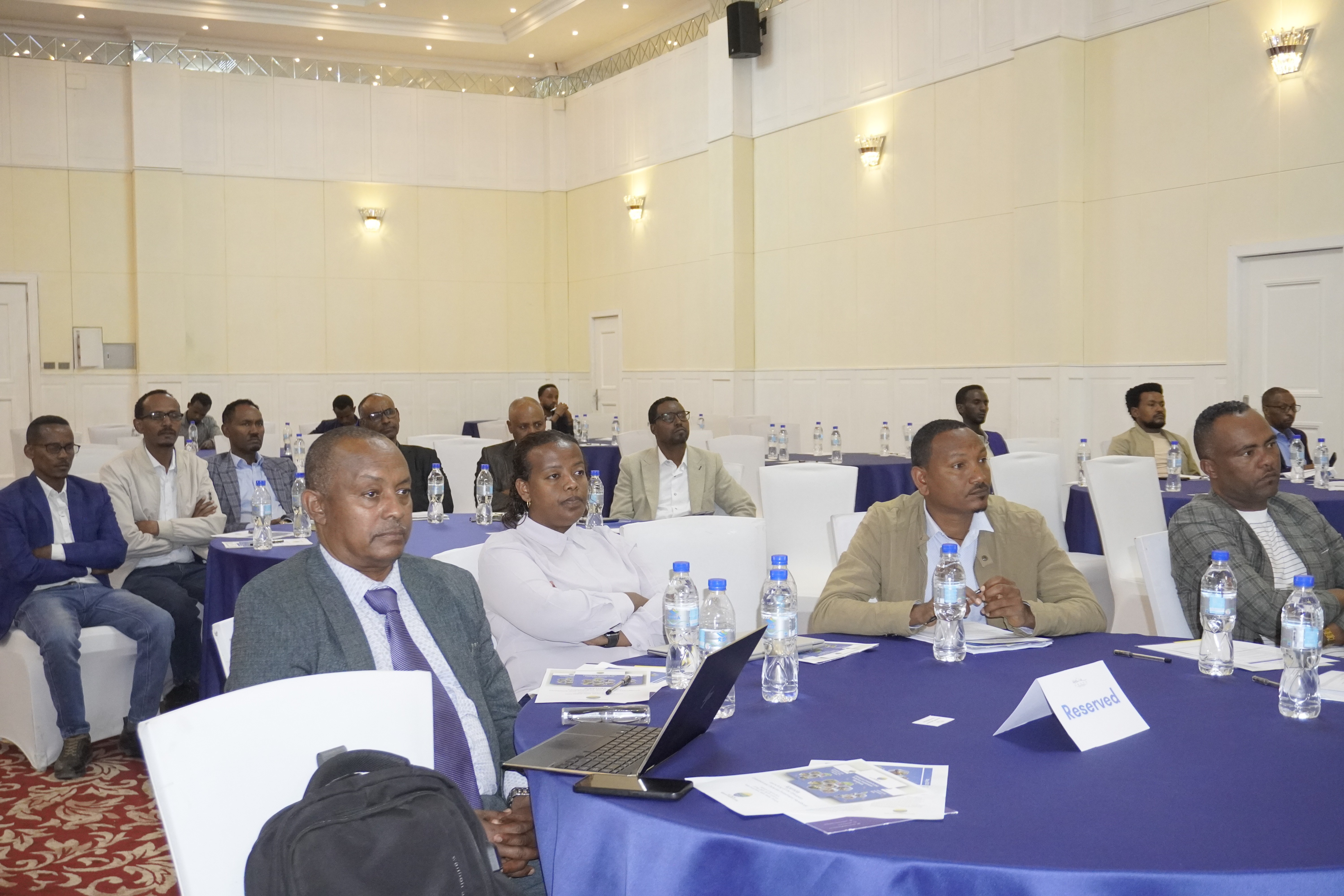
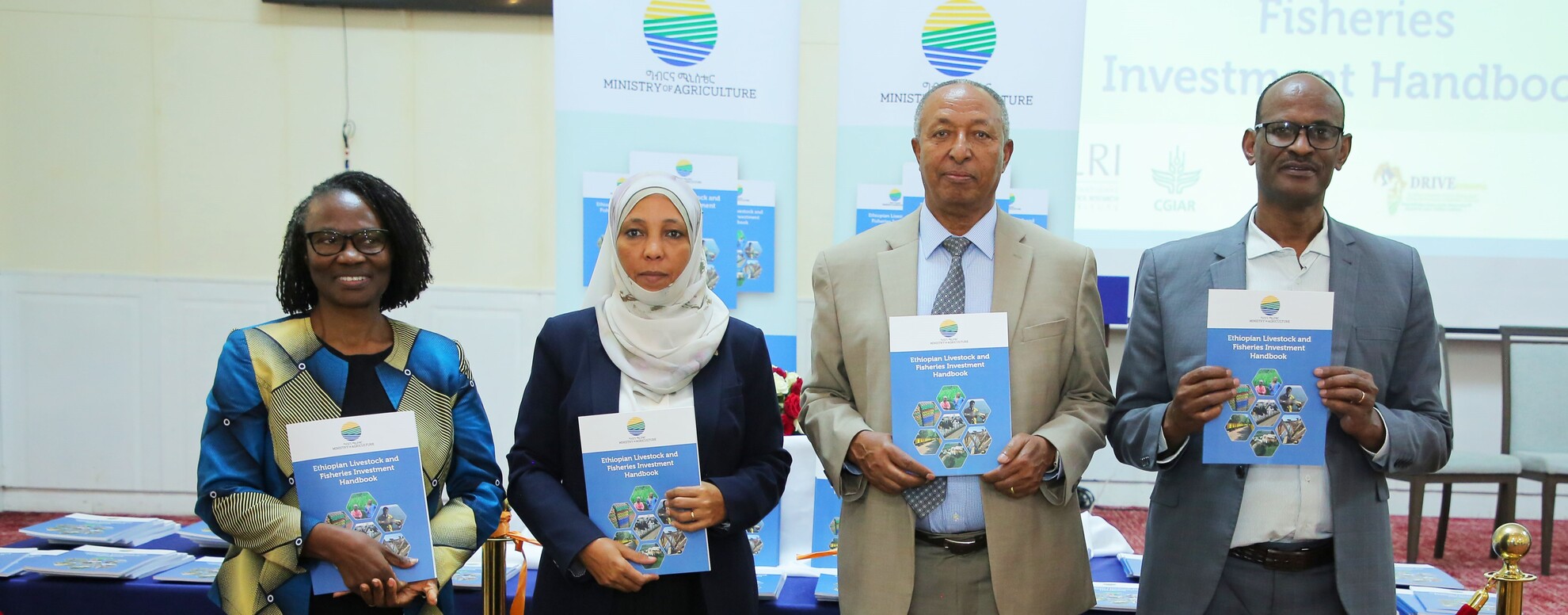
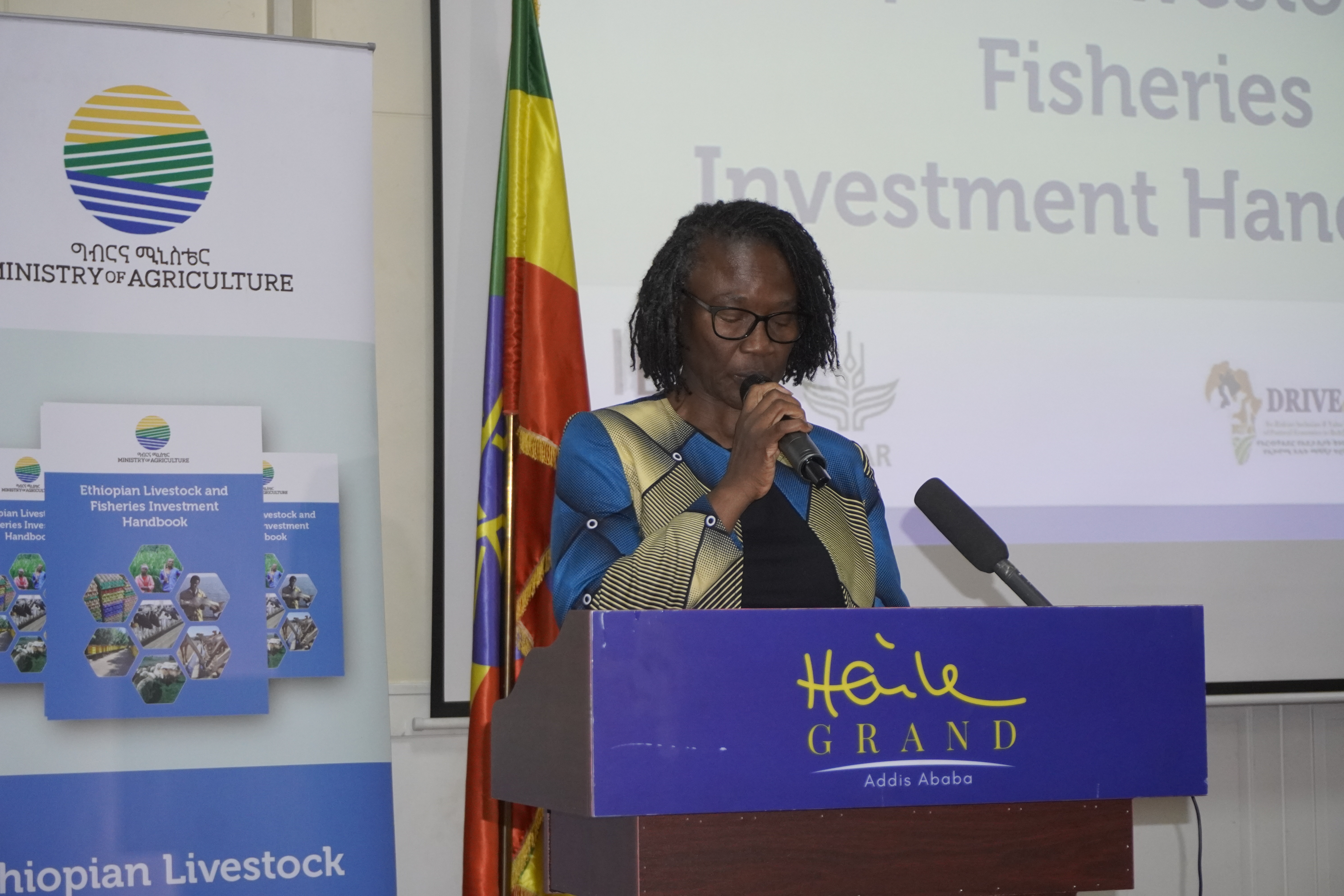
Speaking during the launch of the Ethiopian Livestock and Fisheries Investment Handbook at 13 May 2025 at the Haile Grand Hotel , Sofia said the handbook was one of the steps the government was taking to bridge these gaps and accelerate private sector participation in Ethiopia’s livestock and fisheries industries. Prepared by the Ministry of Agriculture in collaboration with the International Livestock Research Institute (ILRI), the handbook is a significant milestone in the government's push to transform these industries into dynamic engines of economic growth, food and nutrition security and sustainable job creation.
The handbook outlines a wide array of viable investment options, quality standards, enabling policies and support services tailored to the country’s unique agro-ecological context, all based on the 10-year agricultural transformation plan. Key objectives include:
- Presenting a spectrum of investment opportunities in livestock and fisheries;
- Promoting innovative and sustainable investment approaches;
- Defining viable business models and standards;
- Mapping institutional support structures; and
- Attracting both domestic and foreign investors through clarity and transparency.
Some of the measures the Ethiopian government has taken to attract private investment in livestock and fisheries are establishing a clear legal framework (investment proclamation no. 1180/2020), a one-stop service for investment facilitation, a movable collateral registry (directive no. MCR/01/2020), access to loans from the Development Bank of Ethiopia, and investment land allocation through regional governments. Investors also benefit from incentives such as income tax holidays, duty-free import of capital goods and raw materials for export, investment credit support, competitive land lease rates, and customs duty exemptions for development vehicles (directive no. 942/2023).
Livestock feed and hay production is a key area of investment opportunity. Ethiopia faces a significant supply-demand gap in animal feed, particularly in roughage and agro-industrial by-products. Therefore, the government is encouraging investment in commercial-scale forage production, hay and silage making, and feed processing using high-yield forage varieties.
Investors are incentivized through access to land often via outgrower schemes and technical support, including training and provision of seeds and planting materials. Moreover, investing in mechanized feed development using irrigation and improved technologies can yield high returns while enhancing livestock productivity. These efforts are aligned with national goals to modernize and commercialize livestock farming across the country.
‘This handbook is not just a report; it is a practical investment guide mapping out real business opportunities across the livestock and fisheries value chains. It highlights investment incentives, policy support, and how private actors can engage profitably and sustainably. It’s a product of collaboration between scientists, agribusiness experts and policymakers. We thank ILRI for the technical support and publication of the handbook,’ Sophia emphasized.
The handbook targets a wide range of stakeholders, including private investors, policymakers, regional and federal implementing bodies, development partners and support institutions. It equips them with the tools and information necessary to mobilize investment, forge partnerships, and build sustainable businesses in the livestock and fisheries sub-sectors.
‘Research must continue to develop new production approaches that improve efficiencies. Let this handbook be a living document that must be updated regularly as you generate innovations technologies & production practices across entire value chains,’ said Namukolo Covic ILRI’s director general representative to Ethiopia and CGIAR country convenor.
The book was developed through a collaborative effort involving the Ministry of Agriculture, the International Livestock Research Institute (ILRI), the Ministry of Trade and Regional Integration (MoTRI), the Ethiopian Institute of Agricultural Research (EIAR), and the Oromia Agricultural Research Institute (IQQO).