A road to better nutrition in Kenya through food systems scenario modeling
Kenya’s food system faces mounting pressure from nutritional, environmental, economic and social challenges. Despite notable progress in agricultural development, undernutrition and food insecurity persist, while land degradation, climate variability and economic disparities continue to undermine the system’s resilience and long-term sustainability.
The International Livestock Research Institute (ILRI) is collaborating with the Sustainable Nutrition Initiative (SNi) in a project dubbed Building an interactive food system scenario model for Kenya to co-design a computational food system model.
This model will simulate present and future food system scenarios at the sub-national and national levels, with the goal of informing evidence-based planning for a more inclusive, resilient and sustainable food future in Kenya.
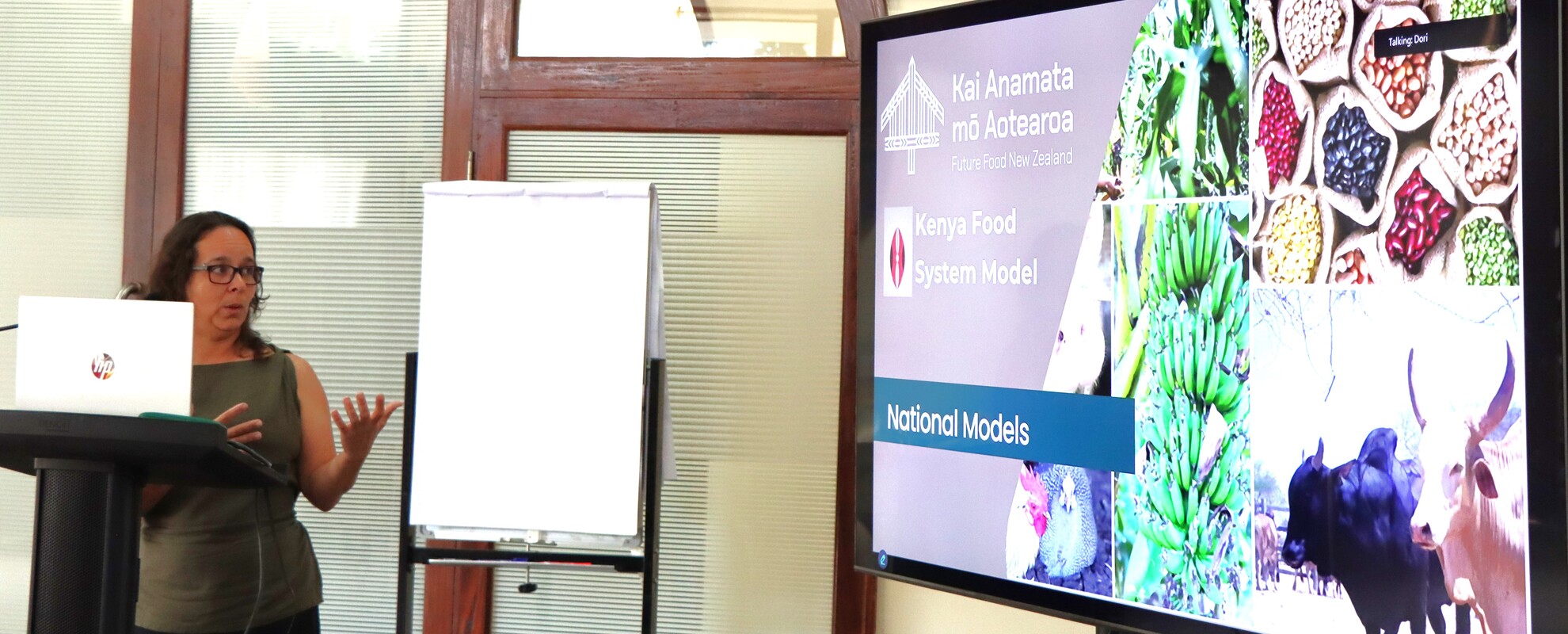
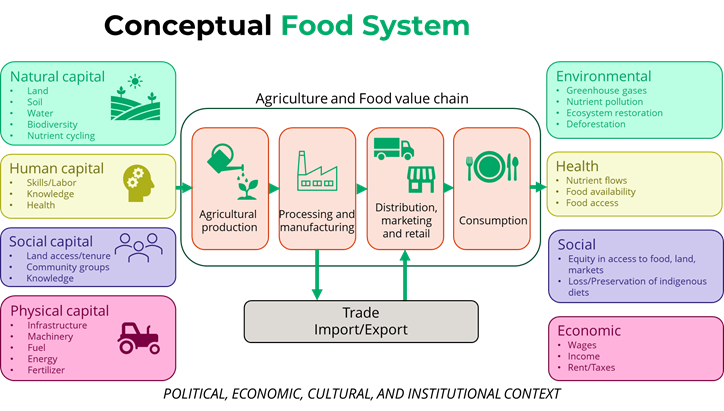
Dorisel Torres-Rojas, the project lead and a senior research officer at SNi, explained that a sustainable food system ensures food security and nutrition for all, in a manner that the economic, social and environmental bases for generating food security and nutrition for future generations are not compromised. The model is based on a framework developed by SNi for the New Zealand food system and is being adapted to model food systems for other countries.
‘The concept addresses the question “what food does our country need to meet the nutritional requirements of the population?” In response, it enables the modelling of future scenarios in the food system and enhances understanding of the consequences of actions taken across various aspects of the food system,’ said Torres-Rojas.
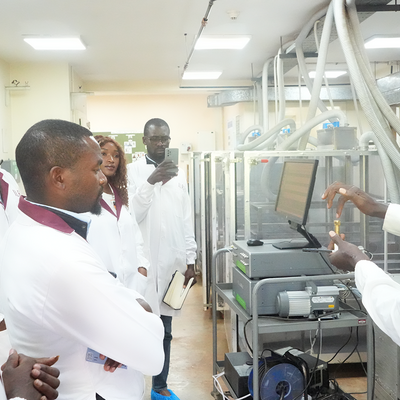
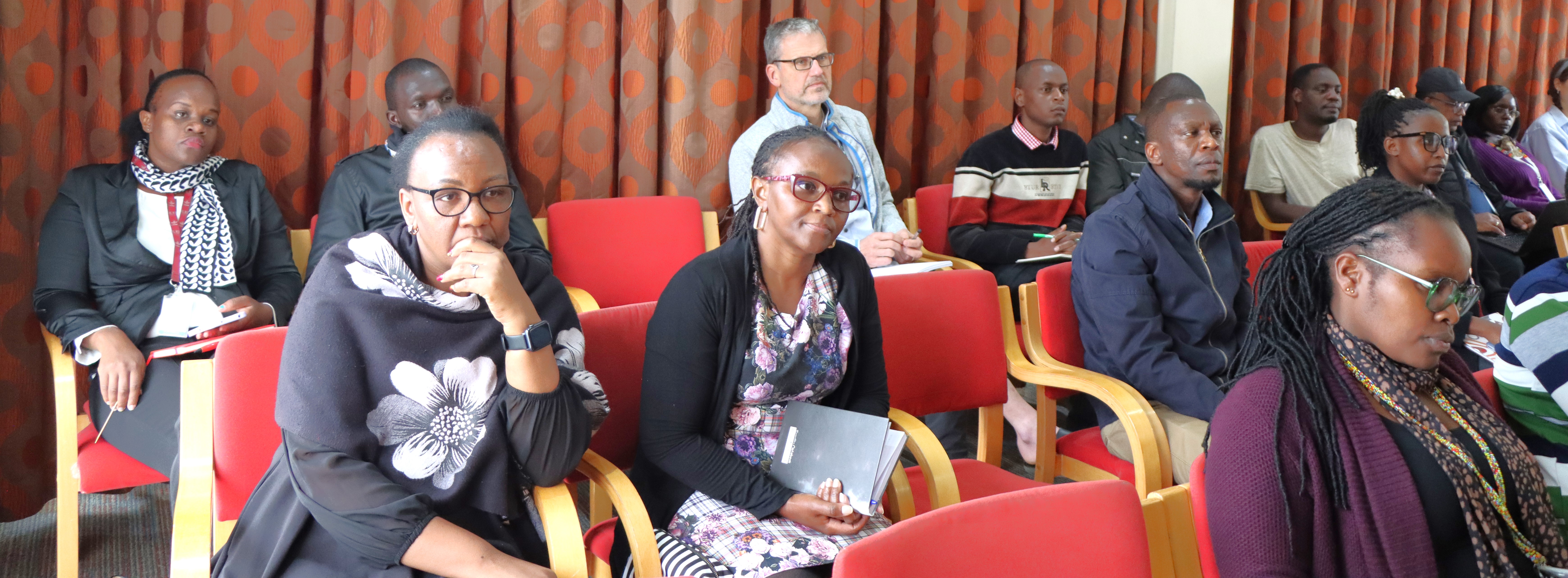
Speaking during a seminar held at the ILRI Nairobi campus in July 2025 to introduce the three-year project, she emphasized that the SNi model builds on and complements other initiatives being implemented in Kenya to support food system transformation, such as the Malabo Protocol towards zero hunger, among others.
In addition, the model provides a data-driven future scenario that explores the consequences and impacts of future food scenarios for Kenya’s food system.
This project builds on and complements existing initiatives aimed at transforming Kenya’s food system.
For instance, the food systems dashboard consolidates data on the current state of the food system and tracks the evolution of key indicators over time. By offering a historical perspective, it supports decision-making through the visualization of drivers, components, and outcomes.
In parallel, the SNi food system interactive model provides a forward-looking, data-driven platform that examines the potential consequences of future food system scenarios. This model enables decision-makers and stakeholders to visualize and quantify the social, economic, environmental, and nutritional impacts of various pathways for Kenya’s food system.
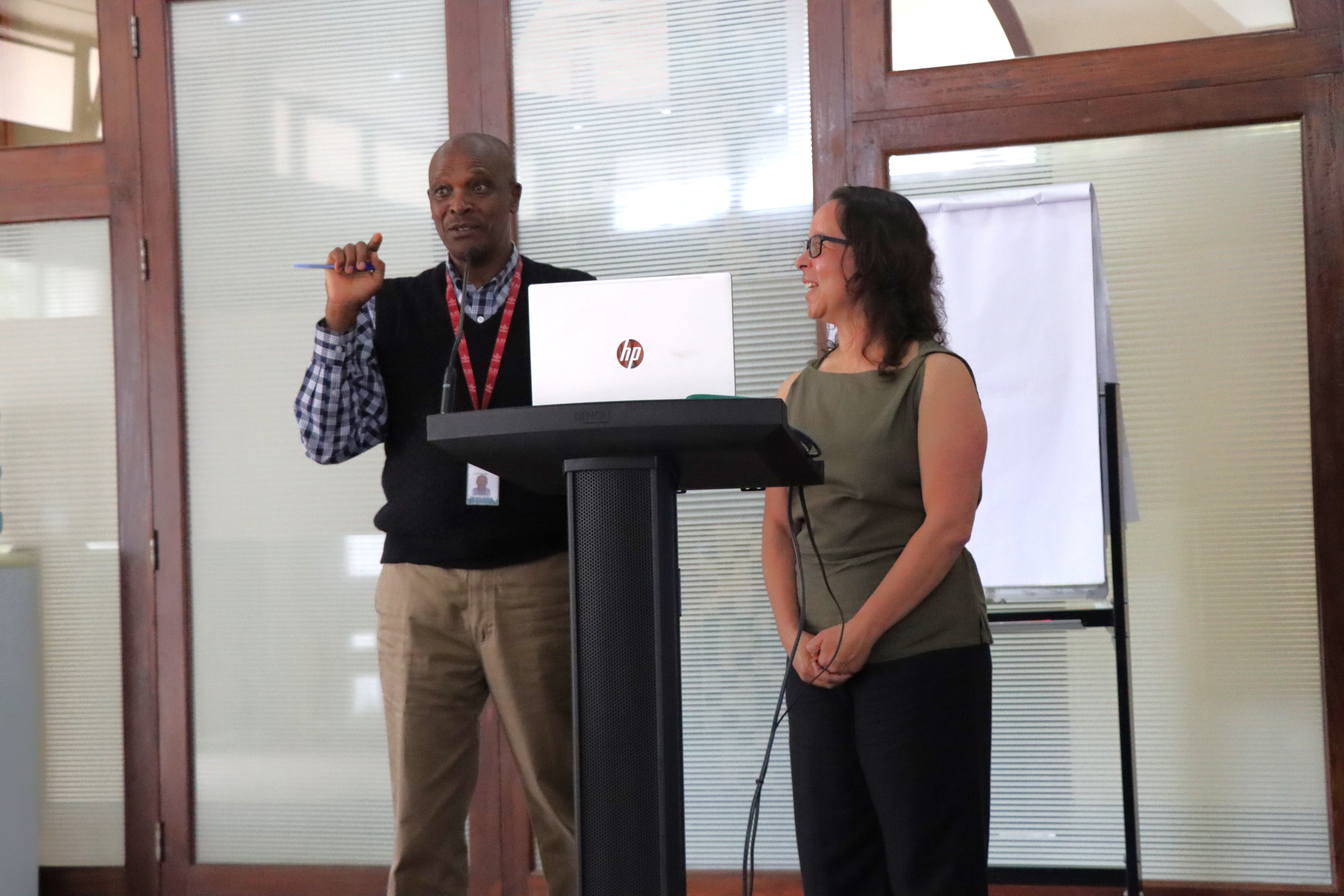
Joseph Karugia, a principal scientist at ILRI with extensive experience in food system modelling, is co-leading the work. He added that the model will be co-developed with stakeholders from government, research institutions, industry and local communities to ensure it accurately represents Kenya’s food system, from production to consumption, while prioritizing nutrition delivery.
‘This will enable users to assess trade-offs and synergies between nutritional adequacy, environmental outcomes, economic performance and social equity,’ Karugia said.
Kenya has committed itself to transforming its food system to achieve the Sustainable Development Goals and the Malabo Protocol's target of achieving zero hunger and eradicating all forms of malnutrition.
This commitment is in addition to its participation in the United Nations Transformation Pathway to Sustainable Food Systems, whose focus includes promoting dietary diversity, building resilience to climate change and increasing the involvement of youth and women in profitable agri-food systems.
Considering this, Siboniso Moyo, ILRI deputy director general for partnerships and impact, pointed out that the model's usability must be well targeted from inception.
She added that it is vital to have modalities in place that ensure the model is put to use by ministry and county officials, among other stakeholders.
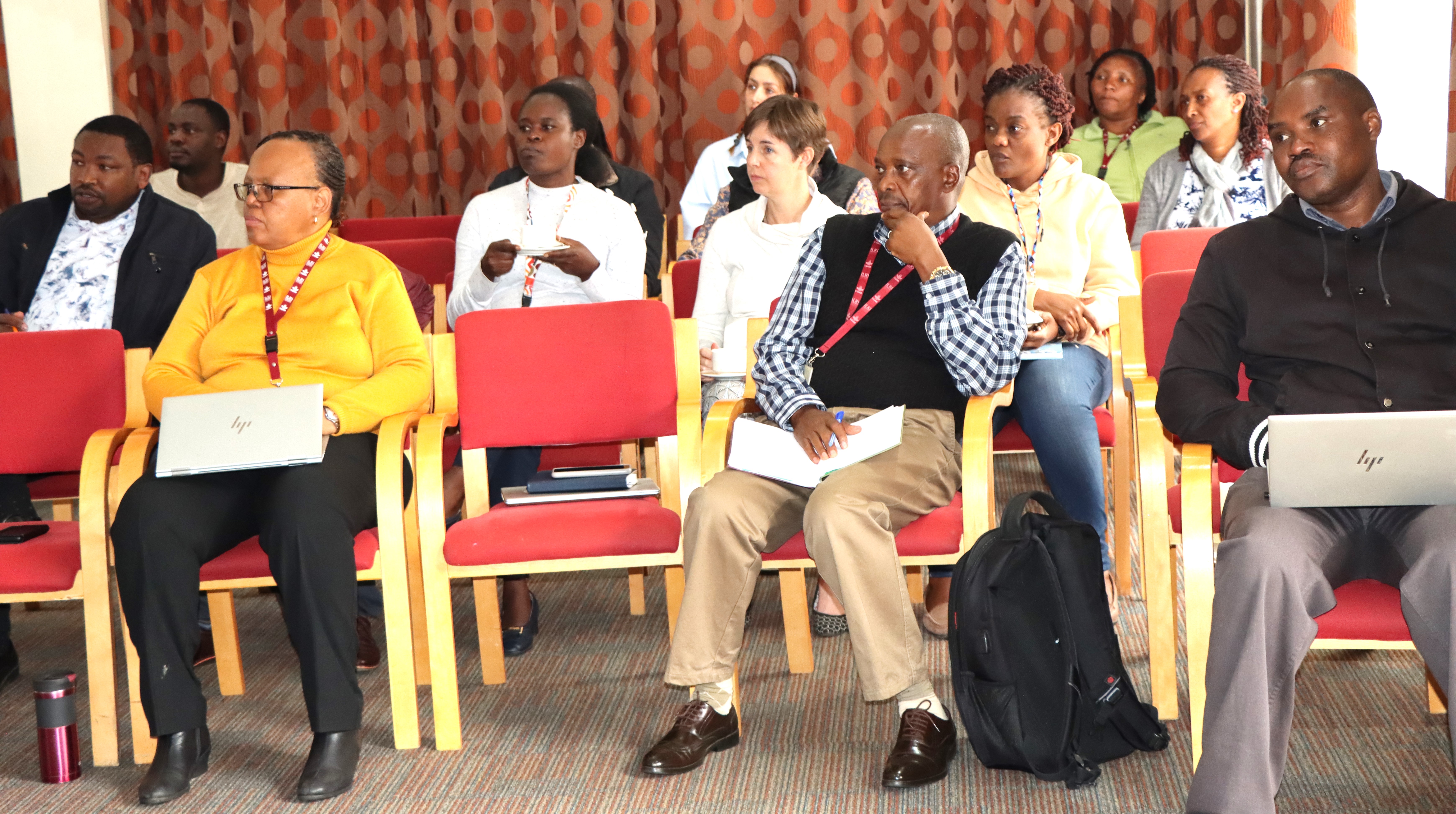
The model is at its inception stage, and as the work progresses, it will be developed in collaboration with various actors in the food system.
It is expected to reflect the impacts of different food system scenarios, including inputs, such as fertilizer application, water usage, labour, input costs, as well as the system outputs, which include wages, nutrient flows, greenhouse gas emissions and incomes. In addition, the model will reflect the expected environmental, economic, socio-cultural and health impacts.
SNi is hosted by the Riddet Institute at Massey University in New Zealand.


Related Publications
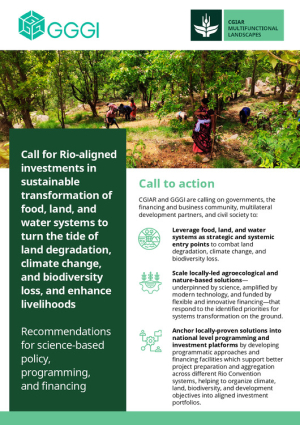
Call for Rio-aligned investments in sustainable transformation of food, land, and water systems to turn the tide of land degradation, climate change, and biodiversity loss, and enhance livelihoods
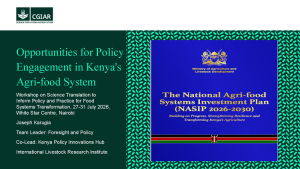
Co-developing a Kenyan scenario model towards a sustainable food system: Reflections from the Kenya Interactive Food Systems Model workshop