ILRI corporate report 2026: Advancing Sustainable Livestock - explore now

Secondary navigation

  • Search
  • Microsites

Main navigation

  • About
    • Overview
    • People
    • Supporters
  • Research
    • Impact areas
      • Climate adaptation and mitigation
      • Environmental health and biodiversity
      • Gender, equality, youth and social inclusion
      • Nutrition, health and food security
      • Poverty reduction, livelihoods and jobs
    • Research support
      • Research compliance
      • Communication and knowledge management
      • Intellectual property and legal unit
      • Data and research methods
    • Themes
      • Health
      • Livestock, Genetics, Nutrition, and Feed Resources
      • People, Policies, and Institutions
      • Livestock, Climate, and Environment
    • Projects
    • CGIAR research initiatives
    • BecA-ILRI Hub
    • Innovations scaling and impact
    • Capacity development
    • Facilities
      • Centre for tropical livestock genetics and health
      • ILRI Genebank
      • Kapiti research station
      • Mazingira centre
      • One health centre
      • Poultry facility
      • The CGIAR AMR hub
      • Tick unit
      • Bioscience facility
      • Genomics platform
      • ILRI-Hyderabad livestock research facilities
  • Where we work
    • Eastern and southern africa
      • Kenya
      • Ethiopia
      • Tanzania
      • Uganda
      • Zimbabwe
      • Burundi
    • West Africa
      • Burkina Faso
      • Mali
      • Nigeria
      • Senegal
    • South Asia
      • India
      • Nepal
    • East and Southeast Asia
      • Vietnam
    • Explore our work in the countries
  • News & Events
    • News
    • Events
    • ILRI in the media
  • Knowledge
    • Outputs
      • Publications
      • Journal articles
      • Presentations
      • Infographics
      • Browse archive
    • Data
      • Datasets
      • Apps
    • Multimedia
      • Videos
      • Podcasts
      • Stories
  • Join Us
    • Careers
    • Subscribe
International Livestock Research Institute
  • Overview
  • People
  • Supporters

CGIAR RESEARCH INITIATIVES

ILRI is actively engaged in several CGIAR initiatives and platforms.

  • Impact areas
    • Climate adaptation and mitigation
    • Environmental health and biodiversity
    • Gender, equality, youth and social inclusion
    • Nutrition, health and food security
    • Poverty reduction, livelihoods and jobs
  • Research support
    • Research compliance
    • Communication and knowledge management
    • Intellectual property and legal unit
    • Data and research methods
  • Themes
    • Health
    • Livestock, Genetics, Nutrition, and Feed Resources
    • People, Policies, and Institutions
    • Livestock, Climate, and Environment
  • Innovations scaling and impact
  • BecA-ILRI Hub
  • CGIAR research initiatives
  • Projects
  • Capacity development
  • Facilities
    • Centre for tropical livestock genetics and health
    • ILRI Genebank
    • Kapiti research station
    • Mazingira centre
    • One health centre
    • Poultry facility
    • The CGIAR AMR hub
    • Tick unit
    • Bioscience facility
    • Genomics platform
    • ILRI-Hyderabad livestock research facilities
International Land Coalition Rangelands Initiative

International Land Coalition Rangelands Initiative: Making rangelands secure

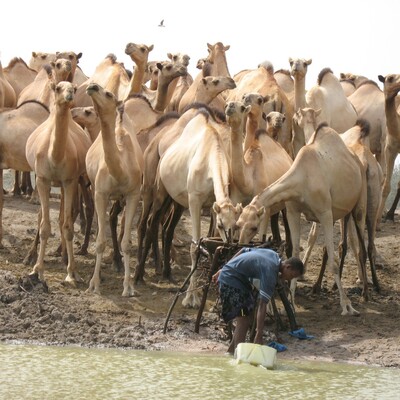
Camels drinking at a water pan in Wajir County, Kenya

ACTIVE Feb 2028

Emerging public health threats in Africa’s drylands

  • Eastern and southern africa
    • Kenya
    • Ethiopia
    • Tanzania
    • Uganda
    • Zimbabwe
    • Burundi
  • West Africa
    • Burkina Faso
    • Mali
    • Nigeria
    • Senegal
  • South Asia
    • India
    • Nepal
  • East and Southeast Asia
    • Vietnam
  • Explore our work in the countries
  • News
  • Events
  • ILRI in the media
SAAF_ActivityReport_AdoptingTechnologies.pdf.jpg
2025

Adopting technologies to enhance productivity, resilience and equity in ruminant livestock resources under pastoral systems of Africa

  • Ojango, Julie M.K.
two_pager_ strategy.pdf.jpg
2024

Unlocking sustainable livestock’s potential through research for better lives and a better planet: ILRI Corporate Strategy 2024–2030

  • International Livestock Research Institute
  • Outputs
    • Publications
    • Journal articles
    • Presentations
    • Infographics
    • Browse archive
  • Data
    • Datasets
    • Apps
  • Multimedia
    • Videos
    • Podcasts
    • Stories
  • Careers
  • Subscribe

Main navigation

  • About
    • Overview
    • People
    • Supporters
  • Research
    • Impact areas
      • Climate adaptation and mitigation
      • Environmental health and biodiversity
      • Gender, equality, youth and social inclusion
      • Nutrition, health and food security
      • Poverty reduction, livelihoods and jobs
    • Research support
      • Research compliance
      • Communication and knowledge management
      • Intellectual property and legal unit
      • Data and research methods
    • Themes
      • Health
      • Livestock, Genetics, Nutrition, and Feed Resources
      • People, Policies, and Institutions
      • Livestock, Climate, and Environment
    • Projects
    • CGIAR research initiatives
    • BecA-ILRI Hub
    • Innovations scaling and impact
    • Capacity development
    • Facilities
      • Centre for tropical livestock genetics and health
      • ILRI Genebank
      • Kapiti research station
      • Mazingira centre
      • One health centre
      • Poultry facility
      • The CGIAR AMR hub
      • Tick unit
      • Bioscience facility
      • Genomics platform
      • ILRI-Hyderabad livestock research facilities
  • Where we work
    • Eastern and southern africa
      • Kenya
      • Ethiopia
      • Tanzania
      • Uganda
      • Zimbabwe
      • Burundi
    • West Africa
      • Burkina Faso
      • Mali
      • Nigeria
      • Senegal
    • South Asia
      • India
      • Nepal
    • East and Southeast Asia
      • Vietnam
    • Explore our work in the countries
  • News & Events
    • News
    • Events
    • ILRI in the media
  • Knowledge
    • Outputs
      • Publications
      • Journal articles
      • Presentations
      • Infographics
      • Browse archive
    • Data
      • Datasets
      • Apps
    • Multimedia
      • Videos
      • Podcasts
      • Stories
  • Join Us
    • Careers
    • Subscribe

Secondary navigation

  • Search
  • Microsites

2019 Lancet Countdown on Health and Climate Change

Climate change is already damaging the health of the world’s children and is set to shape the well-being of an entire generation unless the world meets Paris Agreement targets to limit warming to ‘well below’ 2 degrees Celsius, according to the latest The Lancet Countdown on Health and Climate Change report. 

The report is a comprehensive yearly analysis that tracks progress across 41 key indicators, demonstrating what action to meet Paris Agreement targets—or business as usual—means for human health. The indicators are split into climate change a) impact, exposure and vulnerability; b) adaptation, planning and resilience for health; c) mitigation actions and health co-benefits; d) finance and economics; e) public and political engagement. 

The project is a collaboration between 120 experts from 35 institutions including the International Livestock Research Institute, World Health Organization (WHO), World Bank, University College London and Tsinghua University.

  • Learn below what this report means for Africa.
  • Visit the Lancet Countdown report site to download the report.

Press kit

  • Press release
  • Social media toolkit

Contact for media inquiries

The Lancet Countdown on Health and Climate Change

DISEASE
Malaria suitability will increase in highland areas of sub-saharan Africa, such as Nairobi, which are the most densely populated agro-climatic zone in sub-Saharan Africa. PHOTO James Gathany/CDC
AGRICULTURE
Crop yield potential has reduced in Kenya for all major crops. Since the 1960s, crop yield potential in Kenya has reduced by 6.4% for maize, 1.5% for winter wheat, 1.1% for spring wheat, and 15% for rice. PHOTO C. de Bode/CGIAR
HEALTH
The WHO African region spends the lowest in health adaptation at USD0.45 per capita (compared to USD5.50 per capita in the Americas and USD5 per capita in Europe). Kenya is even below the African average at USD0.26 per capita. PHOTO A. Habtamu/ILRI
EXTREME TEMPERATURES
In Kenya, 86 million potential labour hours were lost due to heat exposure on average in 2015–2018. This is a 5-fold increase from the average for 2000–2003. 98% of the lost hours were lost in the agricultural sector. PHOTO C. de Bode/CGIAR
EMISSIONS
Africa still produces 50% of its electricity from coal, although this is down from 70% in the 90s. In 2016, only 2.6% of electricity in Africa was generated from renewable sources. PHOTO Anagoria
DROUGHT
Major recurring droughts in the Horn of Africa have affected tens of millions of people and cost billions of dollars in livestock losses, particularly in the arid and semi-arid lands that occupy 80–90% of Kenya’s land area. PHOTO K. Dhanji/ILRI

The life of every child born today will be profoundly affected by climate change, with populations around the world increasingly facing extremes of weather, food and water insecurity, changing patterns of infectious disease, and a less certain future. Without accelerated intervention, this new era will come to define the health of people at every stage of their lives. 

'Children are particularly vulnerable to the health risks of a changing climate. Their bodies and immune systems are still developing, leaving them more susceptible to disease and environmental pollutants,' says Nick Watts, executive director of The Lancet Countdown. 'The damage done in early childhood is persistent and pervasive, with health consequences lasting for a lifetime. Without immediate action from all countries to cut greenhouse gas emissions, gains in wellbeing and life expectancy will be compromised, and climate change will come to define the health of an entire generation.'

A second path – which limits the global average temperature rise to 'well below 2ºC' – is possible, and would transform the health of a child born today for the better, throughout their lives. Placing health at the centre of the coming transition will yield enormous dividends for the public and the economy, with cleaner air, safer cities, and healthier diets.

However, the United Nations warns that we are on the brink of missing the opportunity to limit global warming to 1.5°C:

If we rely only on the current climate commitments of the Paris Agreement, temperatures can be expected to rise to 3.2°C this century. Temperatures have already increased 1.1°C, leaving families, homes and communities devastated.

We need to close the ‘commitment’ gap between what we say we will do and what we need to do to prevent dangerous levels of climate change. Governments cannot afford to wait. People and families cannot afford to wait. Economies must shift to a decarbonization pathway now.

Bold new approaches to policy making, research and business are needed in order to change course. An unprecedented challenge demands an unprecedented response. It will take the work of the 7.5 billion people currently alive to ensure that the health of a child born today is not defined by a changing climate.

The Lancet Countdown authors call for bold action to turn the tide on the enormous health impact of climate change in four key areas:
  1. Delivering rapid, urgent, and complete phase-out of coal-fired power worldwide.
  2. Ensuring high-income countries meet international climate finance commitments of USD100 billion a year by 2020 to help low-income countries.
  3. Increasing accessible, affordable, efficient public and active transport systems, particularly walking and cycling, such as the creation of cycle lanes and cycle hire or purchase schemes.
  4. Making major investments in health system adaptation to ensure health damage of climate change doesn’t overwhelm the capacity of emergency and health services to treat patients.

Jimmy Smith

Jimmy Smith

Director general, International Livestock Research Institute (ILRI)

We are delighted that ILRI was able to help The Lancet Countdown in its vital work of advancing the discussion on climate change. It is especially gratifying that ILRI is at the forefront of efforts to find solutions for the livestock sector under climate change that incorporate the perspectives and well-being of people in the developing world

Delia Grace

Delia Grace

Co-Leader Animal & Human Health, International Livestock Research Institute (ILRI)

We are not seeing the sort of change that we need, and I’m concerned that children in Africa will suffer as a result.

Rosemary Sang

Rosemary Sang

Scientist, Kenya Medical Research Institute (KEMRI)

Past and current economic activities in the West are likely to affect Africa’s future for decades to come. We cannot afford to wait on the sidelines for the right decisions to be made; we must lend our voices to those calling for urgent action now.

Nick Watts

Nick Watts

Executive director, Lancet Countdown

With its high rates of healthcare inequality, poverty, and food insecurity, the health effects of climate change are going to be felt strongly across Africa. Dengue and Malaria will spread into new areas, a more hostile climate will continue to threaten food security, and without immediate action, climate change will come to define the health of an entire generation.

Indicator 3.5: emissions from livestock and crop production

Headline findings:

  • Total emissions from livestock have increased by 14% and emissions from crop production have increased by 10%, from 2000 to 2016, with 93% of livestock emissions attributed to ruminants
  • Obesity and undernutrition present two great challenges to global public health, and both these forms of malnutrition share many common systemic drivers with climate change.
  • Current dietary trends are contributing to both non-communicable diseases and greenhouse-gas emissions, with further planetary impacts including biodiversity loss and changes in water and land use. In particular, excess red meat consumption contributes to the risk of cardiovascular disease and type 2 diabetes as well as increased greenhouse-gas emissions.
  • Although total emissions from crops and livestock will need to substantially decline in the future, particular attention should be given to capitalising on low-carbon production processes, and reducing the consumption of ruminant meat and other animal source foods, particularly in high-income settings. Importantly, the nuance and complexity of any such indicator must be emphasised, and no one-diet-fits-all solution exists. 

ILRI contribution to the 2019 report

This year, a new indicator has been added: emissions attributable to livestock and crops. ILRI helped the Lancet Countdown commission track livestock emissions in developing countries.


ILRI scientists working on health and climate change

Delia Grace

Delia Grace

Professor Food Safety Systems, NRI; joint appointed scientist, ILRI

Paula Dominguez-Salas

Paula Dominguez-Salas

Assistant professor at London School of Hygiene and Tropical Medicine

Bernard Bett

Bernard Bett

Senior scientist, Animal and human health

Todd Crane

Todd Crane

Principal Scientist, Climate change adaptation & Head of delegation UNFCCC

Lutz Merbold

Lutz Merbold

Visiting Scientist

Publications

ILRI logo

ILRI Kenya

PO Box 30709
Nairobi 00100, Kenya
  • +254-20 422 3000
  • +254-20 422 3001
  • ILRI-Kenya@cgiar.org

ILRI Ethiopia

PO Box 5689
Addis Ababa, Ethiopia
  • +251-11 617 2000
  • +251-11 617 2001
  • ILRI-Ethiopia@cgiar.org

Get Involved

  • Subscribe to our Newsletter
  • Facebook
  • Twitter
  • Slideshare
  • Flickr
  • Youtube
  • Linkedin
  • Pinterest
  • Instagram

We would like to thank all funders who supported this research through their contributions to the CGIAR Trust Fund.

CGIAR logo
  • Copyright and permissions
  • © 2026 International Livestock Research Institute
  • Creative commons