Farmer-to-farmer learning helps Kenyan dairy producers adapt to new climate realities
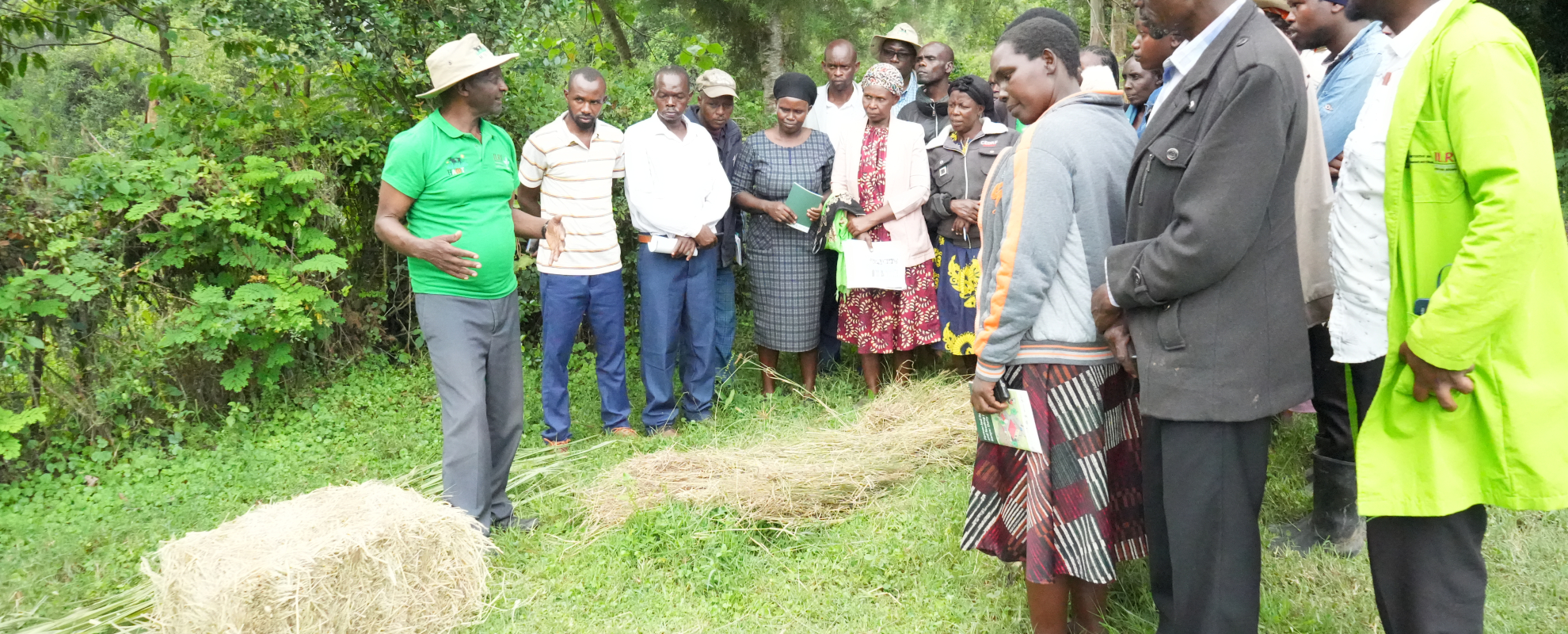
When more than 100 dairy farmers recently gathered on a 10-acre farm in the quiet hills of Lulusik village in Bomet County, they did not come to listen to government extension workers or agricultural researchers. Instead, they came to learn from three innovative farmers, known as adaptation pioneer farmers.
With climate change impacts intensifying in Kenya, a few resourceful farmers are developing effective adaptation techniques. As local experts, they are well placed to share what works with others in their communities.
“The success of the adaptation pioneer farmer model lies in its simplicity. Farmers identify practical solutions that work under local conditions, evaluate them on their own farms, and then share them with neighbors,” explained Emmaculate Kiptoo, a research associate with the International Livestock Research Institute (ILRI).
ILRI and its partners are supporting farmer-led field days for adaptation pioneer farmers to share their innovations with their communities, enabling even more farmers to maintain productive livestock systems under changing climate conditions.
An adaptation pioneer farmer shares climate solutions
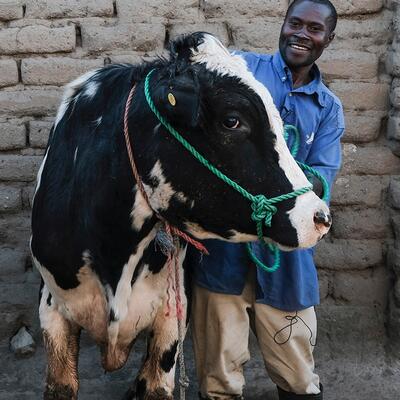
Joseph Bett is one of the adaptation pioneer farmers who hosted a field day in Bomet County.
“We decided to host the field day because we wanted other farmers to benefit from what we have learned,” said Bett. “I wanted them to know how to better feed their livestock and how to plan for times of scarcity. I showed them how to do rotational grazing through paddocks, how to make silage, and how to grow nutritious feeds to cope with the dry spells that are becoming longer and more unpredictable. Many were surprised that some of the resources needed were already available on their own farms.”
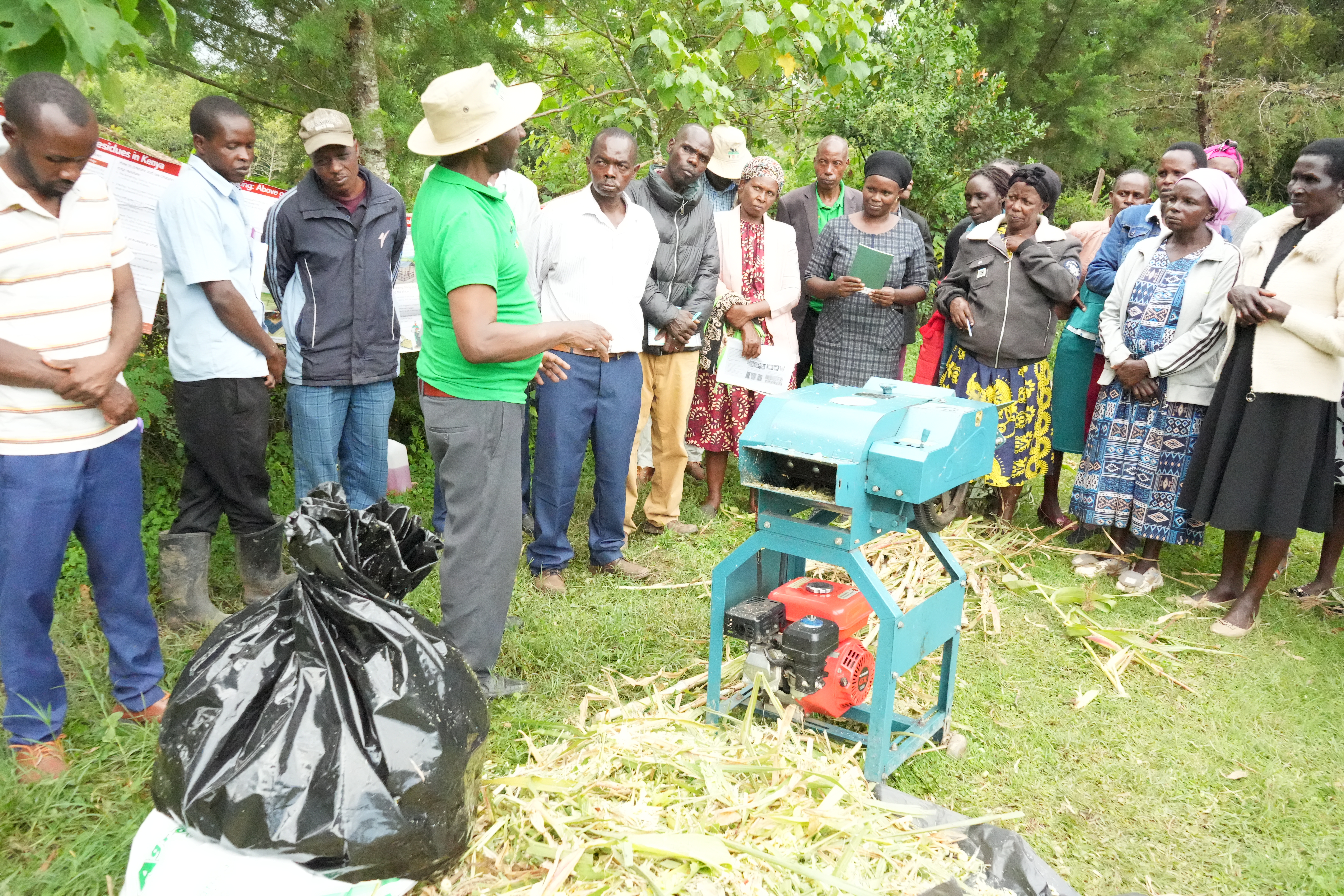
By relying on diverse feed strategies, Bett ensures that his 20 Ayrshire and Friesian cattle have a balanced diet throughout the year. During normal times, the animals graze on his seven paddocks, covering about 7.5 acres.
“Pasture plays a very important role on this farm, because it is our primary source of livestock feed, and without pasture our livestock cannot do very well,” Bett said.
Bett also gives his cows a mix of high-protein feeds such as sesbania, lucerne, and sweetpotato vines. An earth dam guarantees access to water throughout the year, and tools to cut and mix fodder help optimize the nutritional content of feed.
In combination, these solutions mean that Bett gets around 10 liters of milk per cow per day — more than what most farmers achieve.
“We need to treat dairy farming as a business,” Bett said. “At the end of the day, we need income for school fees and other family needs. So, our goal is to keep fewer cows that are better fed and more productive.”
Adaptation pioneer farmers boost agricultural extension services
According to Cheruiyot Langat, Bomet County director of livestock production, the adaptation pioneer farmer model is changing how counties such as Nandi and Bomet are reaching communities through agricultural extension services:
“This strategy has become an eye-opener for our extension officers and for the county at large. We have noted that farmers are very interested in learning from other farmers. When the pioneer farmers share information in the local language, with real on-farm demonstrations, other farmers understand it better and are more convinced to adopt those practices. Also, our extension workers are few and can only be in one place for a brief period, but the pioneer farmers remain within the community.”
One participant in the farmer field day was Caroline Tanui, a dairy farmer from the nearby Sachangwan village:
“The field day has been a great day for me because I have learned a lot from other farmers. I discovered better ways of making and storing silage and learned about high-protein livestock feed crops like lucerne and desmodium. I know I will implement these practices and also teach others who could not attend.”
She left the gathering with contact details for people working in artificial insemination, savings groups, and other farm enterprises.
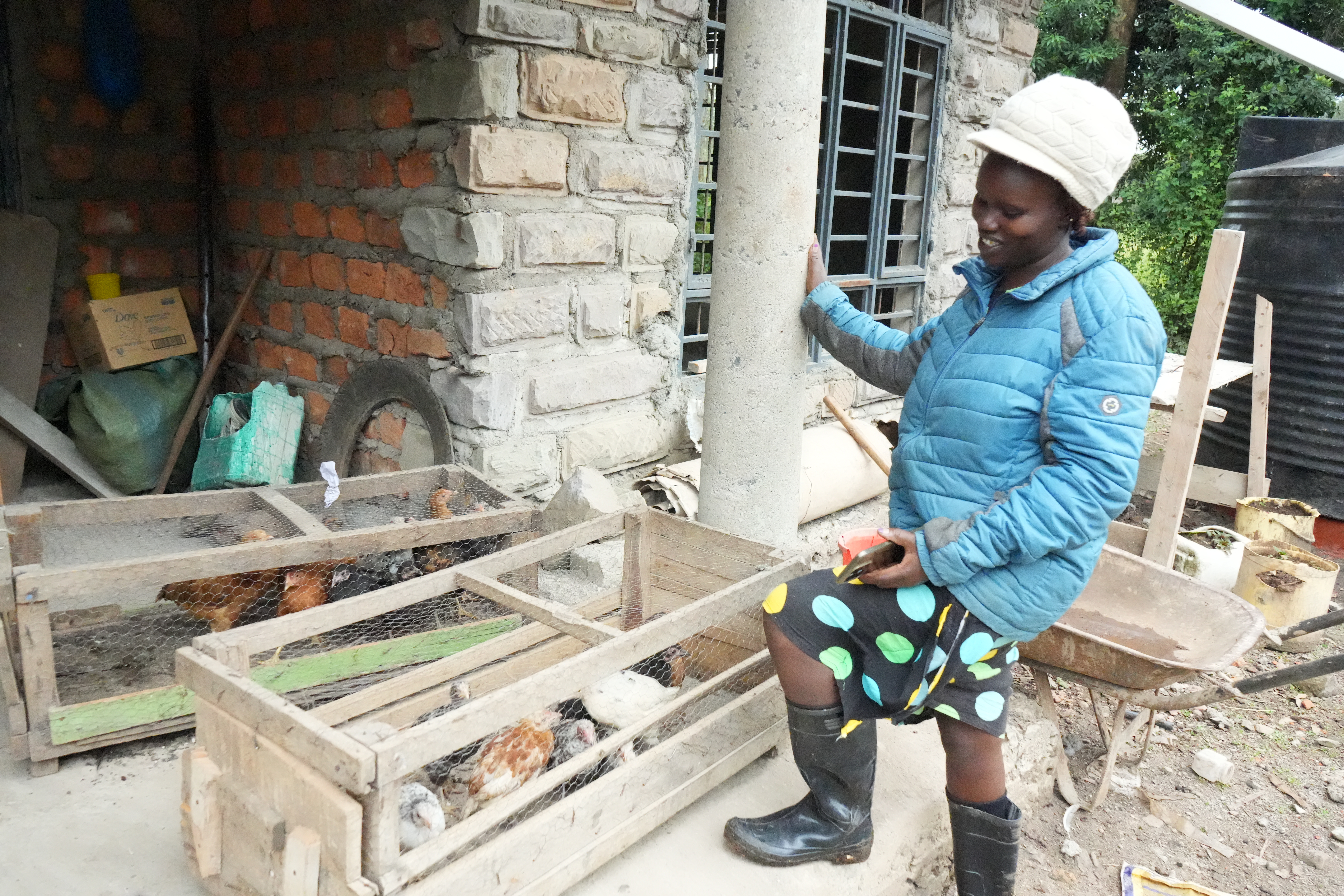
The field days also enable adaptation pioneer farmers to generate additional income by selling fodder planting materials and livestock-related products to visitors, while their guests leave with new ideas they can implement immediately.
Building lasting change
Since 2022, ILRI — through its HABITAT project and previous initiatives — has supported more than 25 farmer-led field days in Bomet County. In May 2026 alone, six field days reached close to 1,000 people, with participation from the County Government of Bomet, Kenya Animal Genetic Resources Centre, Equity Group Foundation, and Sistema.bio.
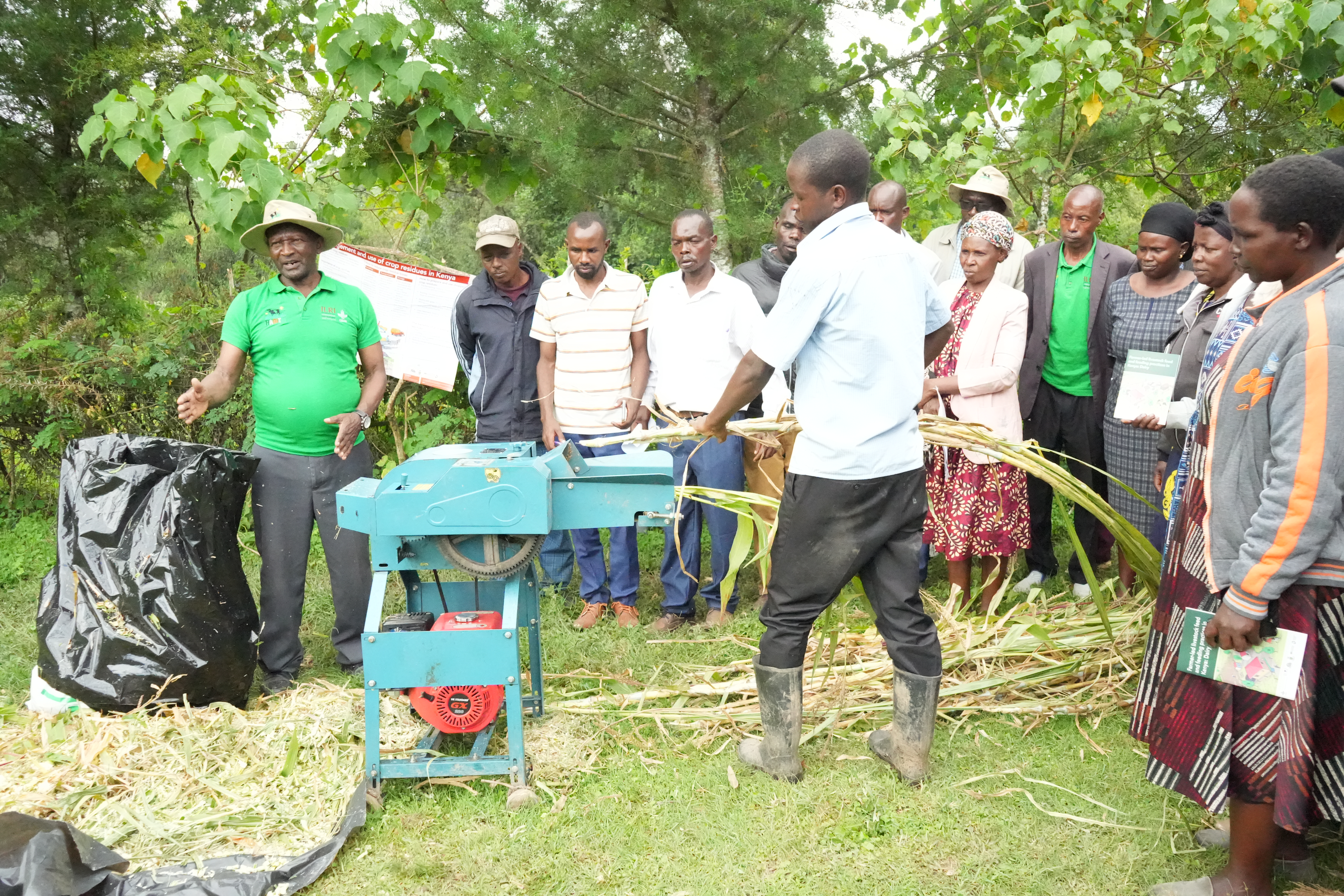
ILRI and its partners are documenting lessons from the adaptation pioneer farmer model to strengthen farmer-led field days and support wider use of locally developed climate adaptation solutions. Drawing on these lessons, the Bomet and Nandi County governments are developing guidelines to integrate the farmer-to-farmer learning approach into the extension system and explore its use beyond the dairy sector.
To Bett, the adaptation pioneer, success is defined not only by the performance of his own farm, but also by the progress of those around him. His belief is simple: when one farmer succeeds, an entire community can benefit. And in Bomet County, his dairy farm is showing that the most effective path to stronger, more climate-resilient livestock systems may begin with farmers learning from fellow farmers.
Read more:
Reimagining research: Empowering producer-led innovation for climate resilient livestock
Sustainable Animal and Aquatic Foods | CGIAR System
Related Publications
Collective governance and household-Level decision-making in Afar pastoral systems: Implications for Pioneer Positive Deviance