Exploring gender and social vulnerabilities to Rift Valley fever: A socio-ecological One Health case study in Kenyan pastoralism
Abstract
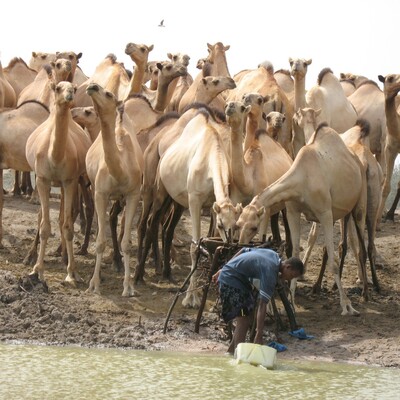
Rift Valley fever (RVF) poses a persistent public health threat in pastoralist regions of Kenya, where human and animal life are intricately linked. This case study examines how social and gender roles shape vulnerability to RVF and how gender dynamics influence the capacities of men and women to negotiate resilience in the face of RVF among Kenyan pastoralists. Specifically, the case study analyses how gender roles embedded in pastoralist practices among children increases their vulnerability to RVF and how these roles influence their social interactions; secondly, to establish how do men’s and women’s livestock ownership and decision making power within the household influence resilience to RVF. The case study findings reveal that boys and girls possess differing levels of knowledge about RVF with boys demonstrating comparatively greater understanding. Importantly, children’s involvement in livestock-related activities contributes to an increased risk of exposure to RVF. In addition, the findings highlight that traditionally, men hold the final authority over livestock ownership and household decisions. The finding further revealed that pastoralist men and women employ diverse strategies, such as hygiene measures, mosquito net use, knowledge sharing, entrepreneurship, healthcare services, and indigenous medicine, to mitigate the impact of RVF on humans and livestock. We conclude that RVF vulnerability in pastoralist communities is shaped by gender roles and individual capacities to negotiate for resilience. Integrating a One Health approach which recognizes the interdependence of human, animal, and environmental health is essential to build sustainable resilience and ensure coordinated responses across sectors.
Citation
Mutambo, I.N., Bett, B. and Bukachi, S.A. 2026. Exploring gender and social vulnerabilities to Rift Valley fever: A socio-ecological One Health case study in Kenyan pastoralism. One Health Cases 2026 (2026): ohcs20260007.