NextGen Ag-Tech Solutions for Africa’s Farmers: Reflections from ACAT2025
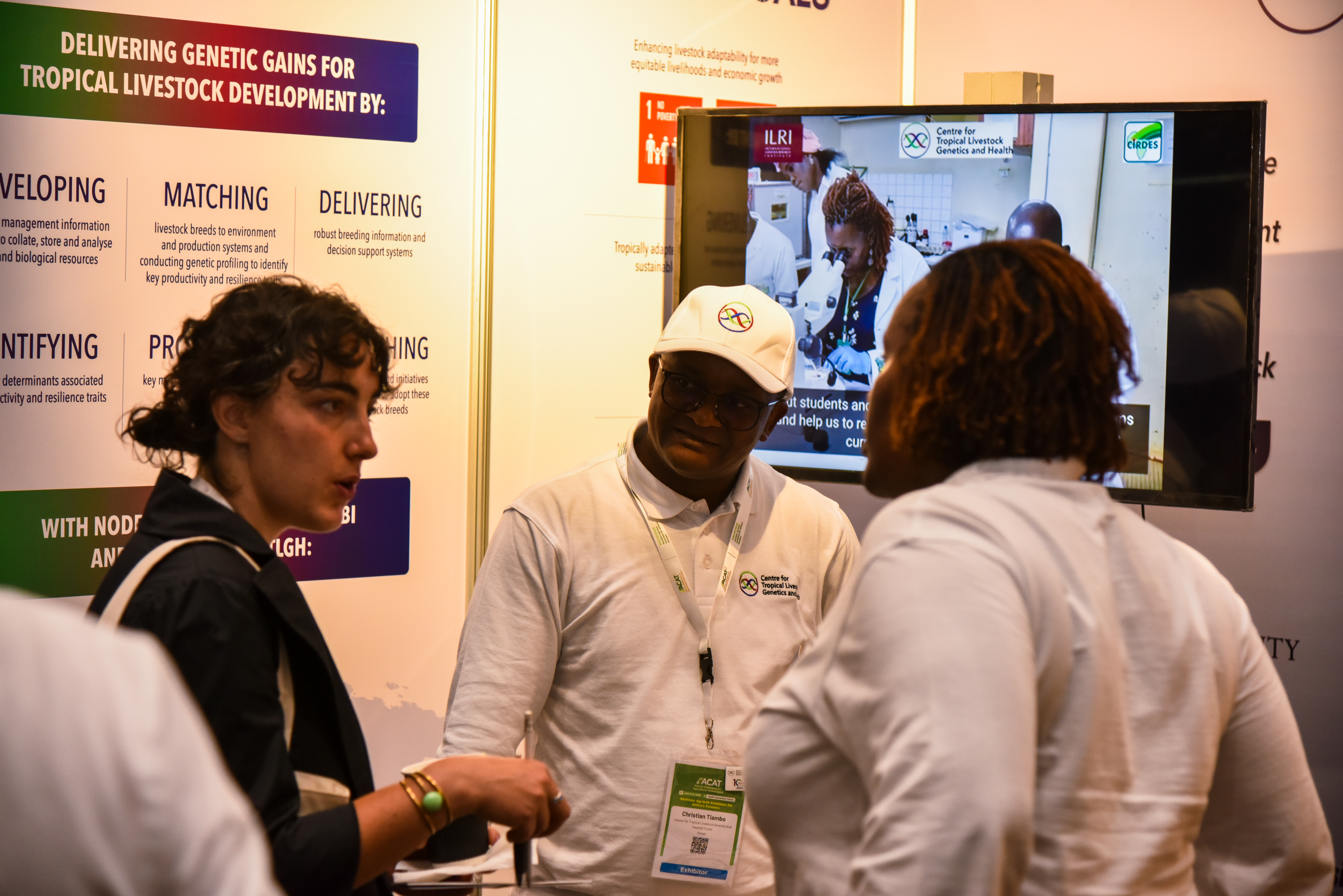
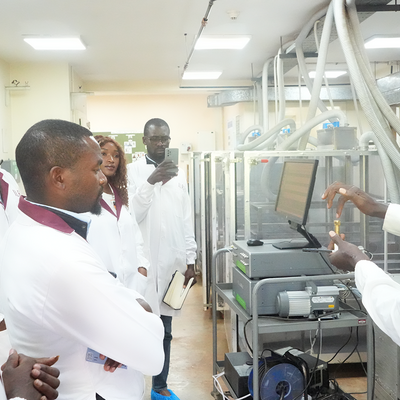
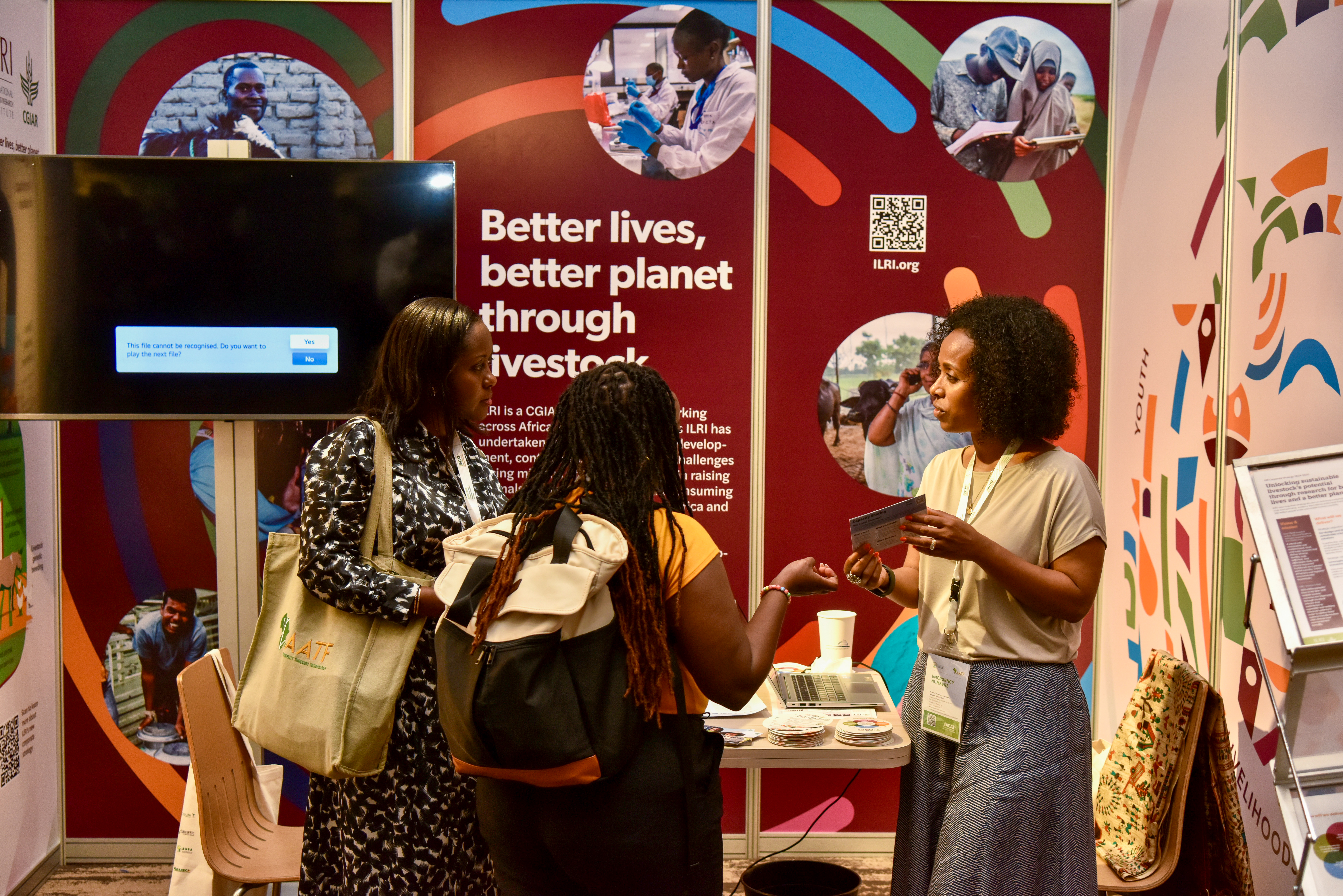
The Africa Conference on Agricultural Technologies (ACAT2025) ended with a push for technology-driven, sustainable agriculture transformation, led by Africans. Under the theme of “NextGen Ag-Tech Solutions for Africa’s Farmers” ILRI was present to showcase some of its innovations within the space and be part of this key gathering of Agricultural partners in Kigali, Rwanda. The Center for Tropical Livestock and Genetics (CTLGH) also had a booth speaking on its innovations within breeding and genetics projects.
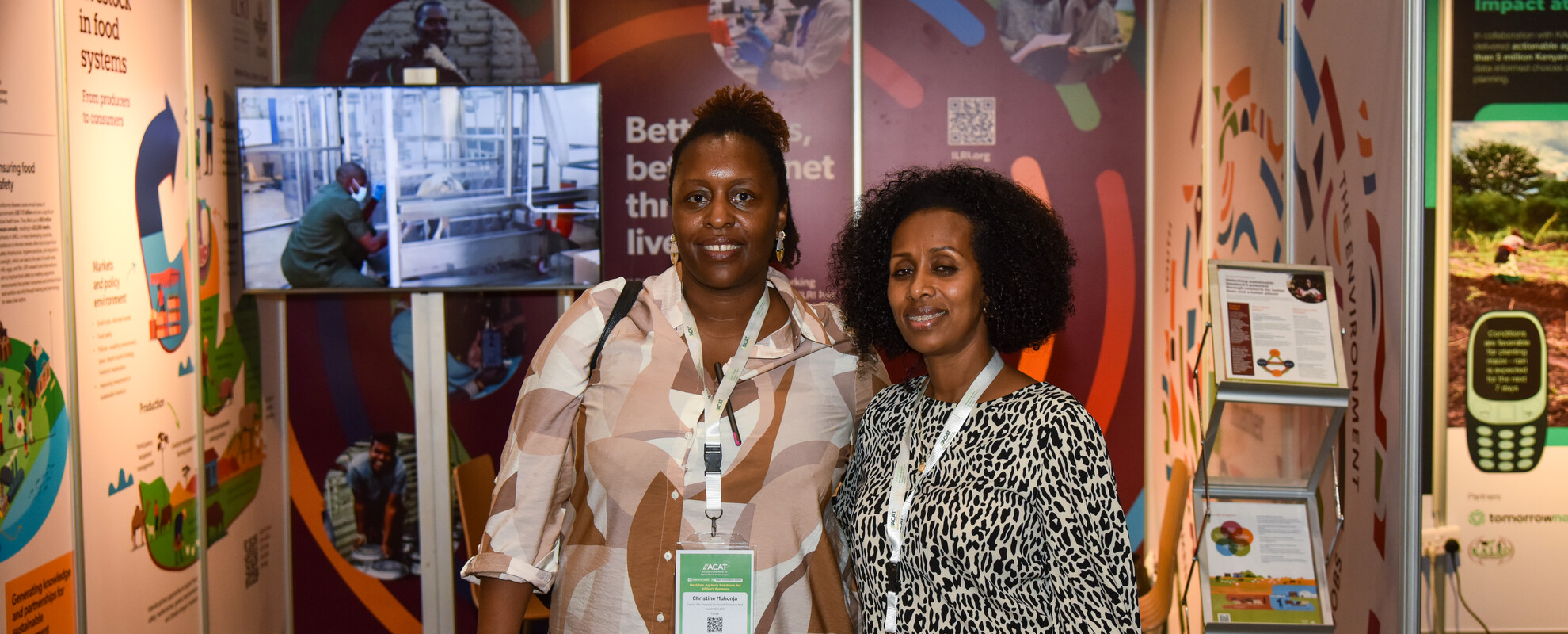
Christian K. Tiambo, Dr. Christine Muhonja, Marcel Henrique Blank from the Roslin Institute were present. Tsehay Gashaw and Saleef Nyambok represented ILRI at the booths. We spoke to Christian Tiambo who attended the event.
Why was it important for ILRI to be present at ACAT 2025?
This was one of the major agricultural technology conferences that we have on the continent. ILRI and CTLGH, being the main players in livestock development and research on the continent, had to be there also to showcase some of the technologies that we have been developing. Also, the impact they are having in communities and an opportunity for everybody to interact with other partners in agricultural technologies.
What were your key takeaways from the conference – insights, innovations, or trends that stood out?
From one of the sessions, a key sentiment came out. Any revision, innovation, or technology that comes out should be farmer- and impact-oriented. We saw different types of organizations, including donors such as the African Development Bank and the Technologies for African Agricultural Transformation (TAAT) program, as well as other private NGOs. Many policymakers discussed how technologies can have a significant impact. We saw the importance of developing home-grown technologies also. Building on what we have internally, we'll be able and adapt wisely to what is coming from outside, and we’ll be able to deploy the technologies.
Were there any interesting encounters with partners or collaborators that could lead to follow-up actions or new opportunities?
I would say Zipline. They were showcasing drone use for the timely distribution of semen and vaccines to farmers. This is something our partners can work on to make sure that we can use that we push and reach the 300 million people that we are targeting.
ICIPE was also doing work on the black soldier fly, which we are also working on. They are looking at how they can be used as livestock feed as an alternative source of protein.
Was there anything you learned that could inform ILRI’s research agenda or how we approach partnerships, innovation, or scaling?
We should be product development-oriented at ILRI and focused on impact.
From your perspective, what role can ILRI play in driving the next generation of agricultural technologies for Africa?
ILRI should be one of the key drivers of the next ACAT happening in Nairobi in 2027. This year’s ACAT was dominated by crop innovations. I hope that ILRI will feature in key areas around livestock in partnership with other partners to showcase these livestock innovations.
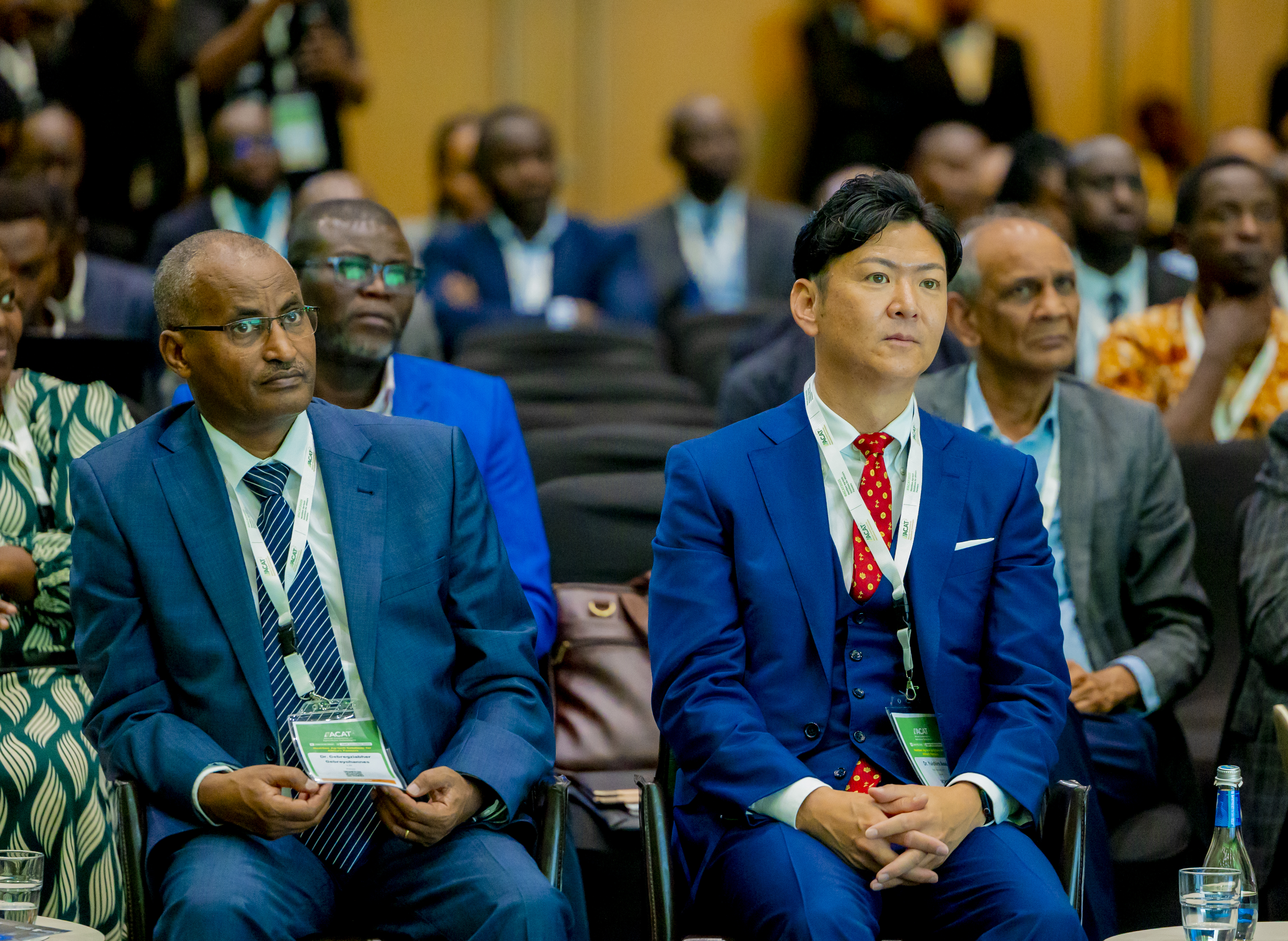
ILRI’s Gebreyohannes Gebregziabher spoke on the work ILRI is doing in 50 countries to reach 300 million lives during the session on charting a collaborative roadmap for quality partnerships.
“ILRI works with different partners nationally and internationally to scale and deploy the technologies it works on.”
He highlighted technologies such as KAZNET, which captures data working hand in hand with pastoralists to provide information to policymakers on market data, climate data, and more to help in better decision-making outcomes.
He also spoke on the Africa Asia Dairy Genetic Gains Project, which facilitates real-time data collection on pro genetics that can be easily translated back into information fed back to dairy farmers. Smallholder farmers often cannot access this data on genetics.
The farmers' dialogue reminded everyone that technology must be grounded in experiences learned by farmers and must be practical, inclusive, and responsive
The conference will meet again in 2027 in Nairobi to take stock of progress made to scale up technologies in line with Africa’s greater strategy for improving agricultural processes.