World Zoonoses Day 2025: How ILRI is combating Rift Valley fever in Africa
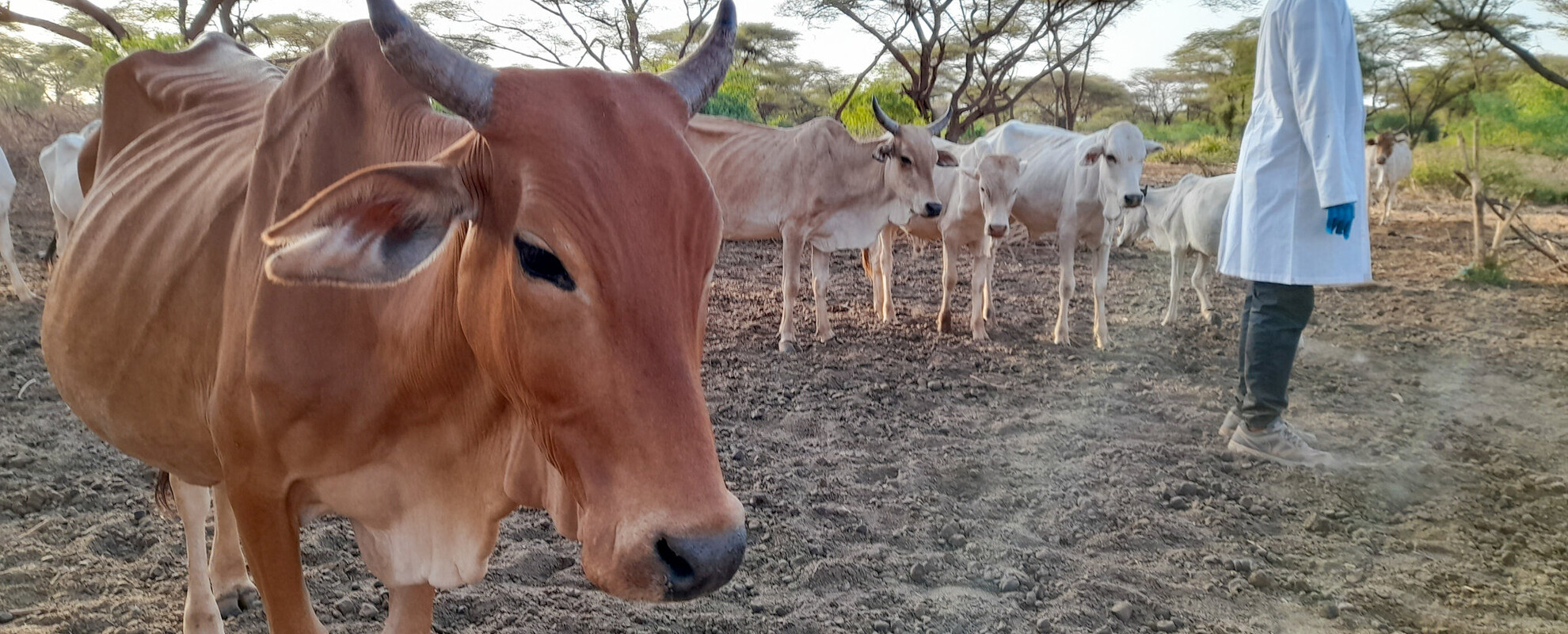
World Zoonoses Day, observed annually on 6 July, raises awareness about zoonotic diseases—infections which are transmitted between animals and humans—and celebrates progress in their prevention and control. This year, the International Livestock Research Institute (ILRI) is placing a spotlight on Rift Valley fever (RVF), a mosquito-borne viral zoonosis that affects both animals and humans. This disease is also influenced by climate variability and extreme weather patterns.
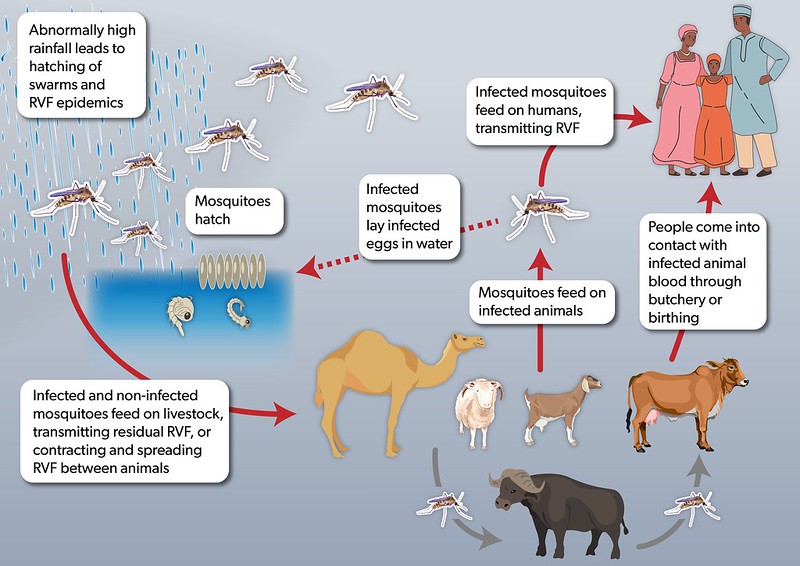
At ILRI, research on RVF spans decades and integrates surveillance, diagnostics, outbreak modeling, risk mapping, and policy engagement. To date some of our achievements include:
- Developing predictive risk models that utilize climate and environmental data to forecast RVF outbreaks, supporting early warning systems across East Africa.
- Establishing a surveillance pipeline to monitor RVF circulation in livestock populations across the wildlife-livestock interfaces, and detect early signs of potential outbreaks.
- Supporting vaccine development through the genomics division by analyzing the genetic diversity of RVF virus clades circulating in the region, which informs more effective immunization strategies.
- Advising policymakers on the adoption of integrated One Health strategies to strengthen coordination between animal and human health sectors for timely outbreak response and risk mitigation.
- Strengthening national capacity for RVF prevention and control by partnering with government agencies and technical institutions across multiple countries.
- Through ILRI’s People’s Policies and Institutional Program, modeling the impacts of RVF and potential interventions using system dynamics to demonstrate scenarios, such as the consequences of delayed livestock vaccination, and guide evidence-based decision-making.
Bernard Bett, ILRI team lead for the One Health Centre in Africa (OHRECA), and a long-standing expert on RVF, emphasized: "Rift Valley fever is not only a veterinary or public health issue, it’s a development challenge. A lot of resources are sunk into preventative measures, and outbreaks are associated with human and animal health burden and extensive socioeconomic losses. By using One Health approaches, we can anticipate and mitigate RVF outbreaks."
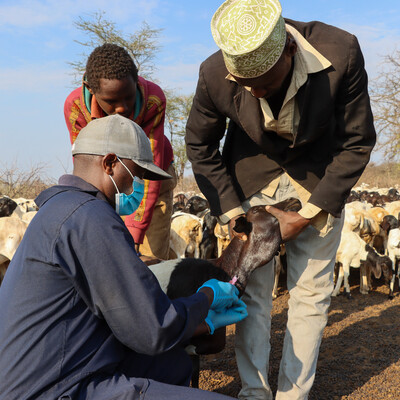
Through the Capacitating One Health in Eastern and Southern Africa (COHESA) project, ILRI also supports country-level efforts to build technical capacity and institutional readiness. In Rwanda, activities are focused on strengthening RVF detection in livestock through improved diagnostic tools and community engagement.
Anselme Shyaka, COHESA country multiplier and lecturer at the University of Global Health Equity, Rwanda shared: "Our work on Rift Valley fever in Rwanda brings science closer to the communities. By integrating local knowledge and equipping animal health workers with tools and training, we can strengthen early detection and response."
As we mark World Zoonoses Day, ILRI remains committed to advancing solutions that reduce the burden of zoonotic diseases like RVF, solutions that are grounded in science, shaped by partnerships, and designed to protect both people and animals in the face of a changing climate.
Learn more about our RVF work here.


Related Publications
Seasonal variation in mosquito abundance and environmental predictors in semi-pastoral southern Kenya: implications for endemic Rift Valley fever
Epidemiological and molecular characterization of Rift Valley fever outbreak in livestock in Burundi, May - November 2022
Systematic review and meta-analysis for the occurrence of Crimean-Congo hemorrhagic fever, tularemia, and Rift Valley fever in pastoralist systems in Africa