
Common livestock dewormers may be failing across Africa. Here’s why that matters
There is a pervasive problem amongst Africa’s ruminant livestock which is being overlooked. Grazing animals are often infected by gut nematodes—parasitic worms which live in the digestive system, stealing nutrients and causing poor health. To date, farmers have relied on worm-killing drugs—known as anthelmintics—to control these parasites. However, improper and indiscriminate use of these drugs, often without veterinary guidance, is driving a new and worrying problem: anthelmintic resistance (AHR), where worms survive treatment and continue to spread.
Parasitic worms are a hidden yet highly destructive enemy. Infections are long-lasting and reduce animal productivity, lower reproductive performance, and cause great discomfort. In sheep, for instance, they can cause up to 58% reduction in weight gain, a loss of 90% in wool production, and a 78% drop in milk yield. Globally, worm infections are responsible for huge economic losses in agriculture—in Europe alone, annual losses exceed USD 2 billion, and managing resistance costs USD 41 million each year.
In Africa then, what is the risk that parasites are becoming resistant?
A new scoping review published in BMC Veterinary Research in October 2025 by scientists from ILRI and the University of Nairobi examined evidence on anthelmintic resistance in African cattle, sheep, and goats. The team identified only 28 relevant studies spanning just nine of Africa’s 54 countries, with most published before 2014. This scarcity of recent and usable research underscores a critical knowledge gap that must be addressed; and the review offers valuable guidance for shaping and expanding future efforts.
The study found that resistance levels varied widely depending on the animal species, study location, and the type of deworming drug used, with most reports showing resistance to the commonly used drug classes—benzimidazoles and macrocyclic lactones—particularly in two widespread worm groups, Haemonchus and Trichostrongylus. Understanding this diversity better will be essential for planning effective control strategies.
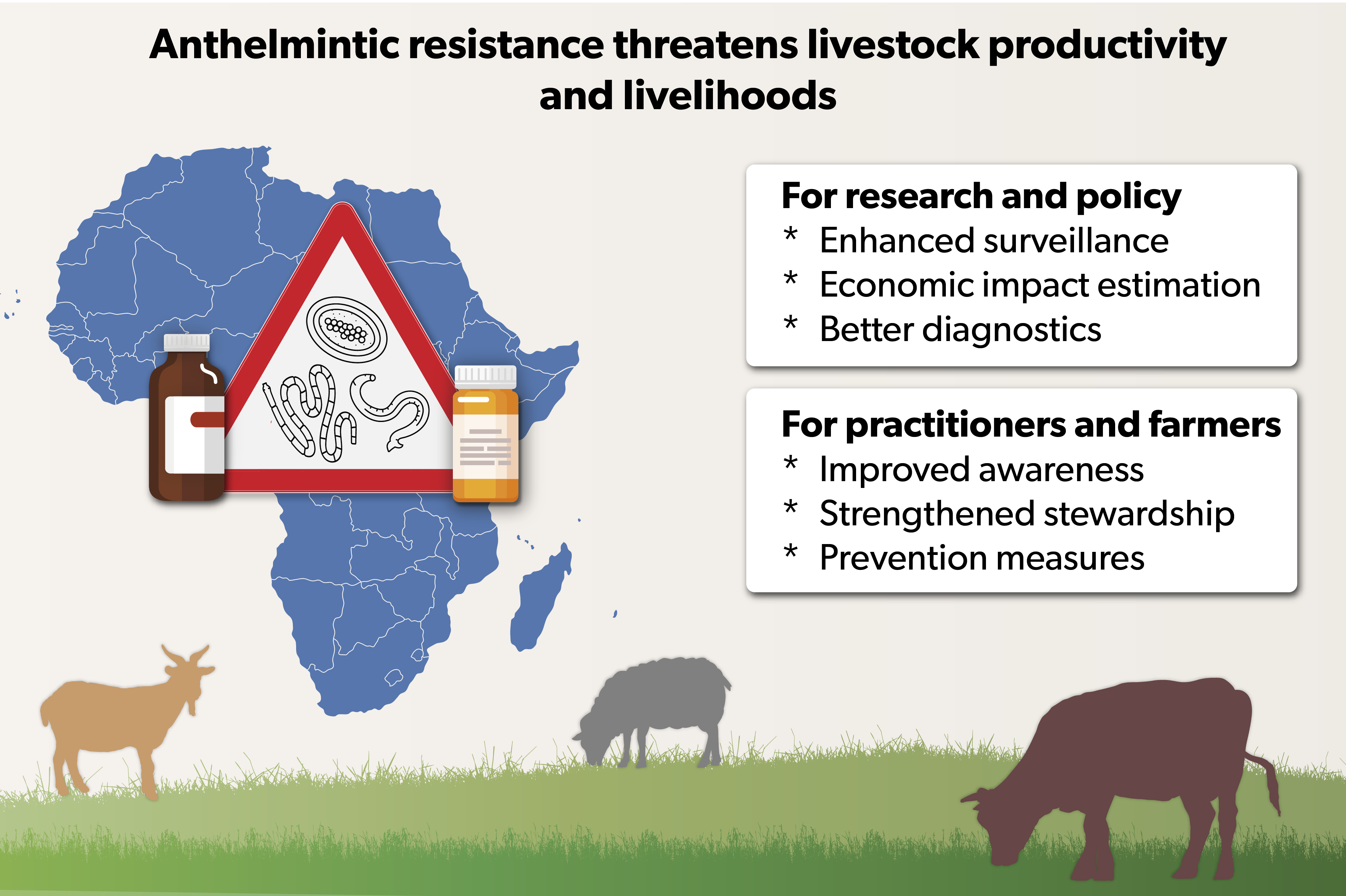
Globally and across Africa, anthelmintic resistance remains largely overlooked in funding priorities, national surveillance programs, and policy discussions. The researchers emphasize that everyone has a role to play, calling for:
- increased investment in research, diagnostics, and regular, standardized surveillance of AHR across African countries;
- enhanced multidisciplinary research to create field guidelines for AHR diagnosis;
- strengthened regulation and stewardship to promote prudent use of anthelmintics;
- greater farmer awareness and adoption of sustainable parasite control practices, such as improved grazing management.
They also emphasize we need to know what economic losses are being caused by parasites and anthelmintic resistance, as clear evidence of costs would create stronger incentives for improved control measures on farms and across regions. Again, this will be built on a base of modern, reliable and widely gathered data.
There is also no time to waste. Recent reports by the Intergovernmental Panel on Climate Change (2019) and the Food and Agriculture Organization of the United Nations (FAO, 2018) identified an increase in livestock diseases, including parasites, as a result of changing climate. To secure Africa’s livestock future—and by extension, its food security and economies—funders, scientists, and policymakers must act now.