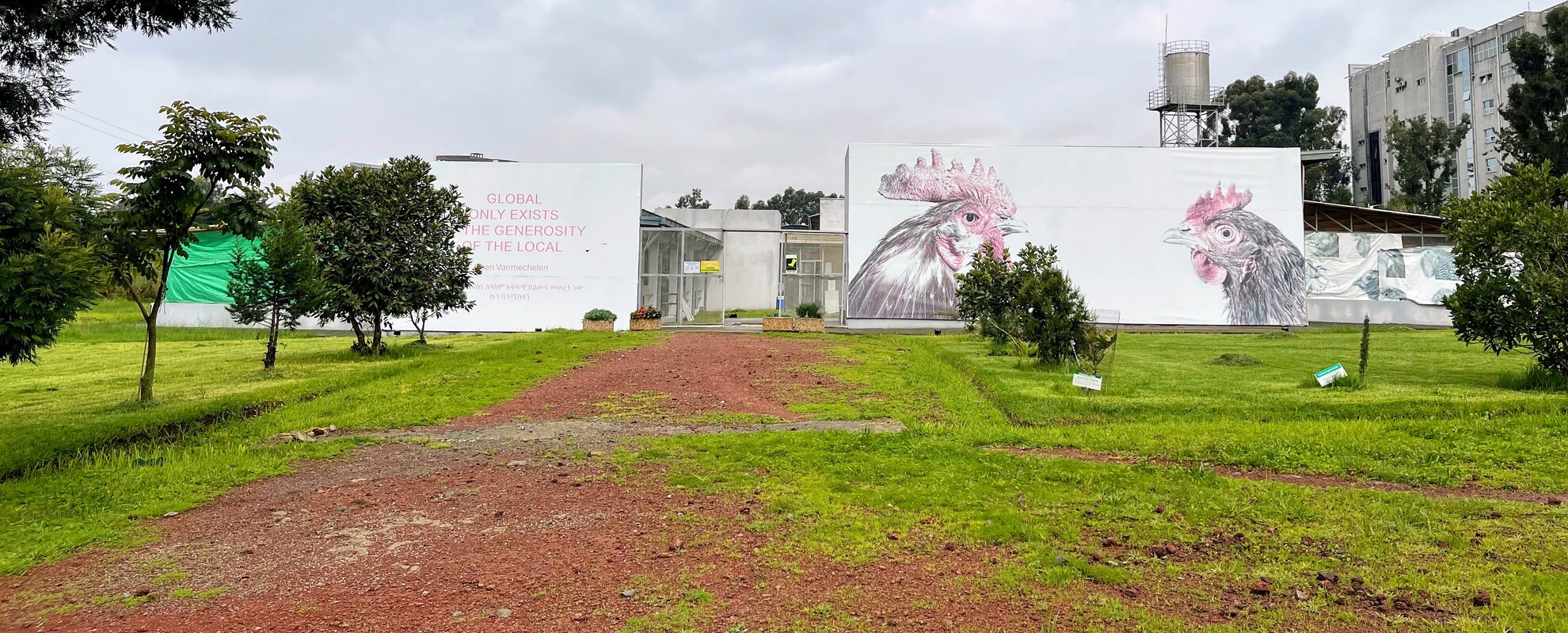
ILRI-CGIAR poultry research facility: A research and development hub open to the global scientific community
In a world facing mounting food security challenges, poultry research is becoming increasingly important. For communities in Africa and beyond, chickens have proven to be the gateway to nutrition and income.
But for poultry to deliver on its potential, we need infrastructure that generates new knowledge and turns that knowledge into practical solutions.
Established in 2018, the International Livestock Research Institute (ILRI) poultry facility in Addis Ababa, Ethiopia, is doing just that; it is CGIAR's only poultry facility.
Created in partnership with the University of Edinburgh and with support from the Roslin Foundation, the Biotechnology and Biological Sciences Research Council and ILRI's livestock genetics, nutrition and feed resources program, the facility is a centre of excellence for research in poultry genetics, health and nutrition for the scientific and education community.
‘This facility stands on the shoulders of strong partnerships and years of scientific research progress,’ says Wondmeneh Esatu, an animal geneticist at ILRI. ‘It is a platform where feedback from the end users of our innovations, is being used to develop animal breeds that are appropriate to smallholder farmers.’
Open to researchers, students, and the public and private sector alike, the facility is advancing science, support education and training, and enabling partnerships that drive tangible impact in poultry systems.
'This facility serves not just ILRI's research goals, but the broader needs of a growing scientific community that is looking to tackle challenges in the poultry sector through real-world solutions,’ says Olivier Hanotte, a geneticist at ILRI and the Centre for Tropical Livestock Genetics and Health.
The facility consists of indoor and outdoor poultry raising structures, allowing researchers to simulate and test controlled trials alongside smallholder conditions. The indoor facility has 20 pens that host up to 4,000 adult chickens, plus an incubation and hatching room.
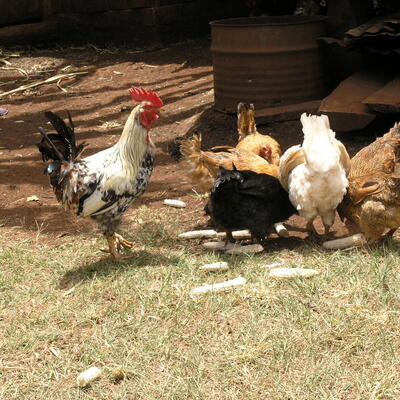
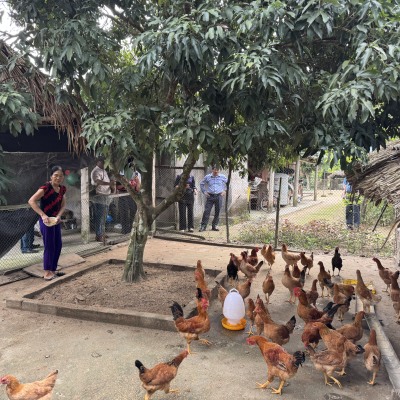
The outdoor spaces consist of four large open fields, each measuring 400 square metres, mimicking the semi-scavenging conditions of raising poultry in smallholder settings.
Built for science and service
The ILRI-CGIAR poultry research facility is advancing chicken development in the region.
Tropical Poultry Genetic Solutions, a three-year project that is characterizing local chicken ecotypes to match farmer preferences and helping establish new chicken breeding programs in Africa, is evaluating crossbred chicken populations, pinpointing genetic potential associated with strong immune systems, high egg-laying capacity, and efficient feed conversion at the facility. This includes assessing the productivity (eggs and meat) of various chicken genotypes in relation to feeding regimes, different climatic conditions, as well as disease challenges.

With the Leibniz Institute of Farm Animal Biology in Germany, ILRI has tested a novel chicken feed blend containing flaxseed (as an omega-3 precursor) and plant polyphenol extracts to find an affordable and scalable poultry-based nutritional solution to help address omega-3 fatty acid deficiency among vulnerable populations in Ethiopia.
This research found that consuming one omega-3-enriched egg or 250 grams of chicken breast 3-4 times per week could help meet the recommended intake of omega-3 fatty acids in vulnerable populations such as young children and pregnant women.
Since 2021, ILRI, Amhara Regional Agricultural Research Institute, later joined by the Roslin Institute, University of Edinburgh, and Scotland's Rural College, have collaborated to improve the productivity and resilience of Ethiopia’s indigenous Tilili chicken breed.
This partnership has developed a chicken that performs well in smallholder conditions and withstands environmental and disease challenges. The program has achieved 68% increase in body weight for Tilili chicken at week 16, a 111% increase in egg production and a 90% decline in mortality during the laying period.
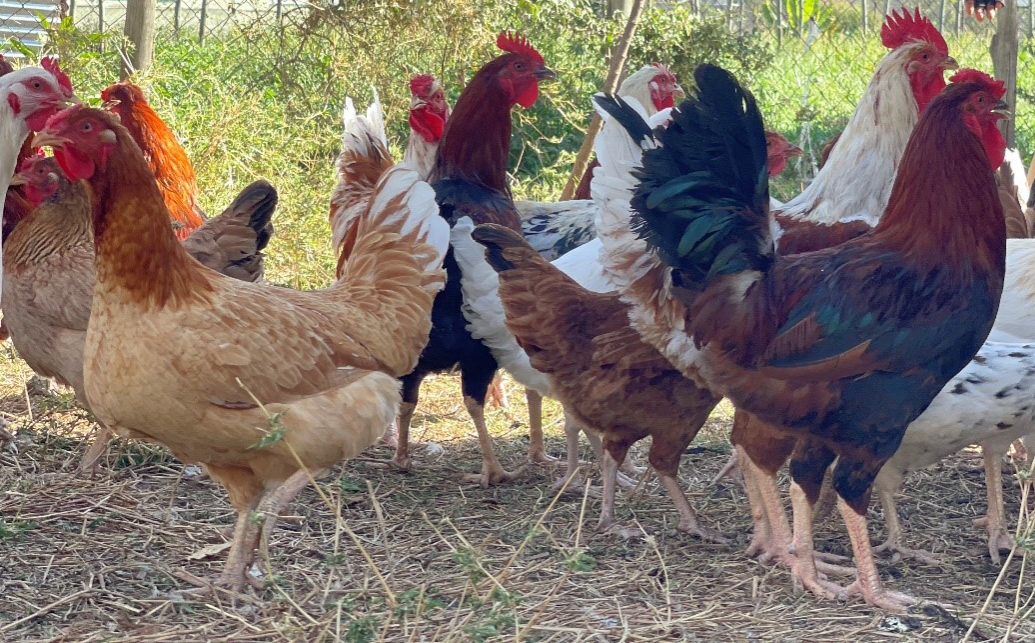
A long-term selective breeding program is running in parallel at the Andassa Livestock Research Center and the ILRI poultry research facility, involving detailed phenotypic data collection and pedigree-based selection of parent birds across five generations.
Personnel and expertise at the centre include a multidisciplinary team of experts including a full-time veterinarian, molecular biology and diagnostic laboratory technician, farm assistants and research scientists (animal genetics, health and nutrition).
'Evaluating chicken genetics is a key part of our work. But we are also monitoring health, improving biosecurity, and building knowledge of local chicken breeds,’ says Mekonnen Girma, ILRI–CGIAR poultry research facility veterinarian.
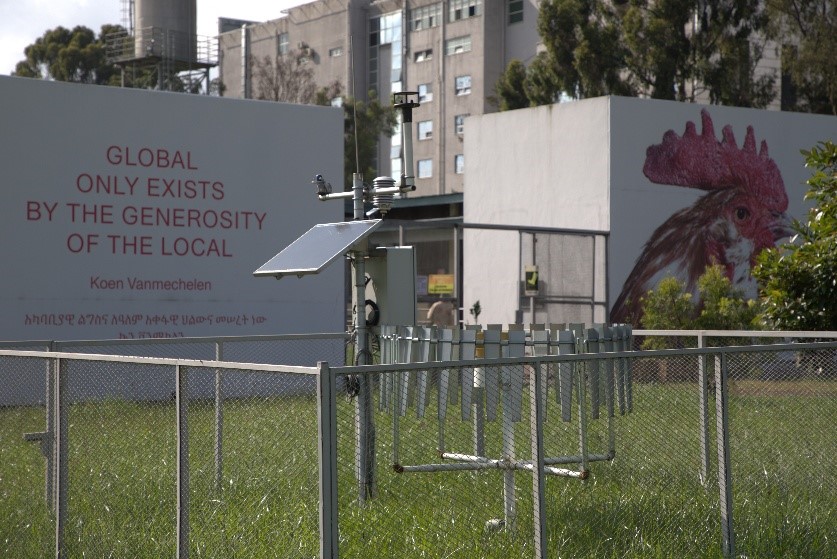
Advanced equipment and capacity at the facility includes two high-capacity incubators with a capacity for 2,000 and 5,000 eggs, a -20oC freezer, and an emergency electric power generator. A dedicated weather station at the site collects daily temperature, atmospheric pressure humidity, and rainfall data. It allows to characterise climate resilience of birds raised in semi-scavenging conditions.
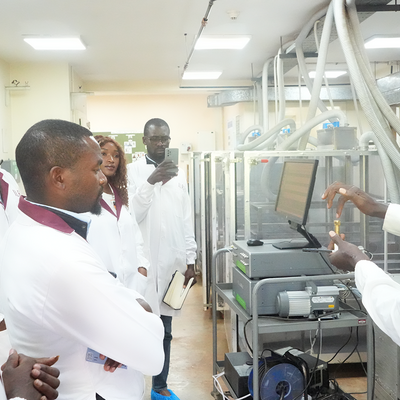
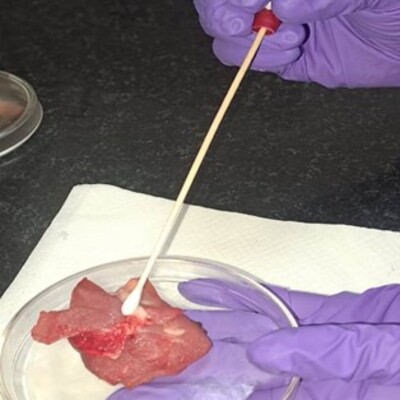
In addition, the facility is connected to Biosafety Level 2 laboratories where all routine molecular biology experiments are conducted. The laboratory includes equipment such as a -90oC freezer, PCR machines, ELISA readers, centrifuges, liquid nitrogen producing and storing facility, ONT sequencing devices. The same premises also holds a black soldier fly breeding facility for chicken feed trials and a feed/nutrition analytical laboratory.
A platform for training and education
The facility also offers postgraduate students, technicians, and early-career researchers hands-on training on how to handle poultry and perform scientific experiments. To date, the facility has supported indoor and outdoor research trials and trained 25 PhD and MSc students from local and international institutions. It has also helped create new international collaborations with universities and agricultural institutions—further positioning it as a global hub for poultry genetics and research.
Mahilet Dawit, a PhD candidate at the Addis Ababa Science and Technology University, has been working at the ILRI genetics lab as part of her doctoral research in comparative genomic evaluation of low and high-altitude livestock species.
'Access to advanced tools and technical expertise at the facility has enhanced the quality of my research,' says Mahilet. 'For early-career researchers like me, the facility has also opened doors for international networking and long-term collaborations. I encourage fellow researchers to take full advantage of this facility at ILRI. It offers an outstanding opportunity to push the boundaries of your research.’
Open to collaboration
The ILRI poultry facility welcomes new partnerships with universities, agribusinesses, research institutes and development organizations. Whether for joint research, trials, breed improvement or training, the facility offers innovative infrastructure and deep technical expertise to support transformative work in poultry systems.
To learn more contact:
Wondmeneh Esatu: W.Esatu@cgiar.org
Mekonnen Girma: M.Girma@cgiar.org
Olivier Hanotte: O.Hanotte@cgiar.org
Related Publications
Prevalence, quantification, and household-level risk factors associated with Salmonella spp. infection in chickens in Boussouma commune, Burkina Faso