Kenyan experts begin to co-develop an interactive food system model
Kenya is developing its first interactive food system model to support the transformation of its food systems. The evidence-informed and dynamic Kenya Interactive Food System Model (KeIFSM) will be used to explore future food scenarios, assess policy impacts, and support national planning to ensure sustainability and nutrition security for the people of Kenya.
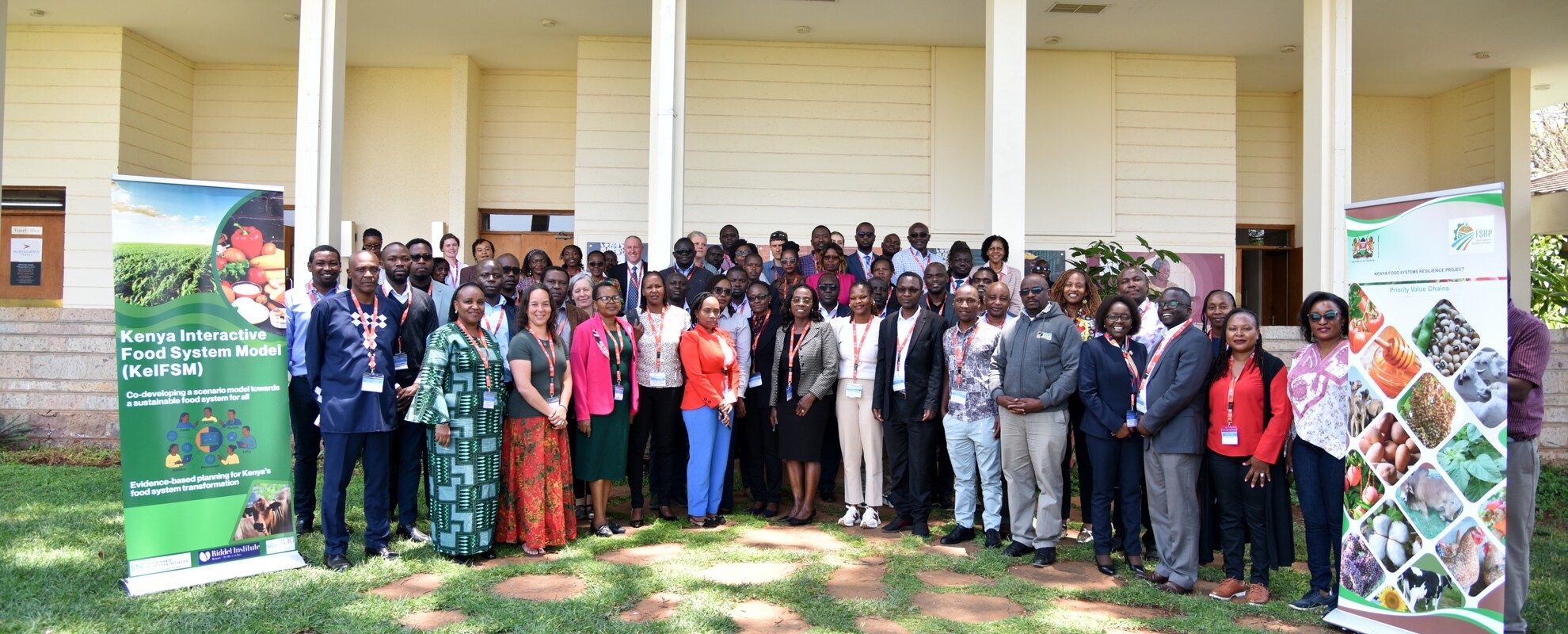
Researchers from the International Livestock Research Institute (ILRI) and representatives from the government, civil society, private sector, research institutions, and development partners began the process of co-developing the model at a meeting held at ILRI's Nairobi campus on 1-2 October 2025.
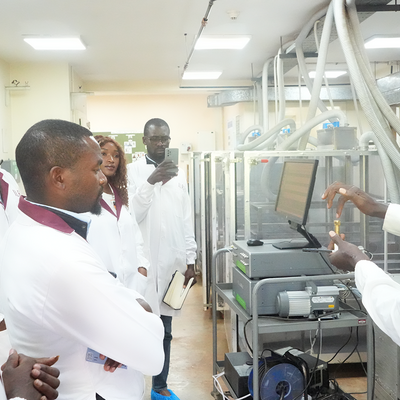
Workshop participants at the ILRI headquarters in Nairobi (October 2025) (Photo credit: Frank Mwangi/ILRI)
Led by the Sustainable Nutrition Initiative (SNi) and ILRI, the workshop articulated 10 desired outcomes of food system transformation in Kenya, including:
- enhanced food sovereignty and security, emphasizing community control over seed systems and production;
- equitable access to healthy and nutritious diets, focusing on affordability, awareness, and inclusivity;
- reduction of non-communicable diseases, achieved through improvements in diet quality;
- sustainable agroecological production, promoting environmentally sound farming practices; and
- increased farmer productivity and income, aimed at strengthening livelihoods through fair and efficient market participation.
Collectively, these priorities reflect a dual ambition to make Kenya’s food systems both nutritionally adequate and economically empowering. As one stakeholder from Murang’a County aptly summarized, “we should not only think about nutrition and forget the structure of the production systems”.
The stakeholders emphasised that Kenya’s food systems transformation should be anchored in principles that extend beyond technology or yield enhancement. “Community participation and inclusivity in decision-making processes, collaboration across sectors to recognize food as a shared societal agenda, and nutrition awareness and education as critical demand-side drivers of change,” they said.
Joseph Karugia, principal scientist at ILRI and the food systems research work principal investigator, said that the model's outputs are also relevant to Kenya’s planning and food policy needs because they are based on an integrated, participatory approach that combines data and lived experiences of Kenya’s food producers and consumers.
Collins Marangu, secretary, State Department for Agriculture, Ministry of Agriculture and Livestock Development, noted that the model aligns well with national and global frameworks. “This interactive food systems model is envisioned as a direct strategic response to national commitments, including Kenya Vision 2030, in which food and nutrition security is a central pillar, and the Agricultural Sector Transformation and Growth Strategy 2019–2029, which outlines a comprehensive policy framework for agricultural transformation. In addition, the Bottom-Up Economic Transformation Agenda (BETA) emphasizes agricultural transformation and inclusive growth as foundational for national economic development,” said Marangu.
Additionally, Dorisel Torres-Rojas, the project lead and a senior research officer at SNi, noted that the model aligns with global commitments under the UN Food Systems Transformation Pathways, particularly those promoting dietary diversity, resilience to climate change, digital innovation, youth inclusion, and sustainable production systems.
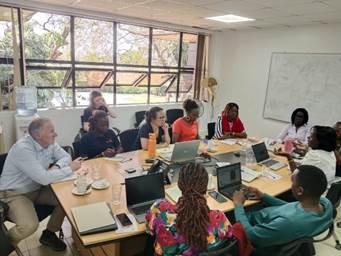 | 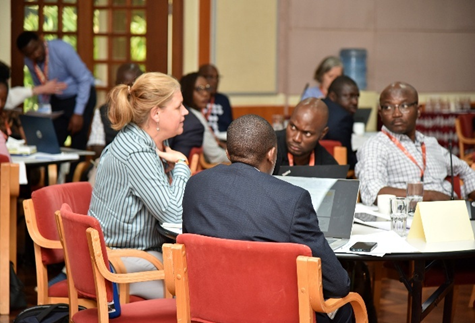 |
Stakeholders engaging in group discussions on food system outcomes and priorities (Photo credit: Frank Mwangi/ILRI)
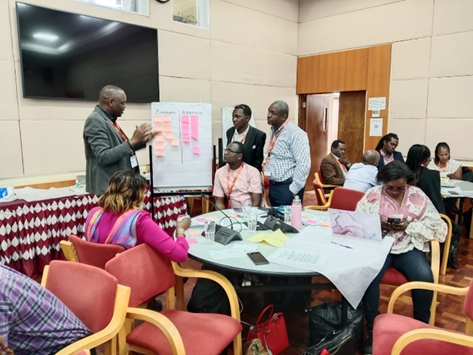 | 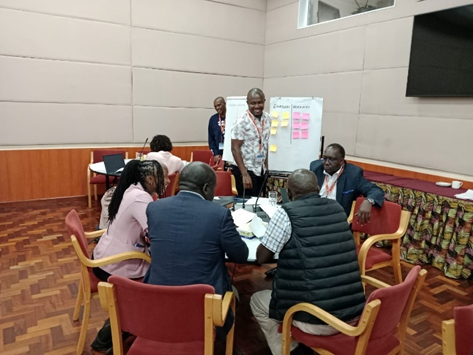 |
Stakeholders mapping barriers, enablers to maximize model usefulness and impacts (Photo credit: Frank Mwangi/ILRI).
Workshop participants also acknowledged that transforming a food system inevitably entails difficult choices. They openly discussed the trade-offs that policymakers and communities must navigate, such as the cost of sustainable or nutritious foods, which may exclude low-income households; the risk that high-yield crop varieties could displace traditional seed systems and biodiversity; the challenge that reducing agrochemical use might temporarily lower yields unless ecological alternatives are scaled up; and the tendency for market-oriented production to prioritize export crops over local nutrition needs.
Recognizing these tensions early enables the model to simulate and visualize where interventions might conflict or complement one another, thus creating a platform for evidence-based dialogue rather than ideological debate.
“This process moves us from talking about transformation to building the tools that make transformation measurable,” said one participant from the Ministry of Agriculture.
ILRI and partners remain committed to facilitating this collaborative process and ensuring that the model becomes a practical, accessible, and policy-relevant tool for national planning and investment decisions. The next steps will involve refining the model structure, incorporating stakeholder feedback, and testing preliminary scenarios that reflect Kenya’s diverse priorities, including nutritional adequacy, climate resilience, trade, livelihoods, and gender inclusion. The project spans three years.
This workshop was co-organized by SNi, ILRI, and the Kenya Food Systems Technical Working Group, with active participation from national and sub-national stakeholders dedicated to transforming Kenya’s food system for people and planet.
More information
- A road to better nutrition in Kenya through food systems scenario modeling
- Building an interactive food system scenario model for Kenya


Related Publications
Call for Rio-aligned investments in sustainable transformation of food, land, and water systems to turn the tide of land degradation, climate change, and biodiversity loss, and enhance livelihoods
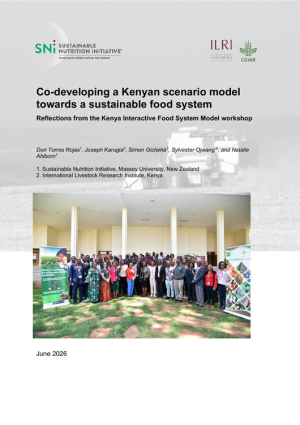
Co-developing a Kenyan scenario model towards a sustainable food system: Reflections from the Kenya Interactive Food Systems Model workshop