“Maisha Makutano”, Kenya’s new edutainment series, features ILRI’s gender and livestock research
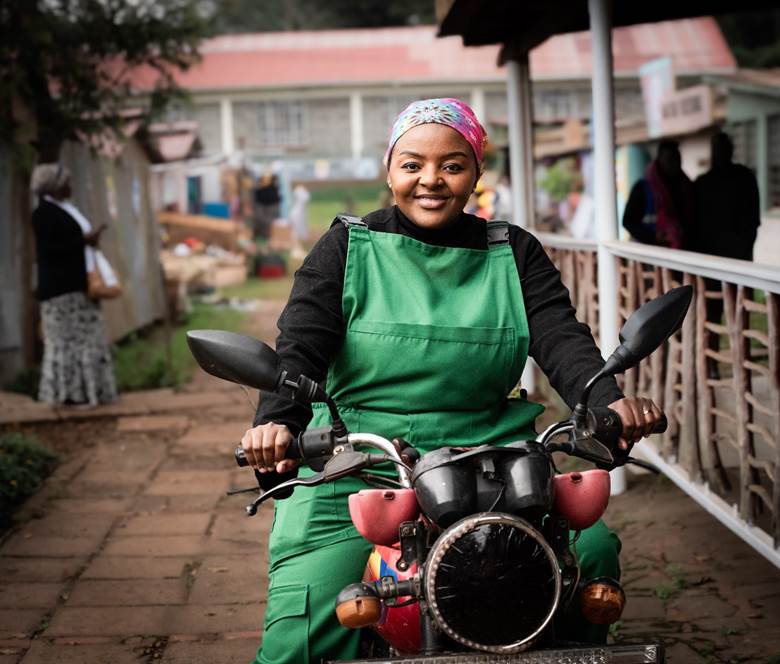
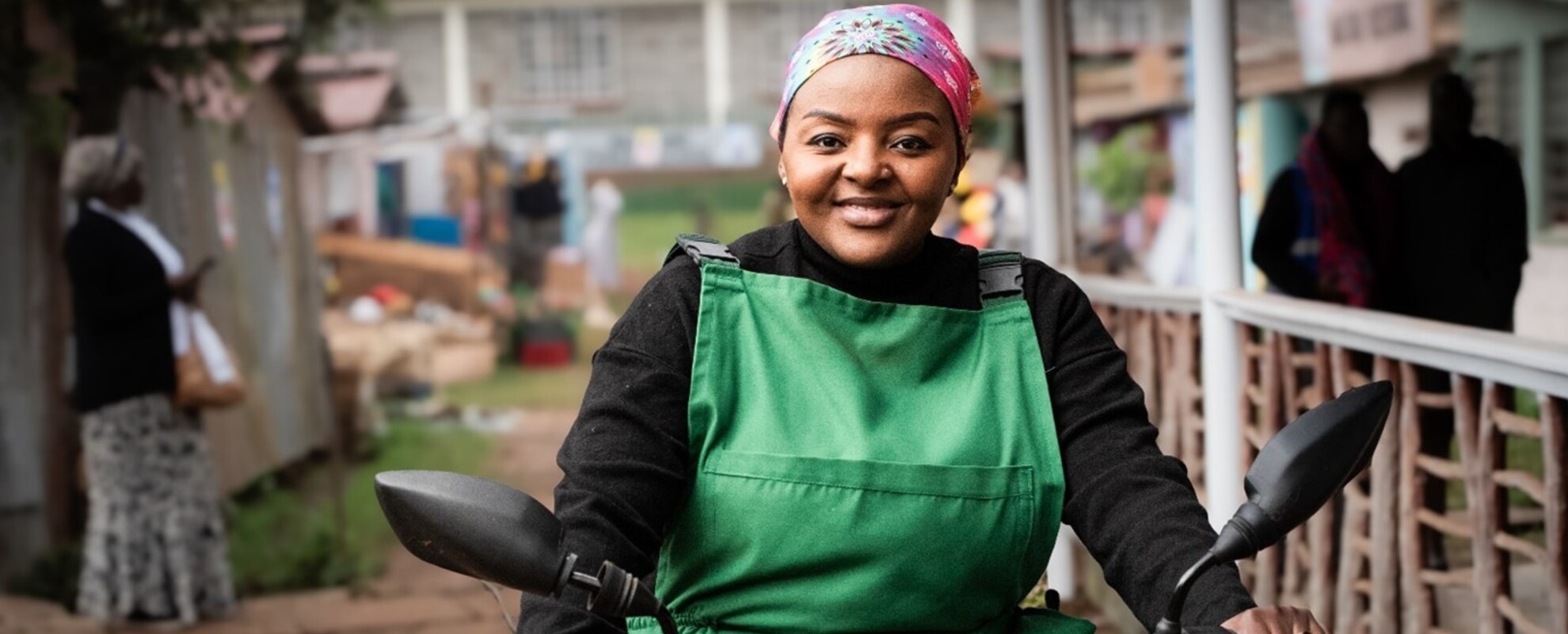
Agripreneur Mwende Baraka, played by Fiona Ashley, defies expectations of women in her community by riding her motorbike through Makutano, delivering veterinary services, vaccinated chicks, and farm inputs to her women clients in the new edutainment series, “Maisha Makutano” (photo credit: Mia Collins).
When researchers from the gender team at the International Livestock Research Institute (ILRI) met the team working on “Maisha Makutano”, an edutainment soap opera tackling challenging social themes from financial inclusion to reproductive health, there was plenty to talk about.
As the production team was defining the social themes to highlight in the new series, ILRI researchers were trying to solve another problem: what kinds of interventions could help women agripreneurs succeed in their livestock businesses? Too often, gender norms hold them back, restricting access to resources, credit, better breeds, and sometimes even respect from their families and communities. One potential solution is Women in Business.
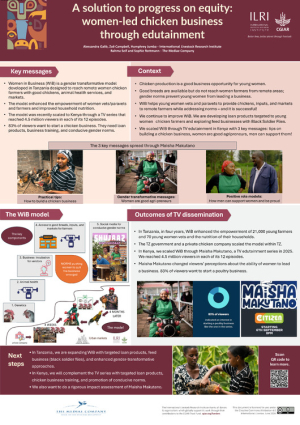
“Women in Business is a business model that engages women vets and para-vets to provide women chicken farmers from remote areas with good breeds, animal health services, and markets,” explains Alessandra Galiè, principal scientist and ILRI gender team lead.
Initially developed as a pilot in Tanzania and Ethiopia, the model has been scaled by the Tanzanian Ministry of Livestock and Fisheries, adopted by AKM Glitters, a private hatchery, and was identified by the United States Agency for International Development (USAID) for scaling to two other African countries before the organization was defunded.
The Maisha Makutano team agreed that including the Women in Business model in the TV series would be a perfect way to discuss the gender norms women in agribusiness face, from lack of capital to push-back from the community if she starts earning more than her husband, boyfriend, father, or brother. Produced by The Mediae Company, Maisha Makutano is a spinoff of “Makutano Junction”, which premiered in 2006 and ran for 15 seasons, reaching 8.6 million viewers through Citizen TV.
“The series is deeply rooted in research, ensuring that its themes resonate with local audiences while sparking real conversations and behavior change,” producer Rahma Seif explained.
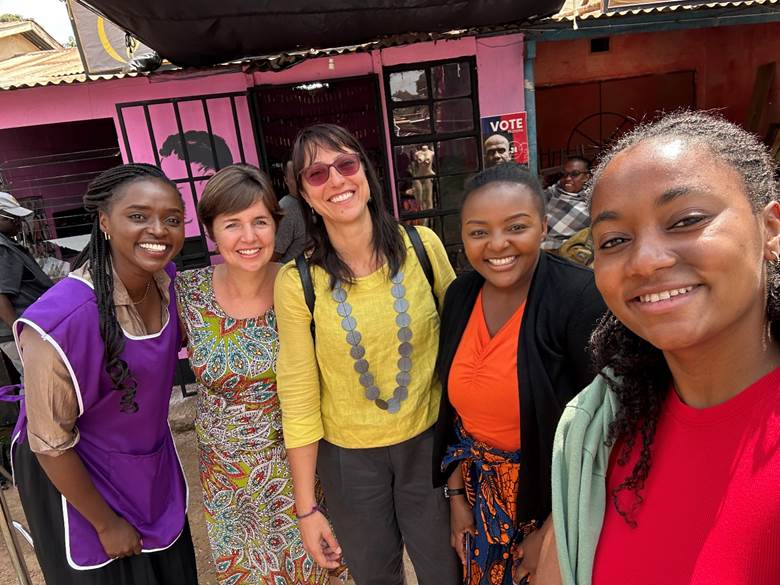
From left to right: Michelle Tiren as Esther Kabando, Zoë Campbell and Alessandra Galiè from the ILRI gender team, Fiona Ashley as Mwende Baraka, and producer Rahma Seif from The Mediae Company in front of “Esther’s salon” on the “Maisha Makutano” film set in Nairobi, Kenya (photo credit: Rahma Seif).
Enter Mwende Baraka, played by Fiona Ashley, a veterinarian who makes a name for herself in Makutano by patiently and persistently growing her business as an agripreneur serving mostly women farmers. She can be found riding her motorcycle laden with chicken feed and teen chicks she has raised to reduce the workload for her clients who may not have the technical expertise or time to handle day-old chicks from the hatchery.
With the support of adoring husband Baraka, played by Samson Psenjen, Mwende manages to grow her business, and offers a helping hand to Esther, played by Michele Tiren, when she starts keeping chickens in a way that is financially beneficial for both women. As the friendship grows, we learn more about their journeys as women agripreneurs.
Gender norms are not just for women; they can put pressure on men whose masculinity is questioned when their wives are successful in business. Thus, we also learn about the men in Mwende and Esther’s lives and how they respond to the women’s involvement in agribusiness.
Already, over 2 million viewers have watched the pilot episode in Kenya, and the first three episodes have reached 3.7 million weekly viewers through the Saturday primetime slot on television. While we hope watching Maisha Makutano is bringing entertaining content and maybe some more serious discussions into homes around Kenya, on the research side, we are also asking: can edutainment bring measurable changes to some of the restrictive gender norms women in agribusiness face? Can a young woman who recently graduated with her veterinary certificate watch Mwende and be encouraged to self-employ as a vendor who works with women farmers? Can a man whose wife out-earned him this month through her livestock business hold his head high and feel proud when he walks in the neighborhood? These are questions ILRI will continue to explore as part of our mission of “Better lives, better planet through livestock.”
Watch Maisha Makutano at 2000 hours on Citizen TV, with new episodes every Saturday and reruns every Sunday through 30 November 2025. Episodes are also available any time on YouTube via the Africa Knowledge Zone channel.
You can learn more about ILRI’s research through our website or the ILRI gender webpage and on our social media platforms - LinkedIn and Facebook.
Sinema Focus: https://www.sinemafocus.com/makutano-junction-spinoff-maisha-makutano/